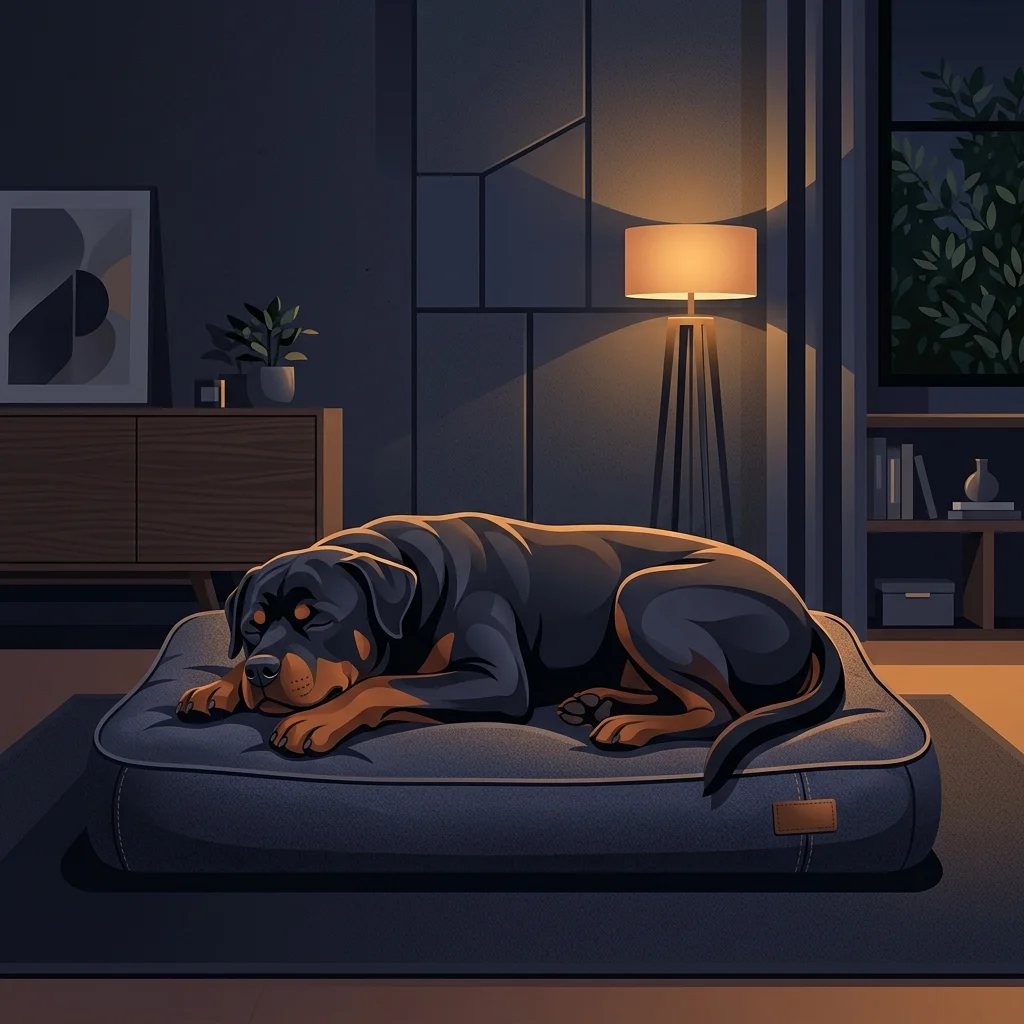
Renowned for their muscular physique, high intelligence, and unyielding loyalty, the Rottweiler is a cherished guardian and family companion worldwide. While deeply affectionate with their families, their deep-chested build makes them extremely susceptible to life-threatening Gastric Dilatation-Volvulus (GDV/Bloat) if exercised right after meals. Additionally, their heavy frame places them at high risk for Hip Dysplasia (HD) and ligament injuries, requiring strict weight management, early socialization, and structured obedience training. In this guide, presents a 3-step daily routine to decode your Rottweiler’s body language and safeguard their health.
Veterinary & Behavioral Evidence
This content is based on American Kennel Club (AKC) & American Rottweiler Club (ARC) Care Standards.
 FreshSelf
Keep pet food and supplements perfectly fresh!
FreshSelf
Keep pet food and supplements perfectly fresh!







1. Rottweiler Body Language: The Rottie Rumble and the Hard Stare
Rottweiler Body Language: The Rottie Rumble and the Hard Stare
Rottweilers express affection and territorial vigilance through distinct vocalizations and body stillness. A low, vibrating guttural sound produced during affection 'The Rottie Rumble' is not aggression, but a unique sign of deep contentment similar to a cat's purr. Conversely, standing completely rigid with a raised neck and an unblinking gaze 'The Hard Stare / Stiff Stance' is an explicit alert signal indicating high arousal, threat assessment, and potential defense.
2. Rottweiler’s Body Language & Behavioral Signals
Emitting a Low Guttural Vibrating Sound During Affection (Rottie Rumble)
A unique Rottweiler affection display expressing immense physical comfort, contentment, and trust toward their owner.
Confirm that their body remains loose and relaxed, responding calmly with gentle petting to maintain bonding.
Standing Completely Rigid with Raised Neck and Unblinking Gaze (Hard Stare / Stiff Stance)
A high-alert territorial posture triggered by potential threats, signaling readiness to react defensively.
Shorten leash control immediately, block their line of sight to the trigger, and issue calm obedience commands like 'Sit' or 'Look at Me'.
3. Customized 3-Step Home Care Routine for Rottweiler
Morning: High-Protein Controlled Feeding & Strict Post-Meal Rest for GDV Prevention
Feed using a slow-feeder bowl to prevent air ingestion, enforcing a mandatory 1-hour calm rest period after eating with no vigorous activity.
Afternoon: Joint-Friendly Balanced Exercise & Early Socialization Obedience Training
Protect joints from Hip Dysplasia (HD) by walking on soft turf rather than hard concrete, combining controlled exercise with structured obedience.
Evening: Weight Management & Anti-Slip Indoor Floor Inspection (Joint Protection)
Maintain optimal lean weight to reduce stress on joints and heart, ensuring indoor floor mats are non-slip to prevent joint injuries.
📌 Frequently Asked Questions (FAQ)
Is the 'Rottie Rumble' a sign of aggressive growling? ▼
No! The 'Rottie Rumble' is a signature display of happiness and contentment, much like a cat purring when being petted by its trusted owner. However, it is vital to distinguish it from a true warning growl, which is accompanied by bared teeth, a rigid body posture, and visible whites of the eyes.
How can I prevent Gastric Dilatation-Volvulus (GDV) and Hip Dysplasia (HD) in my Rottweiler? ▼
To prevent GDV (Bloat), split daily food into 2–3 smaller meals and mandate 1 hour of total rest post-meal. To manage Hip Dysplasia (HD), prevent rapid weight gain during growth, avoid high-impact jumping on hard surfaces, and conduct regular veterinary X-ray screenings starting after 1 year of age.