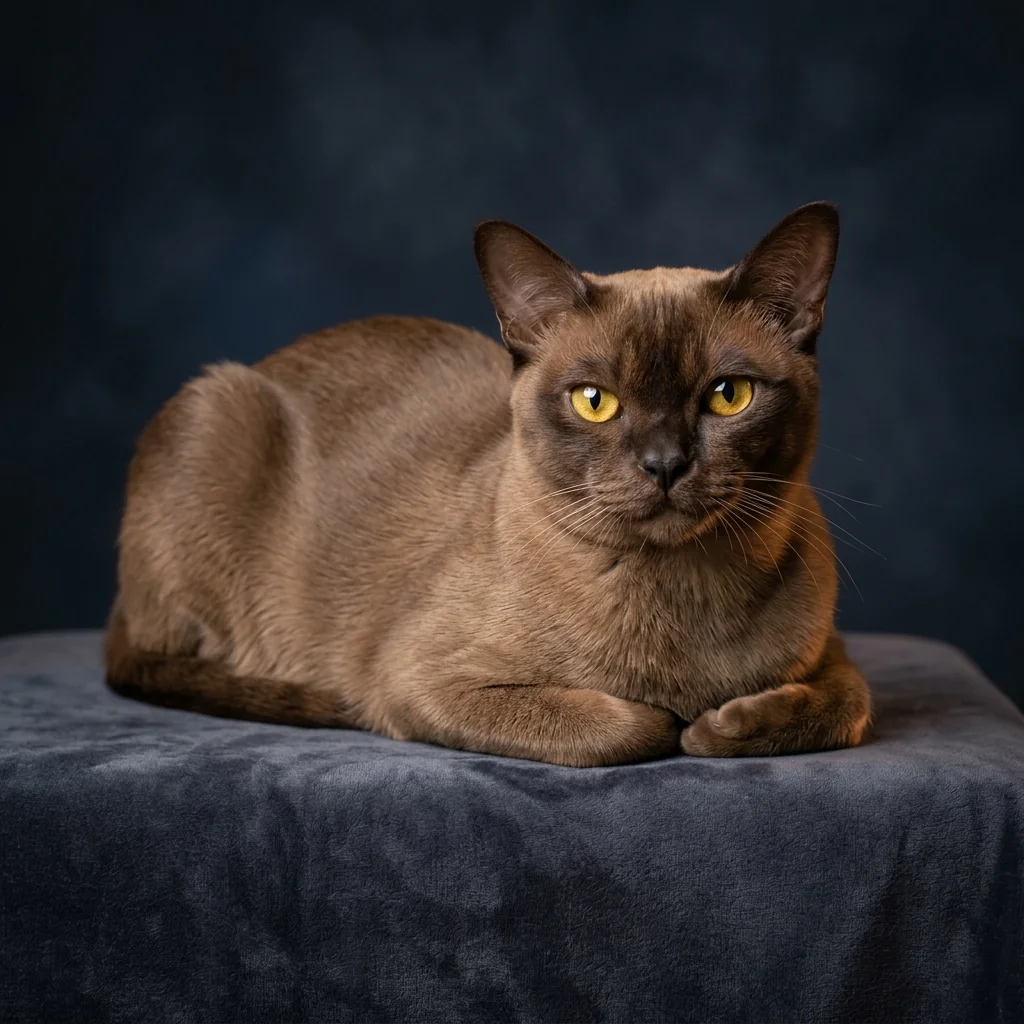
The Burmese cat is globally adored for its satin-like short coat, striking golden eyes, and affectionate ‘dog-like’ personality. Highly social and intelligent, they form strong emotional bonds with their families; however, this intense loyalty makes them susceptible to separation anxiety if left alone for extended periods. In this guide, we analyze Burmese body language and vocal signals, providing a 3-step homecare routine for anxiety prevention, indoor environmental enrichment, and optimal body weight maintenance.
Veterinary & Behavioral Evidence
This content is based on Cat Fanciers' Association (CFA) Breed Standards and International Society of Feline Medicine (ISFM) Clinical Guidelines.
 FreshSelf
Keep pet food and supplements perfectly fresh!
FreshSelf
Keep pet food and supplements perfectly fresh!









1. Burmese Cat Communication: Persistent Head Bunting and Vocal Expressiveness
Burmese Cat Communication: Persistent Head Bunting and Vocal Expressiveness
Burmese cats possess a strong desire to interact continuously with their humans. They share facial pheromones and deep affection through frequent 'Head Bunting', and use a soft, expressive purr-like voice to engage in 'conversations' and demand active playtime.
2. Burmese Cat’s Body Language & Behavioral Signals
Head Bunting & Pawing
A display of deep trust, affection, and territory marking, as well as a direct request for interactive play and human attention.
Acknowledge them immediately with gentle petting or initiate a wand toy session to fulfill their social interaction needs.
Excessive Vocalization & Pacing
Early stress signals of loneliness and separation distress caused by prolonged solitude or lack of environmental stimulation.
Provide puzzle feeders and foraging toys before leaving, and implement gradual desensitization training to reduce solitude anxiety.
3. Customized 3-Step Home Care Routine for Burmese Cat
Morning: High-Protein Feeding & Food Puzzle Enrichment
Serve a premium high-protein diet to support their athletic, muscular build, and hide kibble in puzzle toys before leaving to prevent daytime boredom.
Afternoon: Vertical & Horizontal Territory Enrichment
Set up cat trees and window hammocks to offer outdoor views, complemented by tunnels and hideaways to encourage active indoor exploration.
Evening: 15-Minute Interactive Wand Play & Weight Check
Engage in energetic hunting games using feather wands to release stored energy, perform a routine weight check, and share a quiet, cozy night's sleep.
📌 Frequently Asked Questions (FAQ)
Is a Burmese cat suitable for households where owners are away all day? ▼
No. Burmese cats are extremely social and can suffer severe depression or separation anxiety if left alone for long periods. If your home is often empty, consider adopting a companion pet or providing extensive automated toys and environmental enrichment.
How do I maintain the silky coat of a Burmese cat? ▼
Burmese cats have a short, fine single coat with minimal undercoat, resulting in low shedding. Grooming once or twice a week with a soft rubber brush or silicone grooming glove is sufficient to maintain their signature satin sheen.