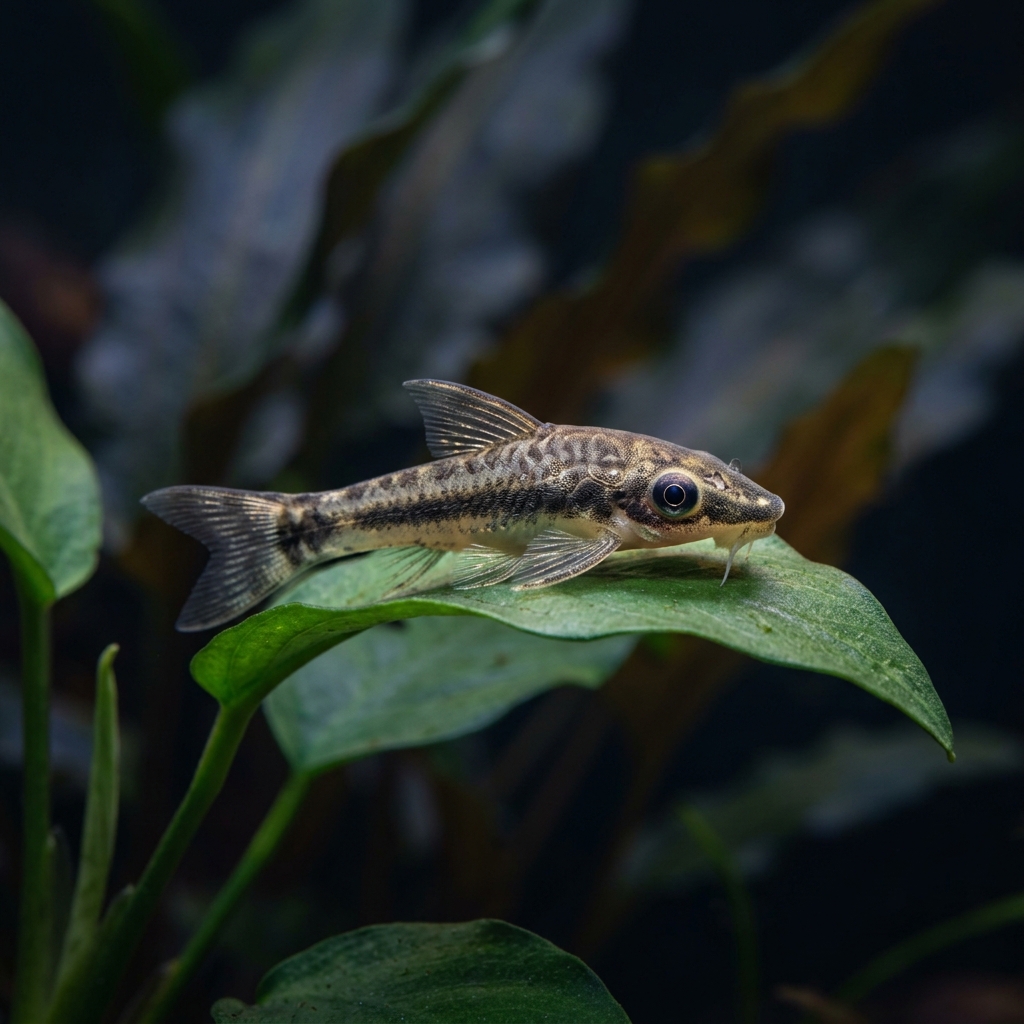
The Otocinclus Catfish (Otocinclus spp.) is a tiny suckermouth armored catfish native to the Amazon River basin, widely celebrated as the ultimate ‘natural algae cleaner’ for planted aquariums globally. Reaching a compact adult size of just 3–4 cm (1.2–1.5 inches), they are exceptionally peaceful and will never attack or harass other fish, dwarf shrimp, or invertebrates. However, because their wild diet consists almost entirely of micro-algae and soft bio-films coating plant leaves and decor, introducing them to newly set up or overly clean tanks frequently results in fatal starvation. Furthermore, they are highly sensitive to fluctuating water parameters and unestablished nitrogen cycles, requiring introduction only into fully matured aquariums via gradual acclimation. In this guide, we detail Otocinclus behavior signals, nutritional supplementation, and a 3-step care routine.
Veterinary & Behavioral Evidence
This content is based on Ornamental Aquatic Trade Association (OATA) Guidelines and International Freshwater Aquarium Care Standards.
 FreshSelf
Keep pet food and supplements perfectly fresh!
FreshSelf
Keep pet food and supplements perfectly fresh!






1. Otocinclus Behavioral Signals: Plump Belly (Nutritional Health) vs. Surface Darting & Sunken Belly
Otocinclus Behavioral Signals: Plump Belly (Nutritional Health) vs. Surface Darting & Sunken Belly
Healthy Otocinclus exhibit round, plump 'potbellies' and graze peacefully in small groups across plant leaves. Conversely, a sunken belly or frequent, frantic darting to the water surface indicates severe starvation, lack of dissolved oxygen, or nitrogen waste spikes.
2. Otocinclus Catfish / Dwarf Suckermouth (Otocinclus spp.)‘s Body Language & Behavioral Signals
Plump Belly & Leaf Grazing
Indicates adequate consumption of bio-film and algae, signifying good nutritional health and comfortable acclimatization.
Maintain current feeding parameters, water quality, and lighting schedules to support natural algae growth.
Sunken Belly & Surface Darting
A critical distress signal indicating starvation due to lack of algae, or respiratory stress from low dissolved oxygen/high ammonia levels.
Immediately supplement with blanched zucchini or sinking algae wafers, increase aeration, and test water parameters.
3. Customized 3-Step Home Care Routine for Otocinclus Catfish / Dwarf Suckermouth (Otocinclus spp.)
Morning: Abdominal (Belly) Observation & Oxygenation Check
Inspect the bellies of Otocinclus resting on glass for plumpness, verifying water temperature (22–26°C / 72–79°F) and adequate filter flow for aeration.
Afternoon: Bio-film Level Inspection & Lighting Management
Check algae availability on plant leaves and decor; balance daily photoperiods to encourage natural micro-algae growth without inducing nuisance algae.
Evening: Herbivorous Supplementation (Blanched Zucchini / Algae Wafers)
Provide a small slice of blanched zucchini or a sinking herbivore wafer before lights-out if natural algae is low, removing uneaten remains the next day.
📌 Frequently Asked Questions (FAQ)
Why shouldn't Otocinclus be introduced to a brand-new aquarium? ▼
Brand-new aquariums lack the essential micro-algae and mature bio-films that Otocinclus depend on for food, leading to rapid starvation. Additionally, they are extremely sensitive to immature nitrogen cycles. Always wait at least 1–2 months until the tank ecosystem is fully established and soft green/brown algae is present.
How do I feed Otocinclus if there isn't enough natural algae in the tank? ▼
Supplement their diet with blanched vegetables like zucchini or cucumber (boiled for 2–3 minutes with skin removed) and small sinking spirulina/algae wafers. Anchor the food near plant leaves and offer it near lights-out so they can graze comfortably in the dark.