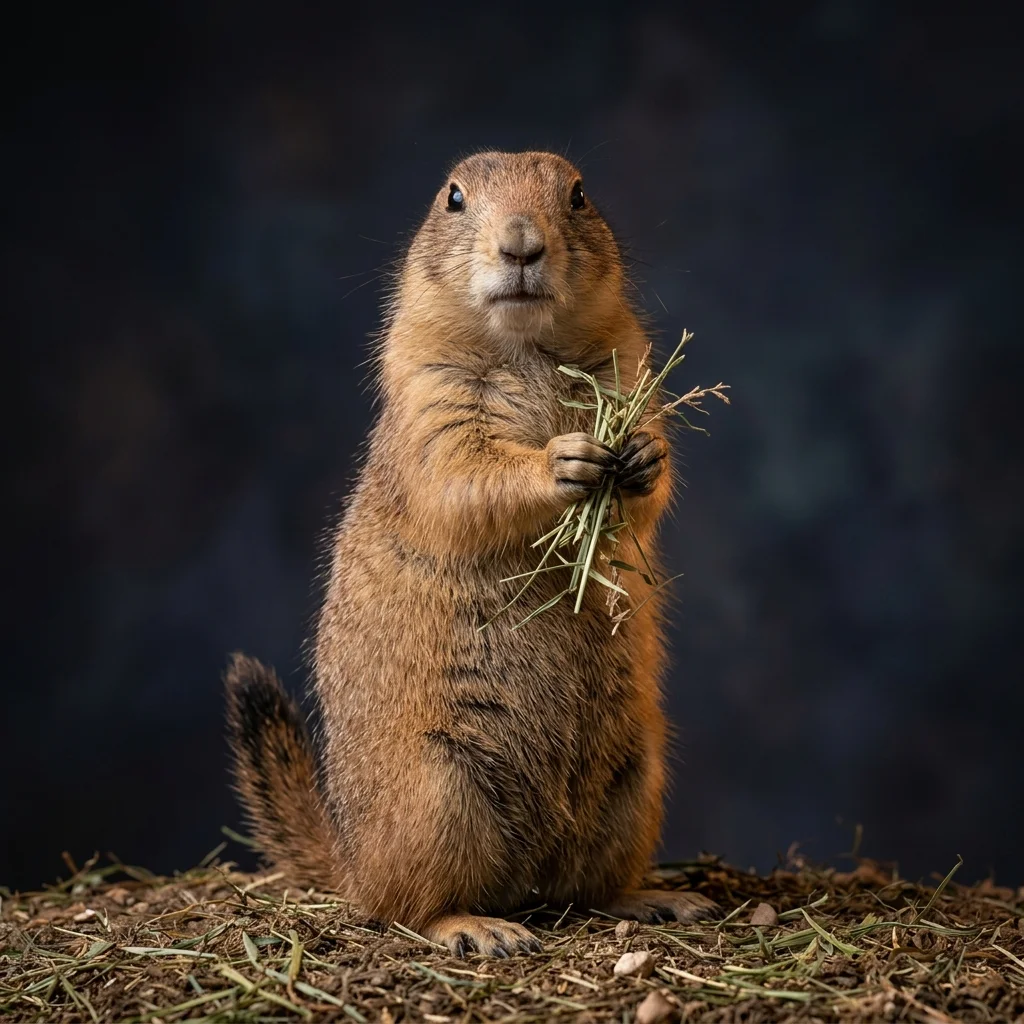
The Black-tailed Prairie Dog is a highly social rodent native to North American plains. Because their incisors grow continuously, providing unlimited high-fiber Timothy hay is critical to prevent fatal malocclusion and odontoma. Deep burrowing substrate and intense social interaction are essential. In this guide, outlines a 3-step care routine.
Veterinary & Behavioral Evidence
This content is based on American Veterinary Medical Association (AVMA) Guidelines.
 FreshSelf
Keep pet food and supplements perfectly fresh!
FreshSelf
Keep pet food and supplements perfectly fresh!









1. Prairie Dog Instincts: Greeting Kisses and Jump-Yip Alarm Calls
Prairie Dog Instincts: Greeting Kisses and Jump-Yip Alarm Calls
They confirm social bonds through 'Greeting Kisses', touching teeth and mouth. When alarmed, they stand upright and emit a sharp 'Jump-Yip' call to alert others.
2. Black-tailed Prairie Dog (Cynomys ludovicianus)‘s Body Language & Behavioral Signals
Greeting Kiss & Nuzzling
Touching mouth and teeth to express affection and confirm group identity.
Gently scratch under their chin and reward them with affection.
Jump-Yip / Alarm Call
Standing on hind legs and barking sharply to signal alertness to strangers or noise.
Remove stressors and speak calmly to reassure them.
3. Customized 3-Step Home Care Routine for Black-tailed Prairie Dog (Cynomys ludovicianus)
Morning: Unlimited Timothy Hay & Water Refill
Supply unlimited Timothy hay for tooth wear and refresh their water bottle.
Afternoon: Substrate Hygiene & Temp Check (20–25°C)
Spot-clean digging substrate and ensure stable room temperatures.
Evening: Pellet Feeding & One-on-One Bonding Time
Provide formulated pellets and enjoy interactive play before night sleep.
📌 Frequently Asked Questions (FAQ)
Is unlimited Timothy hay really mandatory? ▼
Yes. Their incisors grow continuously. Without hay to grind them down, severe malocclusion or fatal odontoma (root overgrowth) will occur.
Can I keep a single prairie dog? ▼
Not recommended. They are herd animals and suffer severe depression when isolated. Keep pairs or spend hours bonding daily.