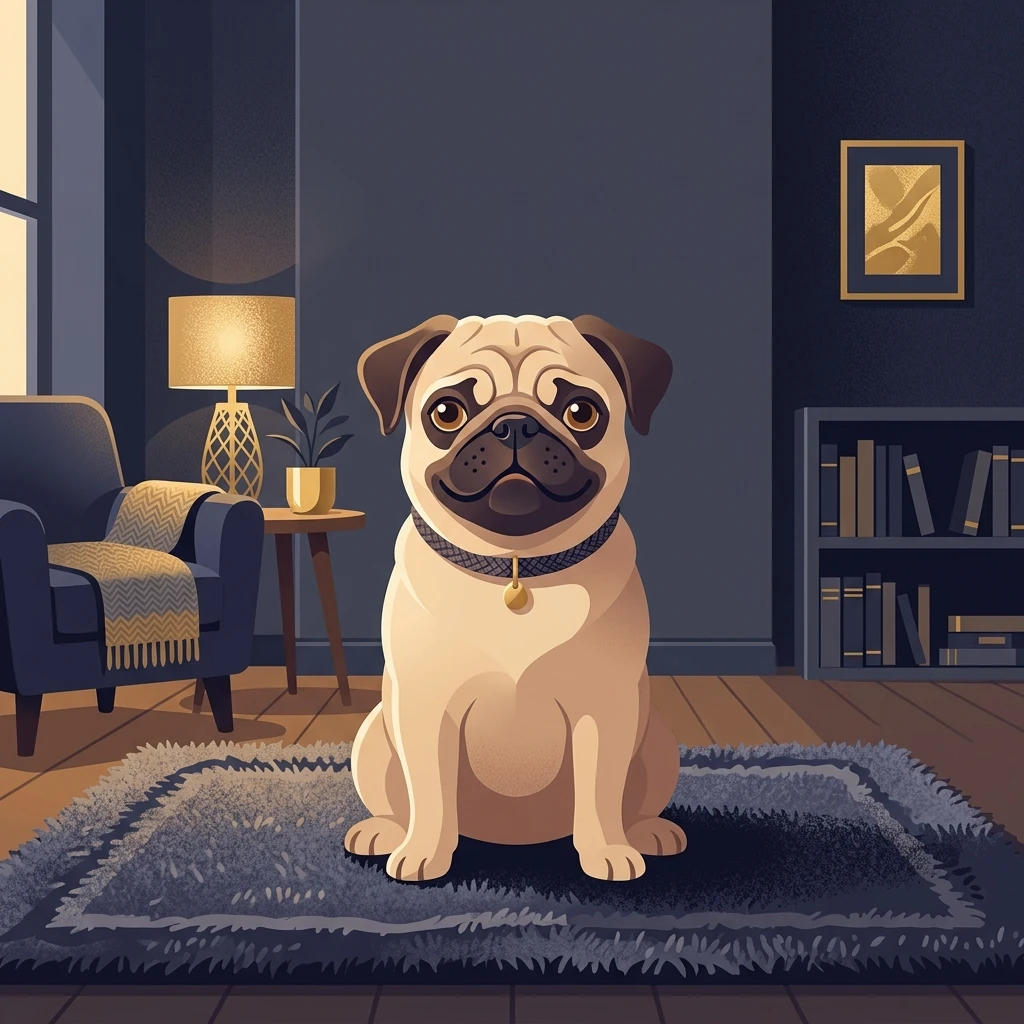
Cherished for centuries for their wrinkled faces, round expressive eyes, and comical affection, the Pug is an iconic companion dog that thrives on human connection. While Pugs are famously gentle and even-tempered, their flat-faced (brachycephalic) anatomy makes them extremely vulnerable to Brachycephalic Obstructive Airway Syndrome (BOAS) and heatstroke. Furthermore, their protruding eyes are prone to corneal ulcers and dry eye syndrome, while their strong appetite makes obesity a major risk factor for breathing difficulties and joint strain. In this guide, presents a 3-step daily care routine to decode your Pug’s body language and protect its health.
Veterinary & Behavioral Evidence
This content is based on American Kennel Club (AKC) & Pug Dog Club of America (PDCA) Care Standards.
 FreshSelf
Keep pet food and supplements perfectly fresh!
FreshSelf
Keep pet food and supplements perfectly fresh!





1. Pug Body Language: The Head Tilt and Open-Mouth Breathing (BOAS Distress)
Pug Body Language: The Head Tilt and Open-Mouth Breathing (BOAS Distress)
Pugs communicate emotions and physical distress through facial expressions and breathing sounds. Tilting their head side-to-side while focusing on your voice 'Head Tilt' is a signature sign of curiosity, intelligence, and affection. Conversely, gasping for air with an open mouth, extended tongue, and widened eyes 'Open-Mouth Breathing / BOAS Distress' is a critical survival signal indicating respiratory distress or thermal overload.
2. Pug’s Body Language & Behavioral Signals
Tilting Head Side-to-Side with Short Snort-Chirps (Head Tilt & Snort-Chirping)
An iconic Pug communication display showing intense curiosity, active listening, and a desire to engage with their owner.
Speak in a warm, friendly voice and stroke under their chin or behind their ears to reinforce trust.
Panting Heavily with Open Mouth, Extended Tongue, and Widened Eyes (Open-Mouth Breathing / BOAS Distress)
A danger signal indicating airway collapse, inability to thermoregulate, or acute overheating from exercise or climate.
Stop exercise immediately, move to an air-conditioned room, and apply lukewarm water to paw pads to reduce body temperature safely.
3. Customized 3-Step Home Care Routine for Pug
Morning: Facial Wrinkle Hygiene & Portioned Feeding for Weight Control
Gently wipe facial folds with damp pet wipes to prevent moisture buildup and fold dermatitis, strictly measuring food portions to prevent obesity.
Afternoon: Climate-Controlled Environment (22–24°C) & Low-Impact Short Walks (15–20 Min)
Keep indoor ambient temperature cool as flat-faced breeds overheat rapidly, scheduling brief, low-impact walks during cool hours.
Evening: Ocular Inspection & Pressure-Free Y-Harness Verification
Flush protruding eyes with sterile saline to prevent corneal ulcers, ensuring walks utilize a padded Y-harness that puts zero pressure on the trachea.
📌 Frequently Asked Questions (FAQ)
Why do Pugs snore heavily and why is hot weather dangerous for them? ▼
Pugs possess Brachycephalic Obstructive Airway Syndrome (BOAS), characterized by narrowed nostrils (stenotic nares) and an elongated soft palate. Because dogs rely on panting to cool down, a Pug's restricted airway makes heat dissipation inefficient, leading rapidly to fatal heatstroke in warm weather. Indoor air conditioning and avoiding summer daytime walks are mandatory.
How should I protect my Pug's eyes and manage Pug Dog Encephalitis (PDE)? ▼
Because of their shallow eye sockets, Pugs are susceptible to eye trauma, dry eyes, and corneal ulcers from grass or debris; daily eye flushing is recommended. Additionally, Pug Dog Encephalitis (PDE / Necrotizing Meningoencephalitis) is a fatal hereditary brain disease occurring between 1 and 3 years old. If you observe seizures, circling, or head pressing, consult a veterinarian immediately for an MRI evaluation.