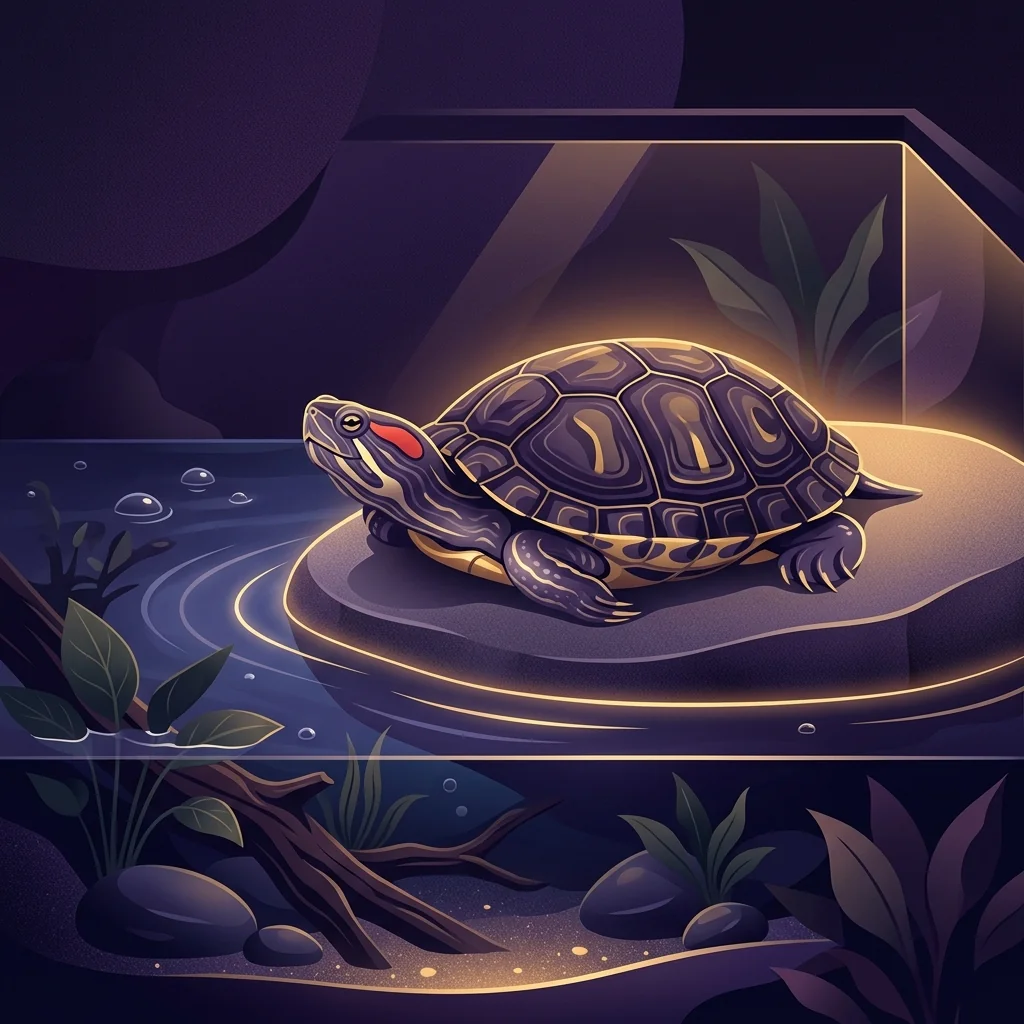
Famous for the distinctive red stripe behind their eyes, the Red-Eared Slider (Trachemys scripta elegans) is the most widely recognized semi-aquatic turtle in the world. They require both a deep aquatic environment for swimming and a dry basking area equipped with heat and light to regulate body temperature. Without proper UVB lighting and heat lamps, sliders cannot synthesize Vitamin D3, leading to Metabolic Bone Disease (MBD) and Shell Rot. Furthermore, cold water temperatures dramatically increase the risk of fatal pneumonia. In this guide, presents a 3-step daily care routine to read your turtle’s body signals and maintain shell and respiratory health.
Veterinary & Behavioral Evidence
This content is based on Association of Reptilian and Amphibian Veterinarians (ARAV) & Reptile Care Protocols.
 FreshSelf
Keep pet food and supplements perfectly fresh!
FreshSelf
Keep pet food and supplements perfectly fresh!





1. Red-Eared Slider Body Language: Starfish Basking and Lopsided Swimming
Red-Eared Slider Body Language: Starfish Basking and Lopsided Swimming
Red-Eared Sliders communicate health status through basking postures and swimming movement. Fully extending their hind legs while resting under a heat lamp 'Starfish Basking' is a healthy behavior that raises body temperature, aids digestion, and dries the shell to prevent fungal growth. Conversely, tilting to one side while swimming or gasping for air 'Lopsided Swimming & Open-Mouth Breathing' is a critical warning sign of acute pneumonia or severe respiratory infection.
2. Red-Eared Slider (Trachemys scripta elegans)‘s Body Language & Behavioral Signals
Extending All Four Limbs Fully on Basking Platform (Starfish Basking)
A healthy behavior for thermoregulation, Vitamin D3 synthesis via UVB absorption, and drying the shell.
Maintain proper basking platform temperatures (30°C–32°C) and UVB distance without startling the turtle.
Swimming Tilted to One Side in Water (Lopsided Swimming)
A critical signal of pneumonia where fluid accumulation in one lung causes loss of normal buoyancy.
Immediately raise water temperature to 28°C–30°C to support immunity and seek urgent reptile veterinary care.
3. Customized 3-Step Home Care Routine for Red-Eared Slider (Trachemys scripta elegans)
Morning: Water Temp Check (24°C–28°C) & 10–12 Hour UVB/Heat Light On
Verify heater operation and water temperature, then turn on the spot heat lamp and UVB light to stimulate metabolism.
Afternoon: Age-Appropriate Feeding & Filter Flow Check
Feed high-protein pellets to juveniles and incorporate greens for adults, checking filter output to handle heavy waste.
Evening: Substrate Waste Siphoning & Nighttime Lights Off
Siphon out uneaten food and debris to control ammonia spikes, turning off lights to maintain a natural day-night cycle.
📌 Frequently Asked Questions (FAQ)
Why is my turtle's shell soft or showing white spots? ▼
A soft shell indicates Metabolic Bone Disease (MBD) caused by calcium deficiency and lack of UVB light. White spots or bad odors signify Shell Rot from bacterial infection. Upgrade your UVB lamp, provide calcium supplements, and ensure proper dry basking care.
Is a filter necessary and how often should I change the water? ▼
Turtles produce a high volume of waste, making a powerful filter (canister or top filter) essential. Perform a 30–50% partial water change 1–2 times weekly, and always wash your hands after handling to prevent Salmonella transmission.