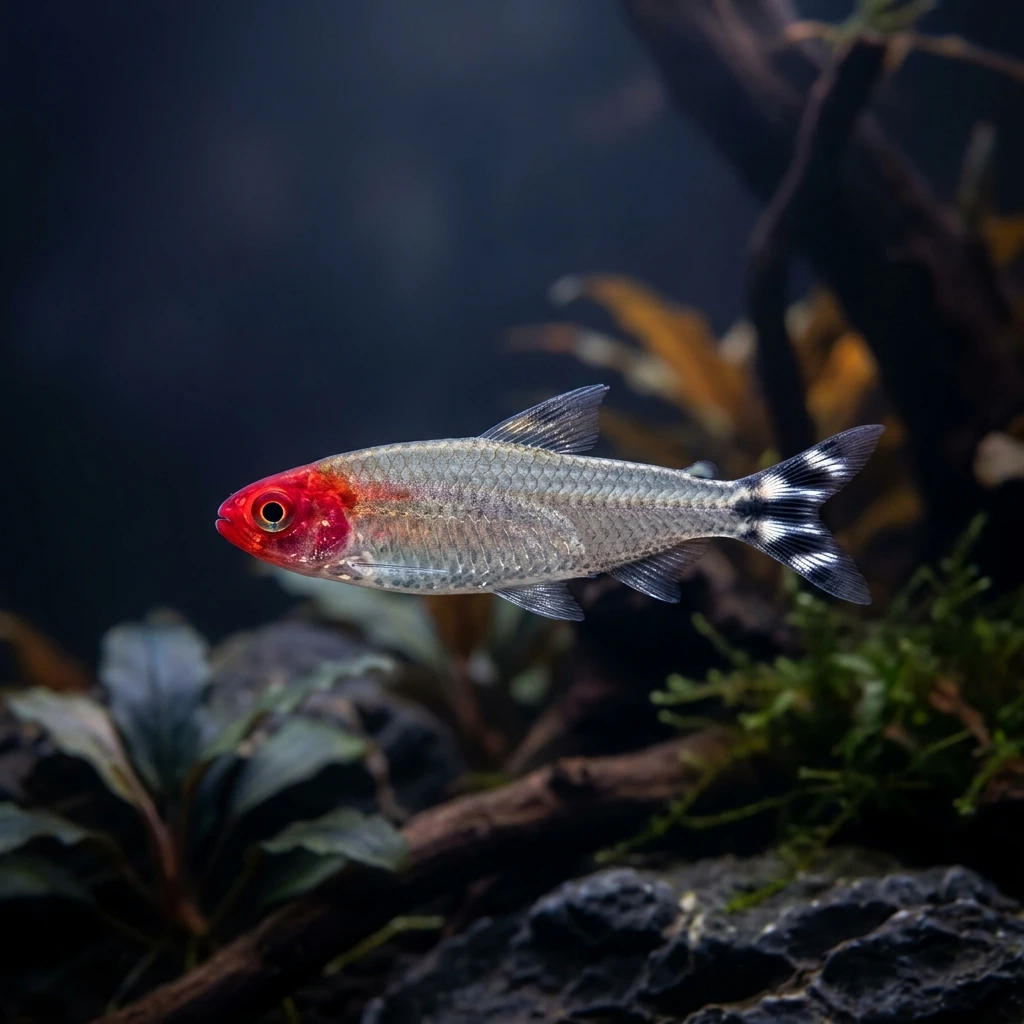
The Rummy-Nose Tetra (Hemigrammus bleheri) is an iconic South American characin prized by aquascapers worldwide for its vibrant ruby-red head, black-and-white zebra-striped tail, and unmatched tight-schooling behavior. Highly sensitive to water parameters, the intense red coloration on their head serves as a living barometer for water quality (nitrates, pH) and overall health. Furthermore, they thrive and display their famous synchronized swimming when kept in schools of 10 or more. In this guide, we analyze the Rummy-Nose Tetra’s behavioral and health signals and share a 3-step daily routine for vibrant head coloration, water stability, and perfect schooling harmony.
Veterinary & Behavioral Evidence
This content is based on Ornamental Fish International (OFI) Standards & World Aquatic Veterinary Medical Association (WAVMA) Guidelines.
 FreshSelf
Keep pet food and supplements perfectly fresh!
FreshSelf
Keep pet food and supplements perfectly fresh!






1. Rummy-Nose Tetra Instincts: Vibrant Head Coloration and Synchronized Schooling
Rummy-Nose Tetra Instincts: Vibrant Head Coloration and Synchronized Schooling
When in pristine water conditions and optimal health, Rummy-Nose Tetras showcase a deep, intense ruby-red head. However, if water quality degrades or nitrates spike, their head pales to a dull white. To defend against perceived threats, dozens of individuals swim in tight, perfectly synchronized formations as if operating as a single organism.
2. Rummy-Nose Tetra (Hemigrammus bleheri)‘s Body Language & Behavioral Signals
Deep Ruby-Red Head Coloration
Indicates pristine water quality (low nitrates, stable pH) and peak physical health and emotional contentment.
Maintain consistent water parameters and warm temperatures (24–28°C) to sustain their vibrant coloration.
Paled or White Head Coloration
A warning signal triggered by water quality deterioration (high nitrates/ammonia), pH shock, or severe stress.
Immediately test water parameters (nitrates, pH), verify water temperature, and perform a gentle 10–20% partial water change.
3. Customized 3-Step Home Care Routine for Rummy-Nose Tetra (Hemigrammus bleheri)
Morning: Water Temp (24–28°C) & Head Color Inspection with Micro-Pellet Feeding
Check head redness after turning on aquarium lights to assess water health, then feed micro-pellets or crushed flakes suitable for small mouths.
Afternoon: Moderate Flow Rate Check & Schooling Group Assessment
Ensure filter outlets are set to moderate, non-stressful currents, and observe the group (10+ fish) to check for isolated or struggling individuals.
Evening: Nitrate Control Maintenance & Scheduled Lights-Out
Perform weekly partial water changes (10–20%) to keep nitrates low, then turn off aquarium lights to allow 8–10 hours of peaceful rest.
📌 Frequently Asked Questions (FAQ)
Why did my Rummy-Nose Tetra's head turn pale white, and how can I fix it? ▼
A pale head is the classic symptom of water quality stress (elevated nitrates or ammonia), temperature fluctuation, or acclimation shock. Immediately test your aquarium water for nitrates and pH, confirm the temperature is between 24 and 28°C, and perform a gradual 10–20% partial water change.
Why are my Rummy-Nose Tetras not swimming together in a school? ▼
Rummy-Nose Tetras require a group of at least 10 (ideally 12–15+) to feel secure enough to school tightly. If the group size is too small, or if there are no open swimming spaces in the aquascape, they may disperse among plants instead of forming tight formations.