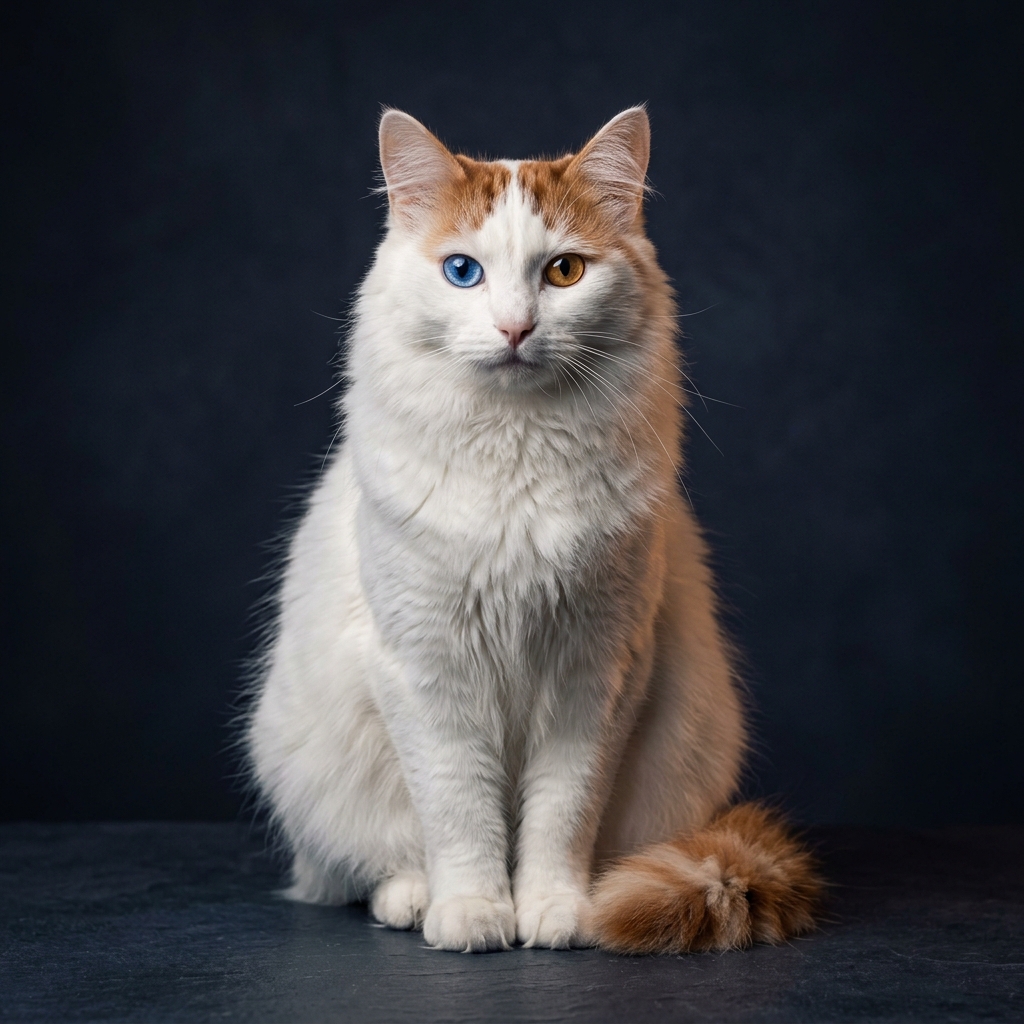
The Turkish Van is an ancient natural landrace breed originating near Lake Van in Türkiye, famous for its distinct ‘Van pattern’ (chalk-white body with color restricted to the head and tail) and striking odd-eyes (heterochromia). Unlike most domestic cats, the Turkish Van possesses a unique, cashmere-like single coat that is naturally water-resistant, giving them a legendary affinity for swimming and water play. However, their muscular build and high intelligence require generous vertical spaces and interactive hunting play to prevent boredom. Additionally, odd-eyed individuals with blue eyes carry a genetic link to congenital sensorineural deafness, requiring dedicated hearing checks. Furthermore, thorough drying of the inner ear and coat after water encounters is crucial to prevent otitis externa and skin dermatitis. In this guide, we cover Turkish Van behavior signals, water safety, and a 3-step care routine.
Veterinary & Behavioral Evidence
This content is based on International Society of Feline Medicine (ISFM) Clinical Guidelines and TICA/CFA Breed Conservation Standards.
 FreshSelf
Keep pet food and supplements perfectly fresh!
FreshSelf
Keep pet food and supplements perfectly fresh!








1. Turkish Van Instincts: Water Tapping and Plumed Tail Puffing
Turkish Van Instincts: Water Tapping and Plumed Tail Puffing
Instead of fleeing from water, Turkish Vans curiously tap water surfaces with their paws or voluntarily wade into shallow water. When overexcited or startled, they express emotion by puffing up their large, plumed tail.
2. Turkish Van Cat (Van Kedisi)‘s Body Language & Behavioral Signals
Water Surface Tapping & Voluntary Entry
A unique, instinctual play behavior expressing intense curiosity and pleasure toward water.
Provide shallow, lukewarm water and place non-slip mats around the play area to prevent slipping accidents.
Ear Flattening & Sound Unresponsiveness
Possible congenital deafness in the ear corresponding to the blue eye, or a signal of sensory overload.
Communicate using visual gestures and floor vibrations, and consult a vet for a BAER hearing test.
3. Customized 3-Step Home Care Routine for Turkish Van Cat (Van Kedisi)
Morning: Odd-Eye Health & Hearing Check & Single-Coat Brushing
Inspect eyes for discharge, verify sound responsiveness, and gently brush the water-resistant cashmere coat.
Afternoon: High Vertical Climbing & Interactive Hunting Play
Provide tall cat trees to accommodate their jumping ability, using puzzle feeders and wand toys to channel energy.
Evening: Water Play Safety Supervision & Ear Drying Care
Supervise shallow water interactions, thoroughly dry inner ears to prevent ear infections, and towel-dry the coat.
📌 Frequently Asked Questions (FAQ)
Do Turkish Vans really love swimming? Can I force bath them? ▼
While Turkish Vans naturally enjoy water, forcing them into a bath or submerging them against their will causes severe trauma. Always allow voluntary access to shallow lukewarm water, and ensure their inner ears are dried thoroughly afterward to prevent infections.
Is an odd-eyed Turkish Van with a blue eye more likely to be deaf? ▼
Yes. The white coat and blue-eye gene (W gene) can affect inner ear development, leading to congenital deafness on the side of the blue eye. Have your vet perform a BAER hearing test and use visual gestures or vibrations for communication if hearing is impaired.