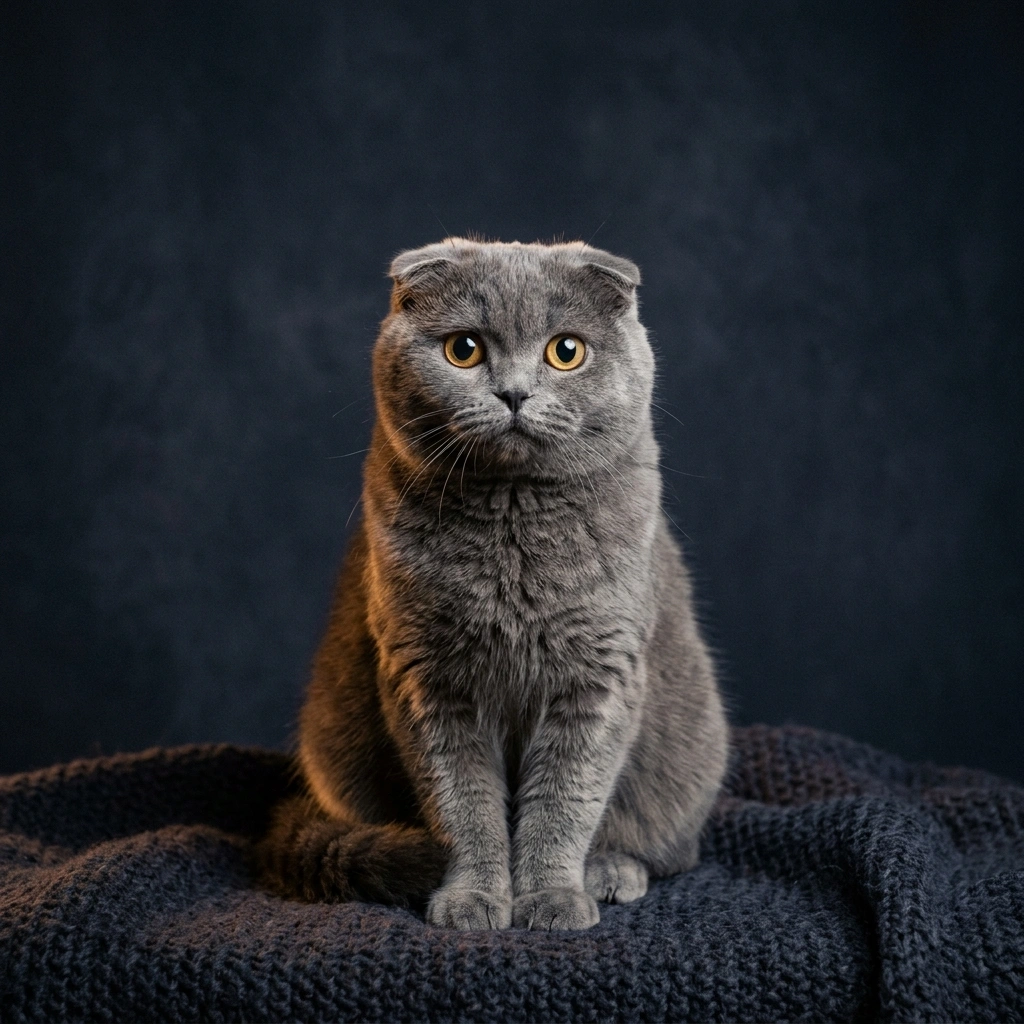
Scottish Folds capture hearts worldwide with their forward-folded ears, round eyes, and owl-like or bear-like appearance. They possess a quiet, sweet, and gentle nature, enjoying peaceful companionship right by their owner’s side. 🐈
However, behind the charm of their folded ears lies a serious genetic condition called Osteochondrodysplasia (hereditary cartilage disease). The same gene responsible for folding their ear cartilage also affects bone and cartilage development throughout their body, leading to joint stiffness and chronic pain in their limbs and tail. Furthermore, because their folded ears restrict natural airflow, moisture and debris build up easily, making them highly susceptible to chronic ear mites and otitis externa (ear infections).
In this guide, decodes the physical signals Scottish Folds display when experiencing pain and outlines a tailored 3-step care routine to minimize joint impact and maintain optimal ear hygiene.
Veterinary & Behavioral Evidence
This content is based on Official ISFM (International Society of Feline Medicine) Hereditary Cartilage Protocol & GCCF Breed Guidelines.
 FreshSelf
Keep pet food and supplements perfectly fresh!
FreshSelf
Keep pet food and supplements perfectly fresh!



1. Fold Body Language: Buddha Position and Tucking the Tail
Fold Body Language: Buddha Position and Tucking the Tail
Scottish Folds use unique postures to manage genetic bone and joint pain. The two most prominent warning signals are the 'Buddha position' and 'tail lowering or tucking'. Sitting upright on their buttocks with their spine against a surface and legs extended forward (Buddha position) is not a cute trick; it is an instinctive resting posture designed to disperse their body weight and relieve severe pressure from stiff hocks and leg joints. Lowering their tail or tucking it tightly between their hind legs signals that the caudal vertebrae are stiffening or painful. When you observe these behaviors, avoid touching their tail, lower back, or hips.
2. Scottish Fold’s Body Language & Behavioral Signals
Buddha Position
An instinctive posture assumed to disperse body weight pressure and alleviate joint pain caused by genetic cartilage disease.
Do not force them to change posture. Place a soft cushion behind their back to support their resting position comfortably.
Tail Lowering / Tucking
A defensive reaction indicating stiffness or pain in the tail vertebrae, rejecting physical contact on the lower spine.
Immediately stop touching their tail and lower back, and gently guide them to a comfortable, padded mat.
3. Customized 3-Step Home Care Routine for Scottish Fold
Morning: Gait Monitoring and Cartilage Support Supplements
Observe their gait for 30 seconds as they wake up to check for limping or morning stiffness. Administer cartilage-supporting supplements (glucosamine, chondroitin, MSM, or Omega-3s) mixed into their morning meal.
Afternoon: Ear Canal Inspection and Weekly Aeration Cleaning
Folded ears trap humidity and lack natural airflow. Never use cotton swabs inside the ear canal. Apply a few drops of specialized feline ear cleaner into the canal, gently massage the base of the ear, allow the cat to shake its head, and wipe away loosened debris from the outer ear entrance with a clean cotton pad.
Evening: Impact-Absorbing Floor Mats and Low-Impact Play
Jumping down from cat trees or furniture creates harsh impact forces on stiffened cartilage. Install anti-slip, shock-absorbing mats along their landing paths, and engage in low-intensity ground play that avoids high jumps or sharp twists.
📌 Frequently Asked Questions (FAQ)
Is the Scottish Fold's human-like 'Buddha position' a sign of pain? ▼
Yes, absolutely. Sitting upright on their buttocks with legs extended forward is an instinctive response to disperse body weight away from their inflamed leg and ankle joints, relieving severe osteochondrodysplasia pain.
Why shouldn't I use cotton swabs to clean a Scottish Fold's ears? ▼
Because of their folded structure, the ear canal is narrow and curved. Inserting cotton swabs pushes wax and debris deeper into the canal and can scratch the delicate skin lining, causing severe bacterial or yeast ear infections (otitis externa).