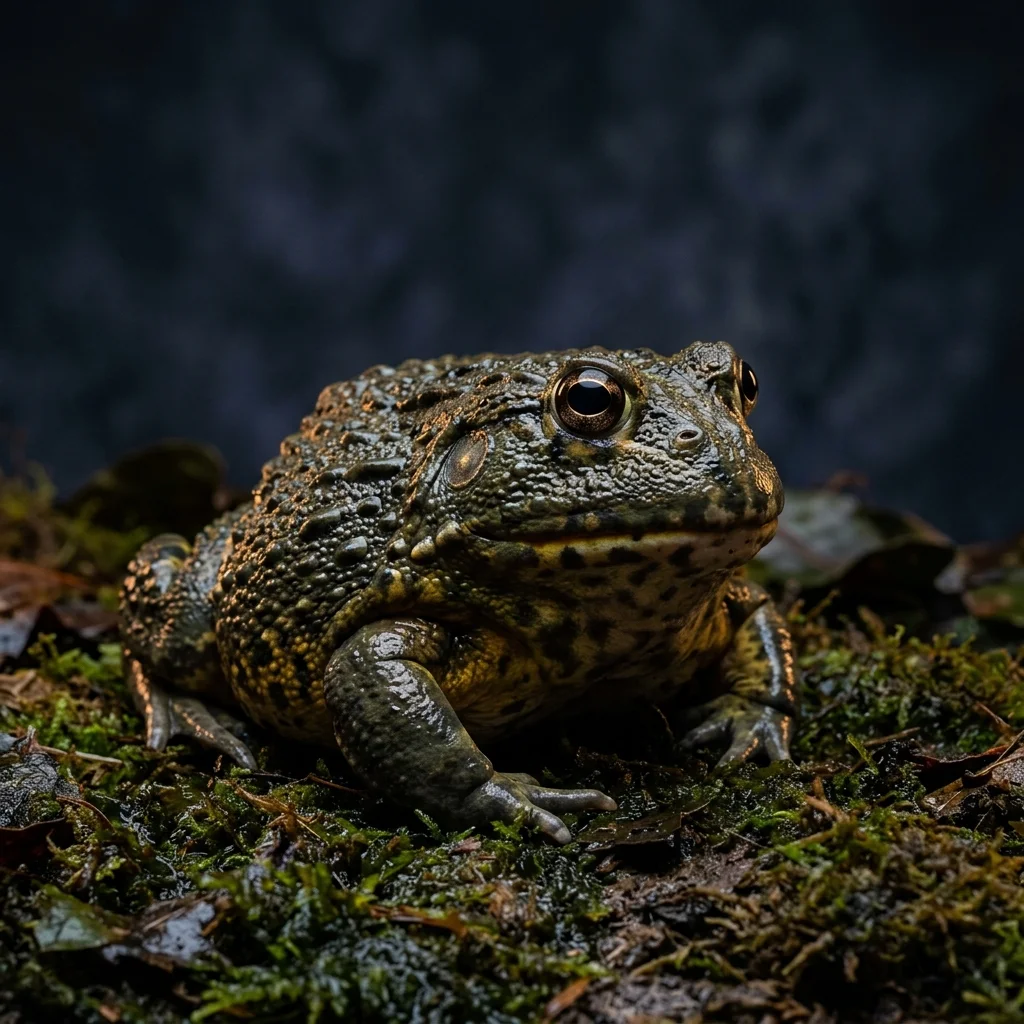
The African Bullfrog is a massive amphibian reaching 1–2 kg. Armed with tooth-like odontoid processes, they are apex ambush predators. Due to permeable skin, they are highly sensitive to chlorine and ammonia. When conditions dry out, they form a cocoon and enter estivation, often refusing food. In this guide, outlines water quality and anorexia prevention care.
Veterinary & Behavioral Evidence
This content is based on Association of Reptilian and Amphibian Veterinarians (ARAV) Guidelines.
 FreshSelf
Keep pet food and supplements perfectly fresh!
FreshSelf
Keep pet food and supplements perfectly fresh!




1. African Bullfrog Instincts: Lung Inflation Threats and Estivation Cocoon Cues
African Bullfrog Instincts: Lung Inflation Threats and Estivation Cocoon Cues
When threatened, African Bullfrogs adopt a 'Lung Inflation' posture, doubling in size. If humidity drops, they harden dried mucous into a sheath buried underground in 'Cocoon Estivation'.
2. African Bullfrog / Pixie Frog (Pyxicephalus adspersus)‘s Body Language & Behavioral Signals
Lung Inflation & Gaping
Puffing up with air and opening the mouth to reveal jaw spikes, signaling defensive aggression.
Avoid physical contact; retreat softly to maintain a quiet, dark environment.
Substrate Burrowing & Cocoon Formation
Enclosing in a hardened sheath underground, signaling estivation due to low humidity or cold.
Increase humidity and warm-bathe the frog gently in lukewarm dechlorinated water (28–30°C) to dissolve the sheath.
3. Customized 3-Step Home Care Routine for African Bullfrog / Pixie Frog (Pyxicephalus adspersus)
Morning: Dechlorinated Water Refresh & Ammonia Check
Replace water daily using dechlorinated water to prevent toxic shock and ammonia buildup.
Afternoon: Substrate Moisture (70–80%) & Temp Check (25–28°C)
Maintain moist substrate, mist thoroughly, and monitor temperatures with under-tank heat sources.
Evening: Calcium-Dusted Feeding & Waste Cleaning
Feed calcium-dusted feeder insects and immediately scoop out waste to protect sensitive skin.
📌 Frequently Asked Questions (FAQ)
Is tap water safe for an African Bullfrog? ▼
No. Amphibian skin absorbs water directly; chlorine and heavy metals cause toxic shock. Always use dechlorinated or conditioned water.
What should I do if my Pixie Frog burrows and refuses food? ▼
It has entered estivation. Raise temperature to 26–28°C, moisten substrate, and bathe in 28–30°C dechlorinated water to dissolve the cocoon and revive appetite.