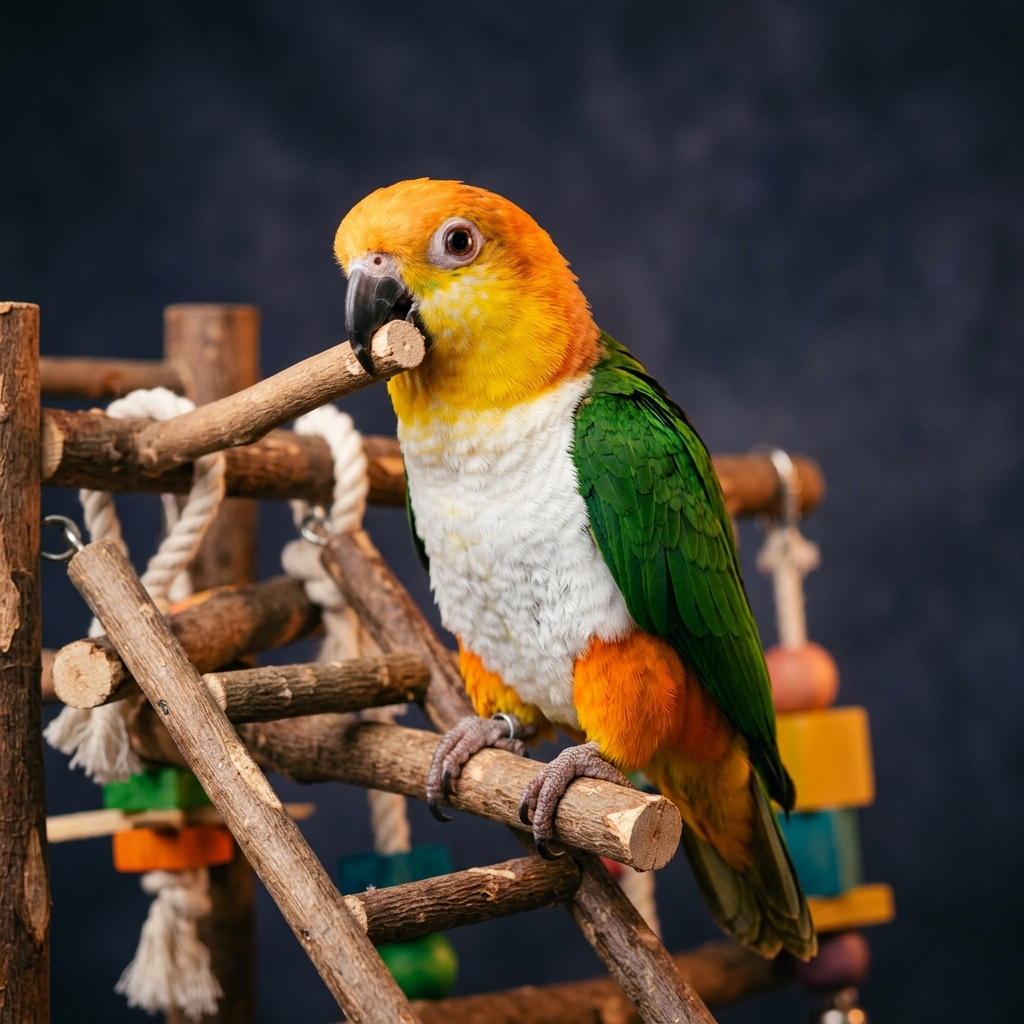
The White-bellied Caique (Pionites leucogaster) is a vibrant medium-sized South American parrot famous for its striking plumage, white chest, and unique habit of hopping on two feet like a bunny—earning it the title ‘The Beagle of the Parrot World.’ Highly energetic and affection-seeking, caiques love interactive wrestling play and acrobatics, making them top favorites among parrot enthusiasts worldwide. However, their intense curiosity and powerful chewing drive demand a continuous supply of foraging and destruction toys; without mental stimulation, they can develop destructive behaviors, excessive screaming, or feather plucking. Furthermore, maintaining a strict 10–12 hour dark sleep routine is critical to prevent hormonal aggression. In this guide, we outline caique behavior signals, enrichment setups, and a 3-step daily care routine.
Veterinary & Behavioral Evidence
This content is based on Association of Avian Veterinarians (AAV) Clinical Guidelines and World Parrot Trust (WPT) Captive Care Standards.
 FreshSelf
Keep pet food and supplements perfectly fresh!
FreshSelf
Keep pet food and supplements perfectly fresh!




1. White-bellied Caique Instincts: Bunny-Hopping and Eye Pinning Signals
White-bellied Caique Instincts: Bunny-Hopping and Eye Pinning Signals
Caiques hop rhythmically on two feet across floors and branches when excited or happy. However, rapid eye pinning (pupil constriction) accompanied by flared feathers indicates extreme excitement or a warning before an impending bite.
2. White-bellied Caique (Pionites leucogaster)‘s Body Language & Behavioral Signals
Two-Foot Hopping & Play Rolling
A joyful expression of peak energy and eagerness to play; a completely healthy and friendly social signal.
Provide foot toys or shreddable materials and engage in active playgym sessions to channel their energy.
Eye Pinning & Tail Fanning
Indicates sensory overload, territorial aggression, or extreme overexcitement—a warning that a bite may occur.
Do not attempt to touch or handle them; pause play immediately and step back until the bird calms down.
3. Customized 3-Step Home Care Routine for White-bellied Caique (Pionites leucogaster)
Morning: Uncovering Cage & Fresh Chop/Pellet Service
Remove night covers after 10–12 hours of sleep, providing fresh water alongside nutritionally balanced pellets and fresh vegetable/fruit chop.
Afternoon: Toy Rotation & Positive Reinforcement Training
Rotate wood/paper destruction toys to satisfy chew instincts, and conduct clicker or target training to fulfill intellectual needs.
Evening: Perishable Food Removal & 10–12 Hour Dark Sleep Setup
Clean leftover fresh chop to prevent spoilage, and cover the cage in a quiet, dark room to ensure proper rest.
📌 Frequently Asked Questions (FAQ)
Why do caiques require so many chewable and destruction toys? ▼
Caiques possess an extraordinarily high play drive and beak workout impulse. They relieve stress by destroying wood, cardboard, and paper. Without destruction toys, they may turn to chewing furniture or develop feather plucking and screaming habits.
How can I reduce caique biting and overexcited aggression? ▼
If a caique bites during play, never yell or react dramatically, as they perceive loud reactions as positive drama rewards. Instantly freeze and withdraw attention. Additionally, guarantee 10–12 hours of dark, uninterrupted sleep nightly to keep hormone levels stable.