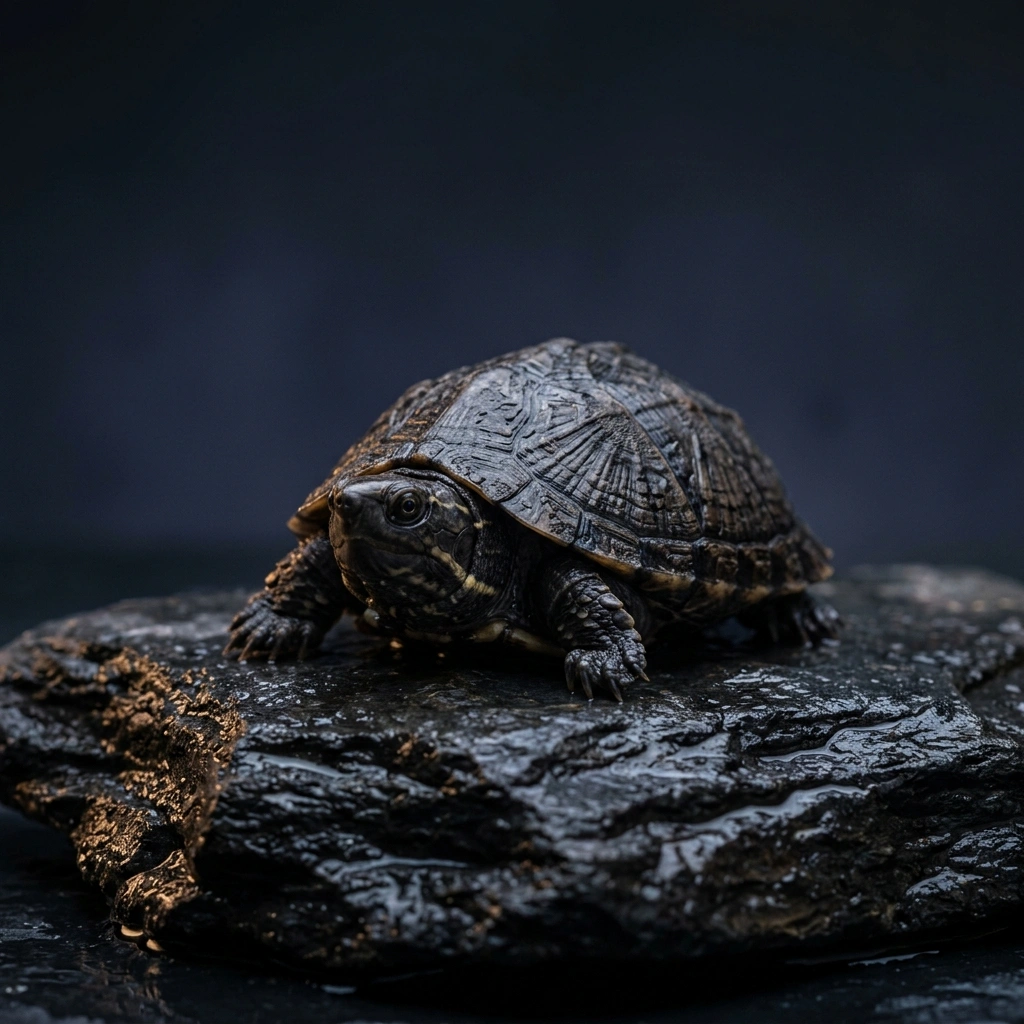
The compact Common Musk Turtle is ideal for beginners due to its resilient nature and minimal tank size requirements. Although they spend most of their time in water, regular dry basking under a UV lamp is essential for shell disinfection, vitamin D synthesis, and maintaining body temperature. Poor water quality and lack of dry basking can lead to painful shell rot (ulcerative shell disease). In this guide, we explain their basking body language and relaxation signals, along with a 3-step tank management routine for crystal-clear water and healthy shell care.
Veterinary & Behavioral Evidence
This content is based on World Chelonian Association Basking Guidelines and Aquatic Turtle Veterinary Protocols.
 FreshSelf
Keep pet food and supplements perfectly fresh!
FreshSelf
Keep pet food and supplements perfectly fresh!





1. Common Musk Turtle Basking Signals and Shell Retraction Defense
Common Musk Turtle Basking Signals and Shell Retraction Defense
Common Musk Turtles stretch their hind legs backward while basking on land 'Back-Leg Stretching' to maximize surface area absorption when completely at ease. Conversely, when sensing sudden shadows or vibrations, they perform a 'Shell Retraction' defense, pulling their head and limbs into their hard shell to protect themselves.
2. Common Musk Turtle (Sternotherus odoratus)‘s Body Language & Behavioral Signals
Back-Leg Stretching on Basking Area
A relaxed state under the UV lamp, loosening tension and stretching limbs to absorb heat and dry skin.
Avoid approaching suddenly so as not to startle them into jumping back into the water. Monitor the basking lamp from a distance.
Retracting Head and Limbs into Shell (Shell Retraction)
A state of high vigilance triggered by overhead hands, shadows, or water vibrations.
Avoid sudden movements in front of the tank and step back until they feel safe enough to peek out again.
3. Customized 3-Step Home Care Routine for Common Musk Turtle (Sternotherus odoratus)
Morning: Water Temperature Check (25-28°C) & Balanced Feeding
Check the water thermometer (keep at 25-28°C) to stimulate active metabolic function and feed age-appropriate commercial turtle pellets in divided portions.
Afternoon: Checking Basking Lamp and UV-B Bulbs
Ensure UV-B and basking heat lamps are functioning properly to prevent metabolic bone disease (MBD) caused by vitamin D deficiency.
Evening: Removing Food Leftovers & Weekly Water Changes
Siphon out waste and leftovers. Clean filter media and perform a 30% weekly water change using aged dechlorinated water.
📌 Frequently Asked Questions (FAQ)
Is it safe to fill the turtle tank directly with tap water? ▼
No. Chlorine in tap water irritates a turtle's sensitive ocular mucous membranes and skin, causing dryness or swelling. Use water aged for at least 24 hours or dechlorinating drops.
Is it normal for my turtle's shell plates to peel off? ▼
Yes. As turtles grow, they shed old scutes, which peel off as thin, translucent pieces called 'scute shedding'. However, if you see white slimy discharge, a soft shell, or foul odor, it indicates a bacterial infection like shell rot and requires veterinary care.