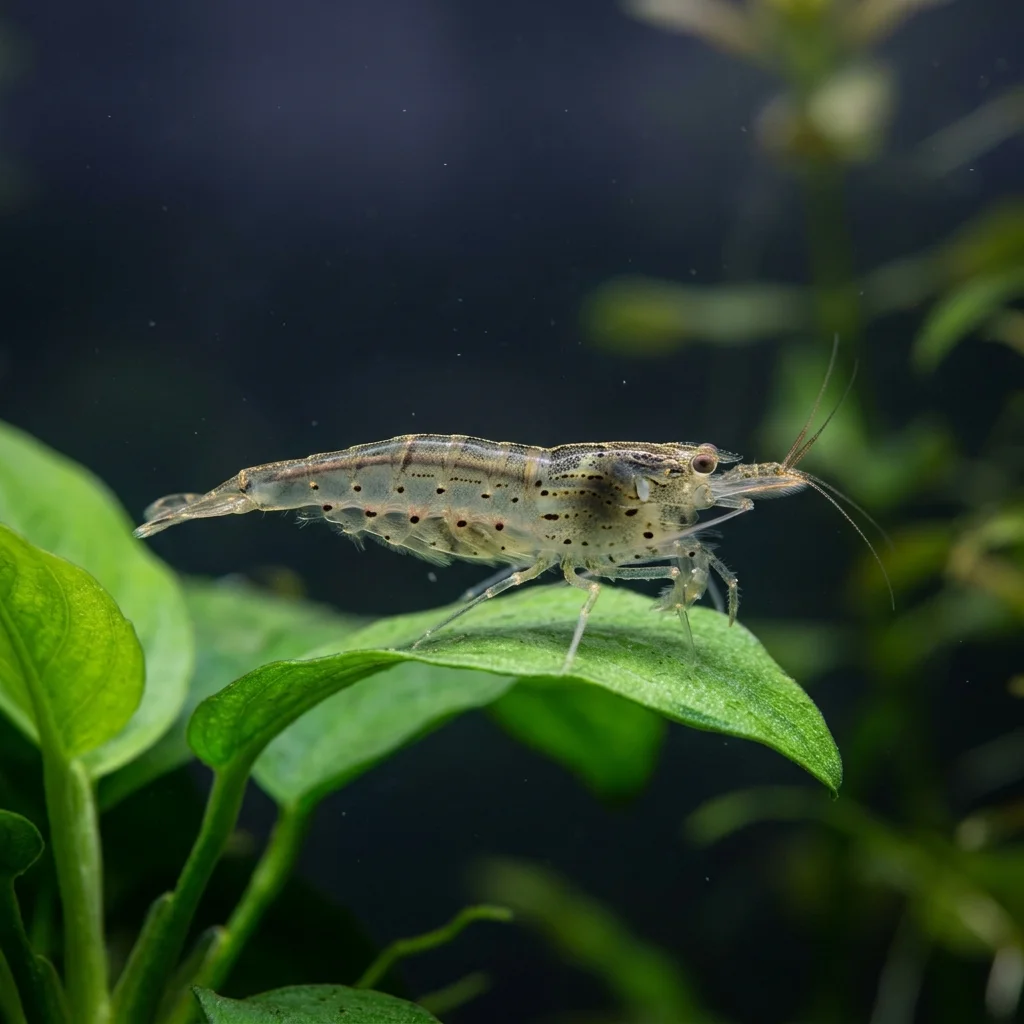
Renowned as the premier algae cleanup crew in planted aquariums, the Amano Shrimp (Caridina multidentata) is a translucent freshwater crustacean with dark lateral dots. While they tirelessly consume hair and thread algae, they are acutely sensitive to heavy metals (especially copper), elevated nitrates, and sudden shifts in water parameters or temperature. Poor water quality often triggers desperate tank escapes or fatal molting complications. In this guide, details a 3-step daily routine to safeguard your Amano Shrimp.
Veterinary & Behavioral Evidence
This content is based on Ornamental Aquatic Trade Association (OATA) Guidelines & Freshwater Invertebrate Clinical Standards.
 FreshSelf
Keep pet food and supplements perfectly fresh!
FreshSelf
Keep pet food and supplements perfectly fresh!





1. Amano Shrimp Water Signals: Surface Climbing (Poisoned Water Signal) and Opaque White Discoloration
Amano Shrimp Water Signals: Surface Climbing (Poisoned Water Signal) and Opaque White Discoloration
If Amano Shrimp 'climb up filter outlets or crawl near the water surface attempting to escape', it is a critical emergency signal of oxygen depletion, high nitrates, or chemical toxicity. Conversely, 'body color turning opaque milky white or reddish with lethargy' warns of copper poisoning, osmotic shock, or impending molting failure.
2. Amano Shrimp (Caridina multidentata)‘s Body Language & Behavioral Signals
Surface Climbing & Frantic Glass Swimming
Indicates dangerous water parameter spikes (ammonia/nitrate), low dissolved oxygen, or toxins prompting escape behavior.
Perform an immediate 30% water change using conditioned water, boost aeration, and securely cover all tank gaps to prevent escape.
Opaque White Body & Lethargy
A symptom of copper or medication poisoning, osmotic shock, or mineral deficiencies leading to failed molting.
Check fertilizers/medications for trace copper (Cu), add activated carbon to the filter to absorb toxins, and feed calcium-rich shrimp food.
3. Customized 3-Step Home Care Routine for Amano Shrimp (Caridina multidentata)
Morning: Water Temperature, Filtration & Tank Escape Check
Check water temperature (22–26°C / 72–78°F), verify filter operation, and inspect tank lids and surrounding areas for escapees.
Afternoon: Algae Grazing Observation & Exoskeleton Care
Observe active algae grazing and leave shed exoskeletons in the tank for 1–2 days so shrimp can reabsorb vital calcium.
Evening: Nitrate Parameter Check & Sinking Pellet Feeding
Supplement with a small amount of sinking shrimp pellets or blanched spinach if algae is scarce, removing uneaten food promptly.
📌 Frequently Asked Questions (FAQ)
Why do Amano Shrimp die suddenly after water changes or medication? ▼
As invertebrates, Amano Shrimp are extremely sensitive to copper (Cu), algicides, fish medications, chlorine, and osmotic shock. Always drip-drip conditioned water during water changes and ensure zero copper ingredients in aquarium additives.
Can Amano Shrimp breed successfully in a freshwater aquarium? ▼
No. While females lay eggs in freshwater, the hatched larvae (zoea) require brackish water with specific salinity to survive and develop. In pure freshwater, the larvae will perish within a few days.