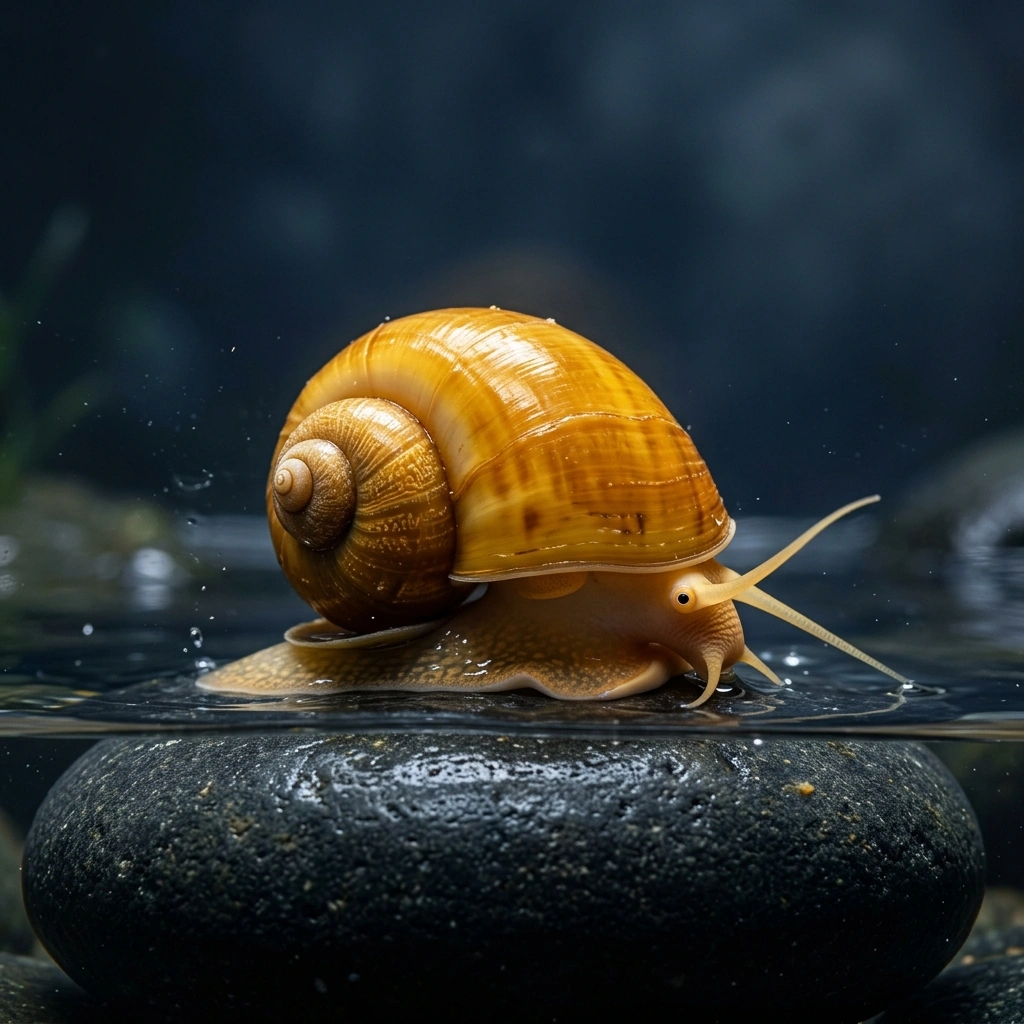
The Apple Snail, commonly known as the Mystery Snail (Pomacea bridgesii), is a globally popular aquatic invertebrate prized for its vibrant shell colors ranging from golden yellow and magenta to violet and blue. Outstanding scavengers of leftover food and algae, they feature long sensory tentacles and a breathing siphon. However, soft or acidic water erodes their calcium-based shells, causing pitting and deterioration. Furthermore, their instinct to lay egg clutches above the waterline makes secure tank covers mandatory to prevent fatal falls and escapes. In this guide, we decode Mystery Snail behavioral signals and present a 3-step homecare routine for shell calcium maintenance, escape prevention, and planted tank cohabitation.
Veterinary & Behavioral Evidence
This content is based on Ornamental Fish International (OFI) Water Quality Standards and Invertebrate Veterinary Guidelines.
 FreshSelf
Keep pet food and supplements perfectly fresh!
FreshSelf
Keep pet food and supplements perfectly fresh!





1. Mystery Snail Instincts: Tentacle Sensing and Surface Climbing
Mystery Snail Instincts: Tentacle Sensing and Surface Climbing
Mystery Snails send clear physical signals regarding their environment. In clean, safe water, they extend long sensory tentacles to scavenge for food. When oxygen levels drop, water turns acidic, or females prepare to lay eggs, they climb up walls above the waterline and extend their breathing siphon or attempt to escape the tank.
2. Apple Snail / Mystery Snail (Pomacea bridgesii)‘s Body Language & Behavioral Signals
Tentacle & Siphon Extension
Normal exploratory behavior in safe water; extending the breathing siphon near the surface allows atmospheric air intake.
Ensure no nipping fish species (like Tiger Barbs or Cichlids) attack their delicate sensory tentacles.
Surface Climbing & Trapdoor Withdrawal
An indicator of egg-laying behavior, low dissolved oxygen, or high toxins (ammonia/nitrates). Remaining sealed in their shell via operculum indicates severe stress or poor water quality.
Check lid seals immediately to prevent escapes, test water parameters for toxins, and perform a partial water change.
3. Customized 3-Step Home Care Routine for Apple Snail / Mystery Snail (Pomacea bridgesii)
Morning: GH/pH Water Check & Calcium Supplement Feeding
Maintain slightly alkaline pH (7.5–8.0) and high general hardness (GH 8–12) to protect shells, feeding calcium-fortified sinking pellets.
Afternoon: Lid Seal Inspection & Water Level Adjustment
Maintain a 5–10 cm air gap below the tank rim for breathing/egg laying, and seal all canopy gaps near filters to stop escape attempts.
Evening: Scavenging Observation & Live Plant Integrity Check
Observe their scavenging activity on substrate waste and verify that sturdy live plants (e.g., Anubias, Java Fern) remain healthy and intact.
📌 Frequently Asked Questions (FAQ)
Why is my Mystery Snail's shell turning white, pitting, or cracking? ▼
This is caused by acidic water (pH below 7.0) or low calcium hardness. Acidic water dissolves calcium carbonate, weakening the shell structure. Add cuttlebone, crushed coral, or liquid calcium supplements, and keep water slightly alkaline (pH 7.5–8.0).
Will Mystery Snails eat and destroy my live aquarium plants? ▼
True Mystery Snails (Pomacea bridgesii) have delicate rasping mouthparts that cannot eat healthy, tough live plants; they only consume decaying leaves and algae. However, the similar Channeled Apple Snail (Pomacea canaliculata) destroys live plants. Ensure proper species identification and pair with sturdy plants like Anubias or Java Fern.