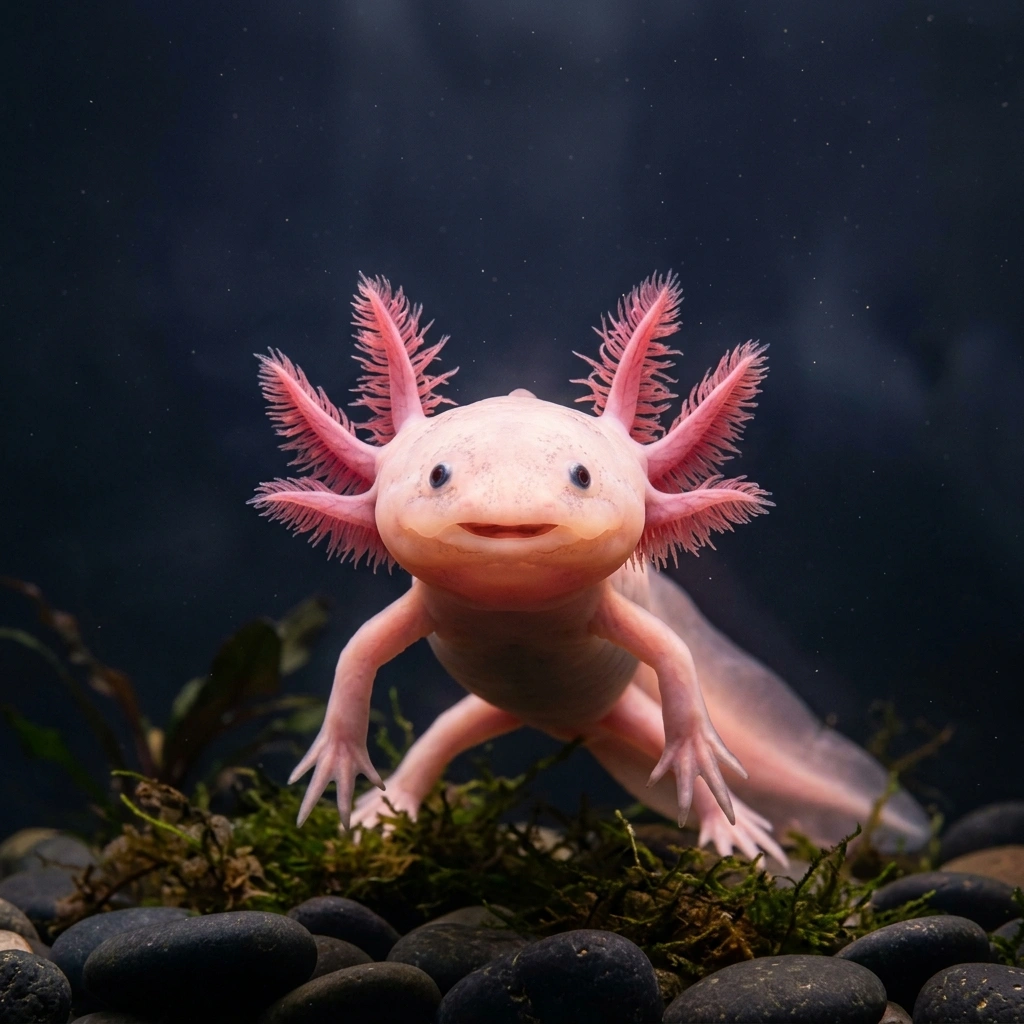
Beloved for their smiling expressions and pink external gills, the Axolotl is a rare amphibian pet with extraordinary body regeneration capabilities. According to the International Amphibian Ark Veterinary Protocol, axolotls breathe through cutaneous skin absorption and external gills, making them extremely vulnerable to water temperatures above 20°C. Keeping the water temperature cool at 16°C ~ 18°C and avoiding gravel substrates that can be swallowed are the core elements of their health care.
Veterinary & Behavioral Evidence
This content is based on International Amphibian Husbandry & Amphibian Ark Veterinary Care Protocol.
 FreshSelf
Keep pet food and supplements perfectly fresh!
FreshSelf
Keep pet food and supplements perfectly fresh!





1. Axolotl Physical Signals: Gill Curling and Mouth Gaping
Axolotl Physical Signals: Gill Curling and Mouth Gaping
An Axolotl's feathery red external gills serve as a clear indicator of water quality and temperature. Forward gill curling signals water quality deterioration or heat stress.
2. Axolotl (Mexican Walking Fish)‘s Body Language & Behavioral Signals
External Gills Curled Forward & Curled Tail (Gill Curling Forward)
An environmental stress warning caused by elevated water temperatures (above 20°C) or rising ammonia levels.
Turn on aquarium cooling fans to drop the temperature to 16°C ~ 18°C and immediately perform a partial water change (20%).
Staring Blankly at the Substrate & Mouth Gaping (Bottom Gaping)
A natural foraging signal indicating hunger or active hunting for food.
Gently offer specialized fish pellets or earthworms in front of their snout using blunt tweezers.
3. Customized 3-Step Home Care Routine for Axolotl (Mexican Walking Fish)
Morning: Water Temperature Monitoring (Maintain 16°C ~ 18°C) & Cooling System Check
Check cooling fan operation to ensure water temperature does not exceed 19°C in summer, and check for condensation on tank walls.
Afternoon: Siphon Waste Removal & Direct Sunlight Block
Maintain a dim tank environment for axolotls due to their poor eyesight, and pick up waste daily using a long siphon.
Evening: Tongs Hand-Feeding & Feathery Gill Circulation Check
Feed sinking fish/shrimp pellets carefully with blunt tweezers and observe whether blood flow in the feathery gills shows a healthy bright red color.
📌 Frequently Asked Questions (FAQ)
Can I use gravel on the bottom of an Axolotl tank? ▼
Absolutely not! Axolotls feed by powerful suction of surrounding water and substrate. Swallowing small gravel can cause fatal intestinal impaction. Use a bare-bottom tank or smooth stones larger than their head.
Why are my Axolotl's feathery gills shrinking and turning white? ▼
This indicates gill damage from water pollution or high temperatures, or a fungal infection (Saprolegnia). Lower the water temperature to 16°C and increase water changes.