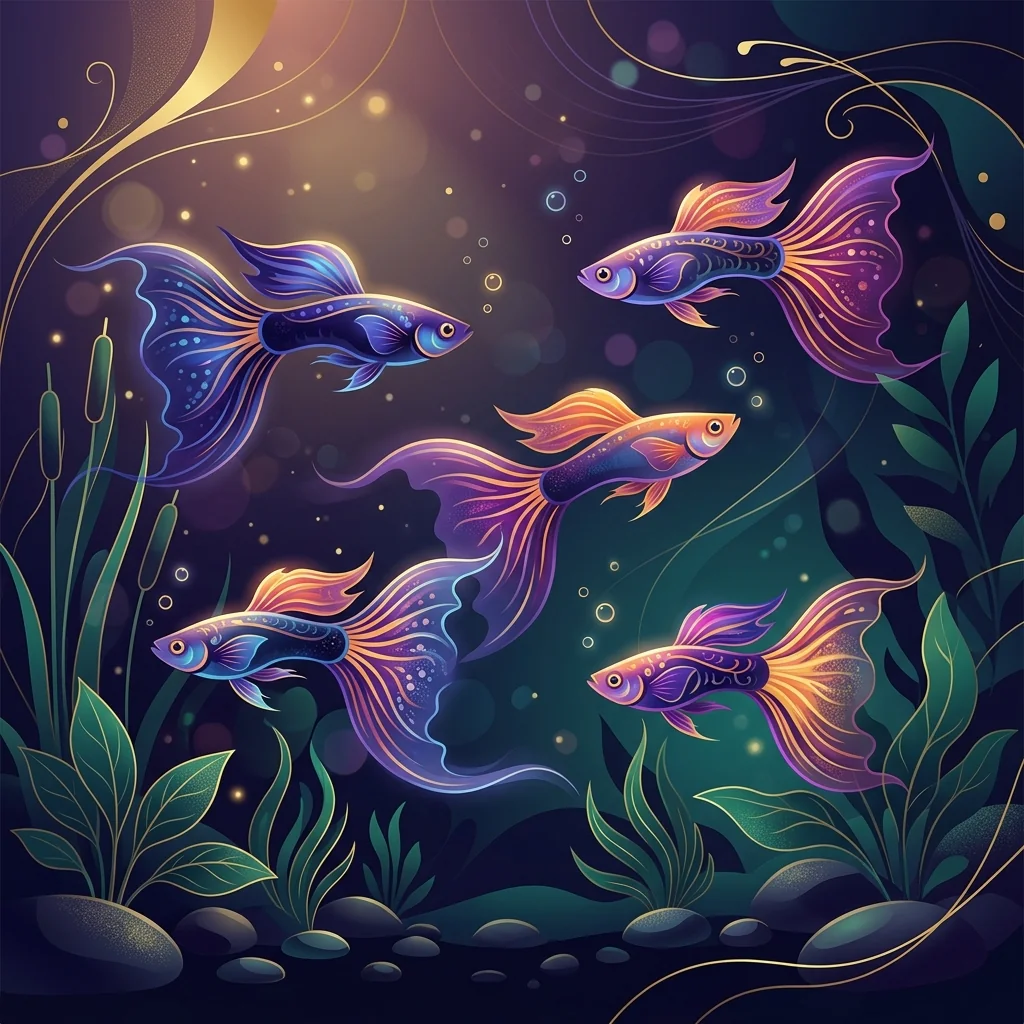
Renowned as both the beginner’s favorite and the expert’s treasure, the Guppy (Poecilia reticulata) is a widely loved livebearer freshwater fish. However, guppies are sensitive to poor filtration, ammonia spikes, and pH shock, which easily trigger Fin Rot or Clamped Fin disease. As livebearers that give birth to free-swimming fry rather than laying eggs, fry protection and pregnancy care are also essential. In this guide, presents a 3-step daily care routine to read your guppy’s physical signals and maintain pristine water parameters.
Veterinary & Behavioral Evidence
This content is based on International Fancy Guppy Association (IFGA) & Freshwater Aquarium Veterinary Care Protocols.
 FreshSelf
Keep pet food and supplements perfectly fresh!
FreshSelf
Keep pet food and supplements perfectly fresh!





1. Guppy Body Language: Clamped Fins and Surface Gasping
Guppy Body Language: Clamped Fins and Surface Gasping
Guppies communicate health and water quality through fin posture and swimming position. 'Clamped Fins'—holding the tail and dorsal fin tightly against the body while staying still—signals severe stress from ammonia accumulation or thermal shock. Conversely, 'Surface Gasping'—repeatedly mouthing at the water surface—is an urgent warning of low dissolved oxygen or gill damage from ammonia poisoning.
2. Guppy’s Body Language & Behavioral Signals
Clamped Fins & Staying Still in Corners (Clamped Fins)
An environmental stress warning caused by rising ammonia/nitrite levels, pH shock, or temperature fluctuations.
Immediately test water parameters for ammonia and perform a 20-30% partial water change with temperature-matched, dechlorinated water.
Repeated Mouthing at Water Surface (Surface Gasping)
A signal of low dissolved oxygen levels, filter failure, or impaired gill function due to ammonia toxicity.
Turn on an air diffuser/bubbler to boost oxygen, check filter flow, and verify water temperature (24°C–26°C).
3. Customized 3-Step Home Care Routine for Guppy
Morning: Water Temperature Check (24°C–26°C) & Small Portion Feeding
Check the thermometer and feed specialized guppy food in small amounts that can be consumed within 2–3 minutes to prevent food decay.
Afternoon: Substrate Waste Siphoning & Tank Wall Monitoring
Siphon out uneaten food and waste from the substrate to reduce ammonia load on the filtration system.
Evening: Fin Health Inspection (Fin Rot Check) & Partial Water Change
Inspect fins for white edges, fraying, or fungal spots, and perform a 10–20% partial water change with pre-conditioned water if necessary.
📌 Frequently Asked Questions (FAQ)
Why are my guppy's fins fraying, splitting, or turning white at the edges? ▼
This indicates Fin Rot, caused by poor water quality or bacterial infection (Columnaris). Since elevated ammonia/nitrite is the primary cause, perform frequent partial water changes and consider mild salt baths (0.3–0.5% concentration) or antibacterial treatments.
How can I tell if a female guppy is about to give birth? ▼
Her belly will flatten into a 'square' or L-shape, and the gravid spot near her anal fin will darken significantly. If she hides in corners or paces up and down the tank walls, move her to a breeding box to protect the fry.