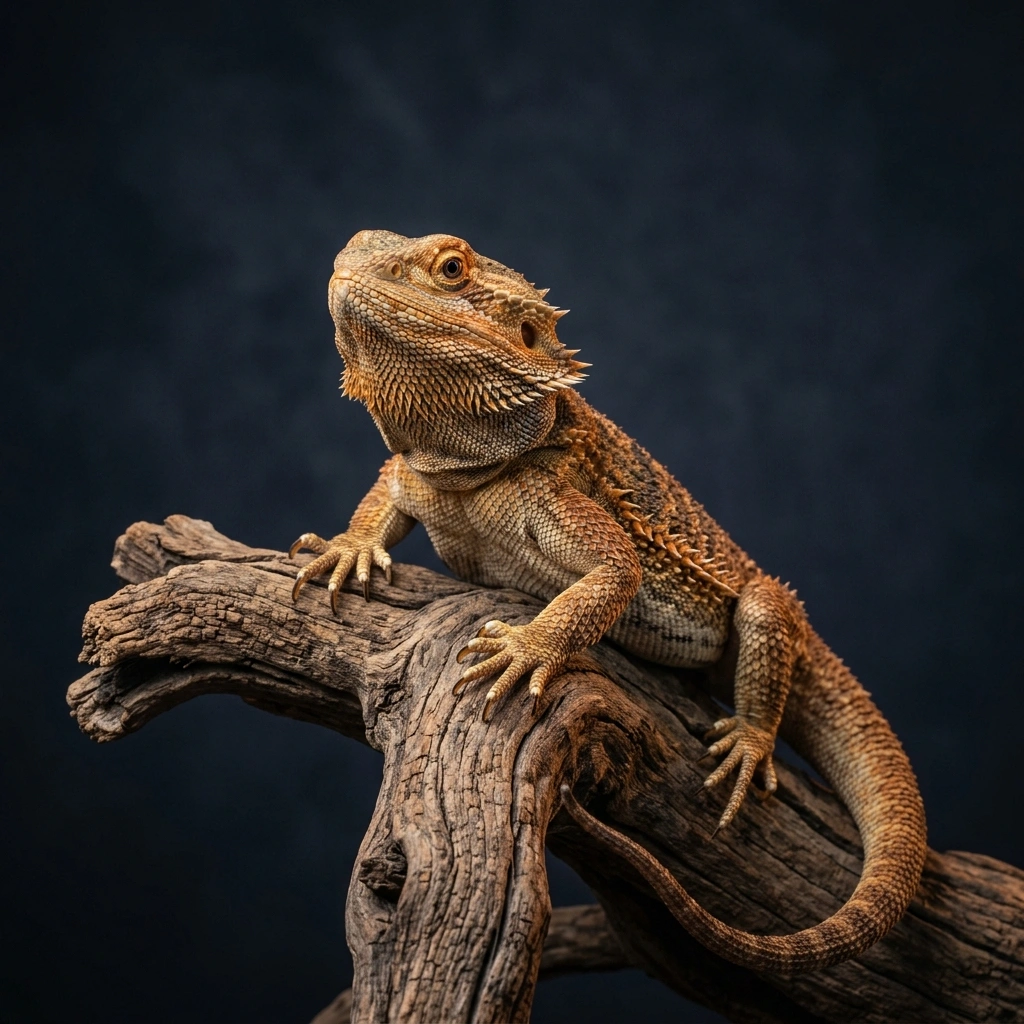
Bearded dragons are among the most popular reptile companions worldwide due to their gentle temperament and curious expressions. However, as ectothermic reptiles, they cannot regulate their own body temperature and rely entirely on external heat sources and UVB (ultraviolet B) lighting to digest food, synthesize vitamin D3, and absorb calcium. Without proper temperature gradients and UVB lighting, they easily develop Metabolic Bone Disease (MBD), which causes soft bones, deformities, and paralysis. In this guide, decodes bearded dragon social signals and outlines a 3-step daily lighting and calcium routine to safeguard their skeletal health.
Veterinary & Behavioral Evidence
This content is based on Association of Reptilian and Amphibian Veterinarians (ARAV) Husbandry Guidelines and herpetological clinical standard veterinary behavior.
 FreshSelf
Keep pet food and supplements perfectly fresh!
FreshSelf
Keep pet food and supplements perfectly fresh!








1. Bearded Dragon Behavioral Language: Head Bobbing and Arm Waving
Bearded Dragon Behavioral Language: Head Bobbing and Arm Waving
Bearded dragons use unique body language to display hierarchy and convey emotions. Rapidly bobbing their head up and down—known as 'Head Bobbing'—is a strong display of dominance, territorial claim, or high alertness. On the other hand, slowly waving one front leg in a wide circle—known as 'Arm Waving'—is a social signal of submission, pacification, and friendliness showing 'I am no threat'.
2. Bearded Dragon (Pogona vitticeps)‘s Body Language & Behavioral Signals
Head Bobbing (Rapid Head Shaking)
An assertion of dominance and territorial claim. It commonly occurs when seeing another individual or when getting excited after spotting their own reflection in glass.
House them individually as a strict rule to prevent cohabitation stress, and use anti-reflective sheets on glass walls to reduce environmental triggers.
Arm Waving (Slow Leg Circles)
A peaceful social signal of submission showing no harmful intent. It is communicated toward larger animals or their human keeper.
Approach them gently from a low angle, speak in a calm and reassuring voice, and offer a treat reward so they recognize the keeper as a safe presence.
3. Customized 3-Step Home Care Routine for Bearded Dragon (Pogona vitticeps)
Morning: Basking Heat & UVB Lamp Activation
Turn on basking spot heaters and UVB lamps. Ensure the basking spot reaches 35-40°C (95-105°F) so their body temperature rises enough to stimulate digestive enzymes.
Afternoon: Gut-Loaded Insect & Calcium-Dusted Feeding
Provide live insects dusted with calcium powder (containing D3 for indoor keeping) alongside fresh calcium-rich greens such as chicory and bok choy.
Evening: Temperature Drop Check & Nighttime Sleep Lighting
Turn off all enclosure lighting. Ensure the temperature drops naturally overnight to support proper metabolic rest, but keep it above 18°C (65°F) for safety.
📌 Frequently Asked Questions (FAQ)
How often should I replace my bearded dragon's UVB bulb? ▼
UVB bulbs stop emitting effective UV radiation long before they visually burn out. Regardless of visible light output, they must be replaced every 6 to 12 months.
What are the early warning symptoms of Metabolic Bone Disease (MBD)? ▼
Early signs include a soft lower jaw, swollen limb joints, muscle tremors, and slipping or dragging limbs while walking. If observed, upgrade lighting equipment immediately and consult a specialized reptile vet.