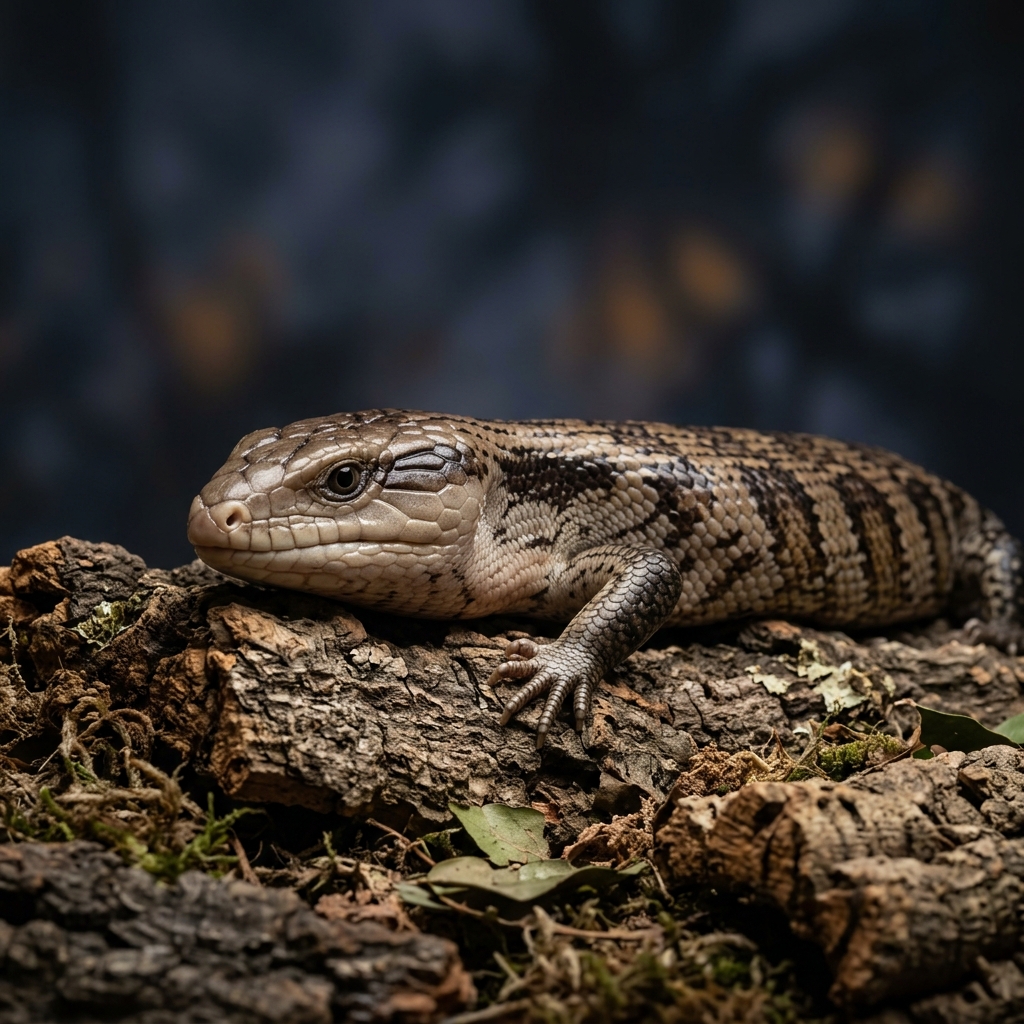
The Blue-tongued Skink (Tiliqua spp.) is a diurnal, terrestrial lizard native to Australia and Indonesia, famous for its vibrant blue tongue displayed when startled and its signature stocky body with short legs. Renowned in the reptile-keeping world for its dog-like docility and high intelligence, it is widely considered the ultimate medium-to-large starter lizard. However, because they are opportunistic omnivores in the wild, failing to balance their protein and vegetable ratios can quickly lead to obesity, vitamin deficiencies, or Metabolic Bone Disease (MBD). Additionally, maintaining a distinct thermal gradient with a hot basking zone and a cool side, along with providing a deep burrowing substrate, is vital for their physical and mental well-being. In this guide, we detail Blue-tongued Skink defense behaviors, omnivorous dietary guidelines, and a 3-step care routine.
Veterinary & Behavioral Evidence
This content is based on Association of Reptilian and Amphibian Veterinarians (ARAV) Clinical Guidelines and ReptiFiles Captive Care Standards.
 FreshSelf
Keep pet food and supplements perfectly fresh!
FreshSelf
Keep pet food and supplements perfectly fresh!







1. Blue-tongued Skink Instincts: Blue Tongue Display and Hissing Defense
Blue-tongued Skink Instincts: Blue Tongue Display and Hissing Defense
When threatened, Blue-tongued Skinks gape their mouths wide to expose their bright blue tongue as a visual warning to predators. Simultaneously, they flatten their bodies to appear larger and emit loud hissing sounds.
2. Blue-tongued Skink (Tiliqua spp.)‘s Body Language & Behavioral Signals
Blue Tongue Display & Open-Mouth Gaping
A strong defensive posture intended to startle predators into believing the skink is venomous or dangerous.
Cease handling or cage maintenance immediately, retract your hands, and allow the skink time to settle down.
Body Flattening & Hissing
An intimidation tactic designed to make the body appear wider and warn intruders to back away.
Avoid reaching down from directly above; approach slowly from below eye level to minimize fear.
3. Customized 3-Step Home Care Routine for Blue-tongued Skink (Tiliqua spp.)
Morning: Basking/UVB Lighting Activation & Thermal Gradient Check
Turn on UVB and basking spot lamps, verifying with a thermometer that the basking zone (35–38°C / 95–100°F) and cool side (22–26°C / 72–78°F) are properly set.
Afternoon: Burrowing Substrate Moisture & Water Dish Care
Maintain adequate substrate depth (cypress mulch, bark, or coco husk) to support natural burrowing habits, and provide clean, fresh drinking water.
Evening: Age-Appropriate Omnivorous Meal & Enclosure Cleaning
Offer a balanced mix of chopped greens, lean protein, and calcium powder tailored to age (Adults: 40–50% protein, 50% greens, <10% fruit), then spot-clean waste.
📌 Frequently Asked Questions (FAQ)
Can I feed dog or cat food to a Blue-tongued Skink? ▼
High-quality, grain-free adult cat or dog food can serve as a great protein base. However, it should never be fed alone due to high fat content. Always mix it with chopped calcium-rich leafy greens (dandelion greens, collard greens) and calcium supplements.
Do Indonesian and Australian Blue-tongued Skinks require different humidity levels? ▼
Yes, significantly. Australian species (like Northern Blue-tongued Skinks) thrive in drier environments (40–50% humidity), whereas Indonesian species (like Halmahera Skinks) originate from tropical rainforests and require high humidity (70–90%) to prevent shedding issues.