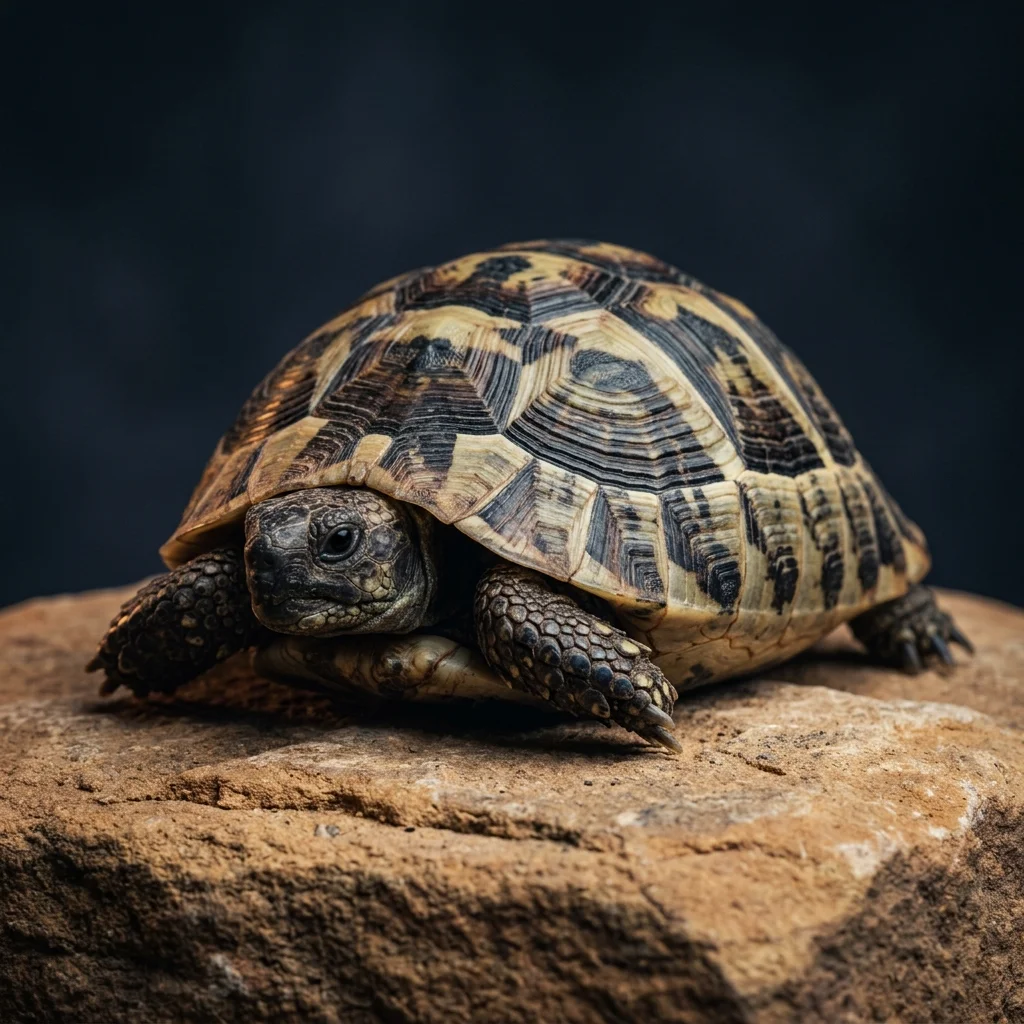
Characterized by its mosaic-patterned carapace and gentle temperament, the Greek Tortoise (Testudo graeca) is a classic Mediterranean species. As diurnal reptiles, they require strong UVB lighting for calcium absorption and proper thermal gradients. Without adequate hydration, calcium, and UVB, they risk pyramiding, Metabolic Bone Disease (MBD), and painful bladder stones from accumulated urates. In this guide, details a 3-step daily care routine for shell and renal health.
Veterinary & Behavioral Evidence
This content is based on World Turtle & Tortoise Association Standards & Exotic Reptile Clinical Guidelines.
 FreshSelf
Keep pet food and supplements perfectly fresh!
FreshSelf
Keep pet food and supplements perfectly fresh!


1. Greek Tortoise Physical Signals: Hard White Urate Discharge and Sunken Eyes with Lethargy
Greek Tortoise Physical Signals: Hard White Urate Discharge and Sunken Eyes with Lethargy
If a Greek Tortoise 'discharges hard, chalky white stones instead of soft toothpaste-like urates', it is suffering from severe dehydration. Conversely, 'withdrawing into its shell with closed eyes away from the basking area' warns of hypothermia, MBD, or respiratory illness.
2. Greek Tortoise (Testudo graeca)‘s Body Language & Behavioral Signals
Hard Chalky Urate Discharge
Indicates severe systemic dehydration where urates solidify into bladder stones inside the urinary system.
Soak in 30–35°C warm water for 15–20 minutes daily, offer hydrated greens, and adjust habitat humidity.
Lethargy & Closed Eyes
Caused by inadequate basking temperatures, MBD from lack of UVB, or an early-stage respiratory infection.
Raise the basking spot to 32–35°C, replace aging UVB bulbs, and inspect for nasal discharge or bubbles.
3. Customized 3-Step Home Care Routine for Greek Tortoise (Testudo graeca)
Morning: Basking & UVB Light On with Warm Water Soaking
Soak the tortoise in 30–35°C warm water for 15–20 minutes to elevate metabolic rate, encourage hydration, and stimulate urate passage.
Afternoon: High-Fiber Feeding & Thermal Gradient Check
Feed high-calcium, low-protein greens (endive, dandelion, collards) dusted with calcium, maintaining a basking zone (32–35°C) and cool zone (22–26°C).
Evening: Shell Cleaning & Nighttime Temperature Management
Wipe the carapace clean, turn off day lights, and maintain a night temperature of 20–22°C for restful sleep.
📌 Frequently Asked Questions (FAQ)
Can I feed fruits or animal protein to a Greek Tortoise? ▼
No. Greek tortoises are strict herbivores. Sugars in fruit disrupt gut flora, causing diarrhea, while excess protein leads to pyramiding and kidney failure. Feed high-fiber, low-protein leafy greens only.
What is pyramiding and how do I prevent it? ▼
Pyramiding is a shell deformity where scutes grow into unnatural conical pyramids. Caused by low humidity, excess protein, or insufficient calcium/UVB. Prevent it by maintaining 40–60% humidity, regular warm soaks, calcium supplementation, and strong UVB.