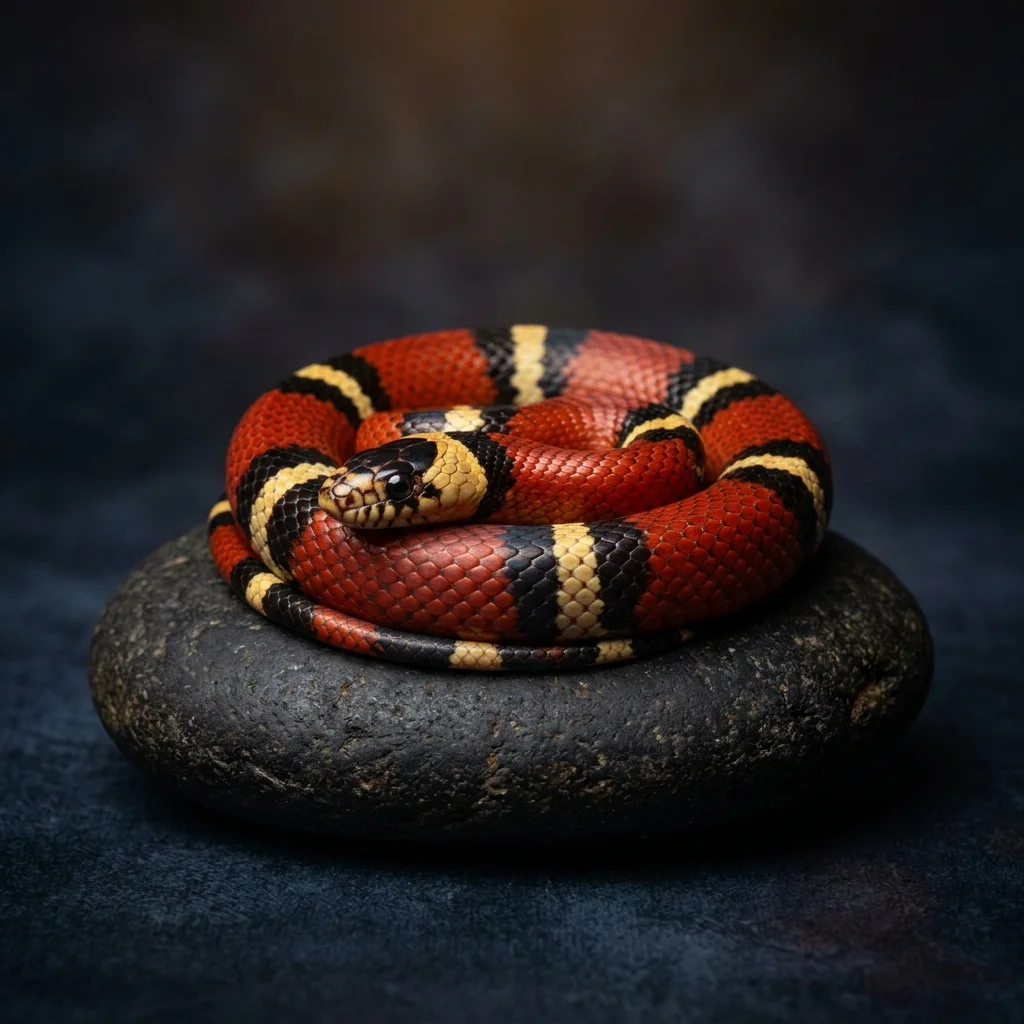
Alongside the Corn Snake and Ball Python, the Milk Snake is recognized as one of the top three most popular pet snakes globally. Known for its striking tri-color bands of red, black, and yellow or white, it serves as a textbook example of ‘Batesian Mimicry’—harmlessly imitating the venomous Coral Snake to ward off predators. Despite their formidable appearance, Milk Snakes are completely non-venomous and become docile with gentle care. As ectotherms, establishing a thermal gradient featuring a Cool Zone (24–26°C / 75–78°F) and a Hot Zone (29–31°C / 84–88°F) is crucial for digestion and thermoregulation. In this guide, outlines Milk Snake behavioral signals and shares a 3-step routine for optimal husbandry.
Veterinary & Behavioral Evidence
This content is based on Association of Reptilian and Amphibian Veterinarians (ARAV) Guidelines & Herpetological Clinical Protocols.
 FreshSelf
Keep pet food and supplements perfectly fresh!
FreshSelf
Keep pet food and supplements perfectly fresh!







1. Milk Snake Instincts: Batesian Mimicry, Tail Rattling, and Blue-Eye Shedding
Milk Snake Instincts: Batesian Mimicry, Tail Rattling, and Blue-Eye Shedding
When threatened, Milk Snakes employ defensive instincts such as 'Tail Rattling' against dry leaves to mimic a rattlesnake, or releasing a foul-smelling secretion known as 'Musking'. Prior to ecdysis (shedding), their eyes turn opaque due to fluid buildup, a phase known as 'Blue Eye Opacity', which temporarily impairs vision and increases nervousness.
2. Milk Snake (Lampropeltis triangulum)‘s Body Language & Behavioral Signals
Tail Rattling & Musking
Vibrating the tail rapidly or excreting unpleasant musking fluid, signaling defense warnings against perceived threats.
Halt handling immediately and return the snake to its quiet enclosure to calm down.
Blue Eye Opacity & Dull Coloration
Clouding of the spectacle eyes and dulling of skin coloration, indicating imminent skin shedding (ecdysis).
Raise ambient humidity to 70%+ or provide a humid hide, and suspend feeding until shedding completes.
3. Customized 3-Step Home Care Routine for Milk Snake (Lampropeltis triangulum)
Morning: Thermal Gradient Check (Cool 24–26°C / Hot 29–31°C) & Fresh Water
Verify temperature zones using digital thermometers and replace water in a dish large enough for full body soaking.
Afternoon: Humidity Monitoring (40–60%) & Spot Cleaning
Monitor baseline humidity, spot-clean fecal waste promptly, and inspect hide conditions.
Evening: Thawed Rodent Feeding Schedule & Nighttime Observation
Offer appropriately sized thawed frozen mice (hatchlings every 5–7 days; adults every 10–14 days) and refrain from handling for 48 hours post-feeding to prevent regurgitation.
📌 Frequently Asked Questions (FAQ)
Can I cohabitate two Milk Snakes in the same enclosure? ▼
Absolutely not. Milk Snakes belong to the Kingsnake genus (Lampropeltis) and are famous for ophiophagy—the instinct to eat other snakes. Co-housing will inevitably lead to cannibalism where one snake consumes the other. House them individually at all times.
Are Milk Snakes venomous despite their bright red warning pattern? ▼
No, they are completely non-venomous. Their bright pattern is a classic example of Batesian Mimicry, mimicking venomous Coral Snakes. In North America, the rhyme 'Red on black, friend of Jack; red on yellow, kill a fellow' helps distinguish harmless Milk Snakes (where red touches black) from venomous Coral Snakes.