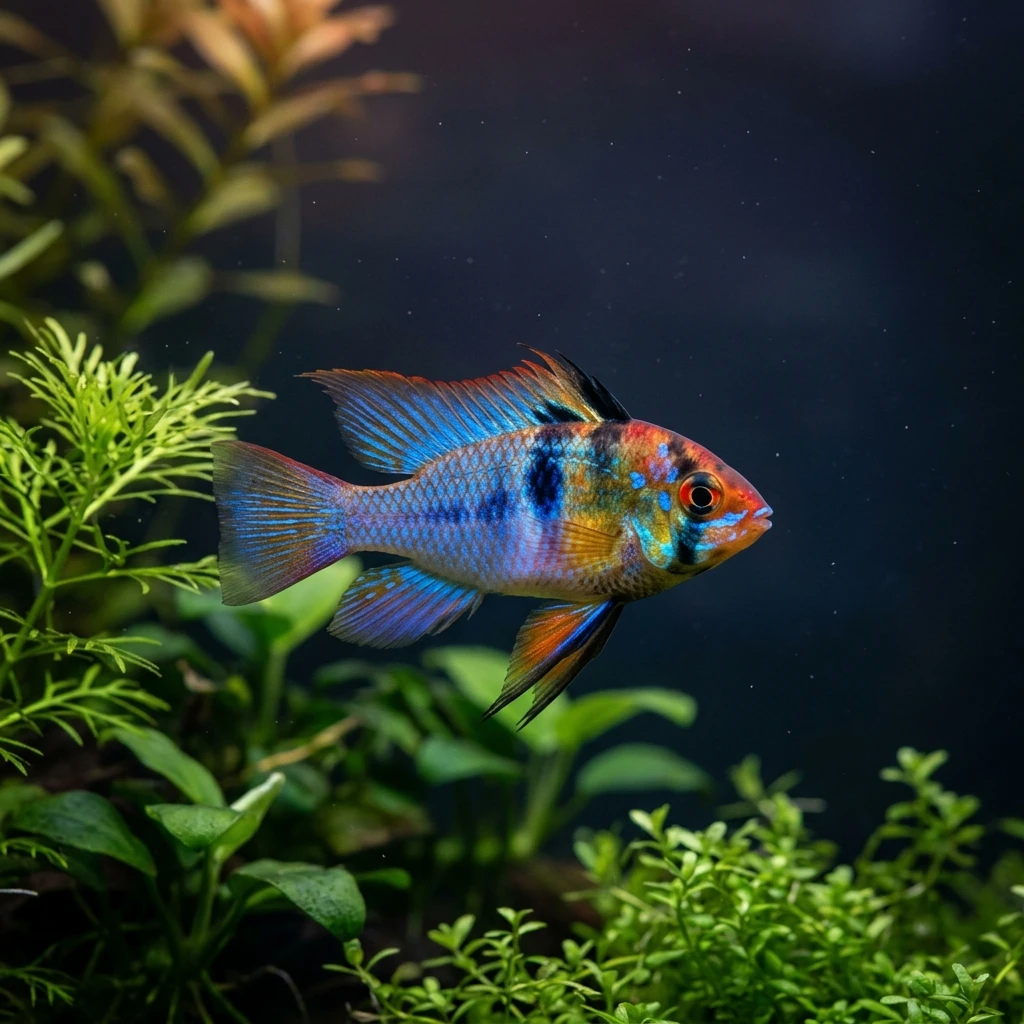
The German Blue Ram (Mikrogeophagus ramirezi) is a South American dwarf cichlid celebrated worldwide for its vibrant, jewel-like coloration and graceful swimming among aquascapes. Reaching just 5 to 7 cm in length, they possess a peaceful nature compared to larger cichlids, making them popular tank centerpieces. However, they are sensitive to nitrates and poor water quality, requiring warm temperatures (26–30°C) and clean, soft, slightly acidic water (pH 6.0–7.0). During breeding, they display distinct territorial behaviors, making plants and driftwood structures essential to break line-of-sight. In this guide, we decode their instinctive signals and share a 3-step homecare routine for water stability, territory peace, and pairing care.
Veterinary & Behavioral Evidence
This content is based on Ornamental Fish International (OFI) Standards & World Aquatic Veterinary Medical Association (WAVMA) Guidelines.
 FreshSelf
Keep pet food and supplements perfectly fresh!
FreshSelf
Keep pet food and supplements perfectly fresh!







1. German Blue Ram Instincts: Fin Flaring and Substrate Cleaning Signals
German Blue Ram Instincts: Fin Flaring and Substrate Cleaning Signals
German Blue Rams display a behavior called 'Flaring', spreading their dorsal and pelvic fins wide while intensifying their neon blue colors to assert territory or court a partner. When a pair forms, they instinctively pick and clean flat rocks or wood with their mouths to prepare a spawning site.
2. German Blue Ram (Mikrogeophagus ramirezi)‘s Body Language & Behavioral Signals
Fin Flaring & Color Intensification
Extending fins fully while glowing with bright neon blue hues, signaling territorial boundary warnings or healthy courtship.
Ensure adequate aquatic plants and driftwood hideouts to prevent excessive aggression between individuals.
Rock & Substrate Cleaning
Nipping and cleaning flat rock or driftwood surfaces when spawning is imminent, signaling active breeding preparation.
Maintain pristine water quality and avoid disturbing the pair during their spawning process.
3. Customized 3-Step Home Care Routine for German Blue Ram (Mikrogeophagus ramirezi)
Morning: Water Temp (26–30°C) & pH Check with High-Protein Feeding
Verify warm water temperatures and soft acidic pH (6.0–7.0), then feed slow-sinking dwarf cichlid pellets or live/frozen brine shrimp.
Afternoon: Aquascape Hideout Inspection & Nitrate Maintenance
Check that plants and driftwood break line-of-sight between territories, and perform small partial water changes (10–20%) to keep nitrates low.
Evening: Pair Bonding Observation & Scheduled Lights-Out
Observe pairing behavior and turn off aquarium lights on a fixed schedule (8–10 hours of darkness) to promote stress-free rest.
📌 Frequently Asked Questions (FAQ)
Can German Blue Rams be kept in a community tank? ▼
Yes. German Blue Rams are peaceful dwarf cichlids that do very well with tetras, gouramis, and corydoras. However, they can defend their spawning site during breeding, so providing dense plants and driftwood to divide territories is recommended.
What are the most critical water parameter requirements for German Blue Rams? ▼
Warm water (26–30°C) and soft, slightly acidic to neutral pH (6.0–7.0) are vital. Rams are extremely sensitive to ammonia and nitrates, requiring strong filtration and regular partial water changes to maintain their health and vibrant colors.