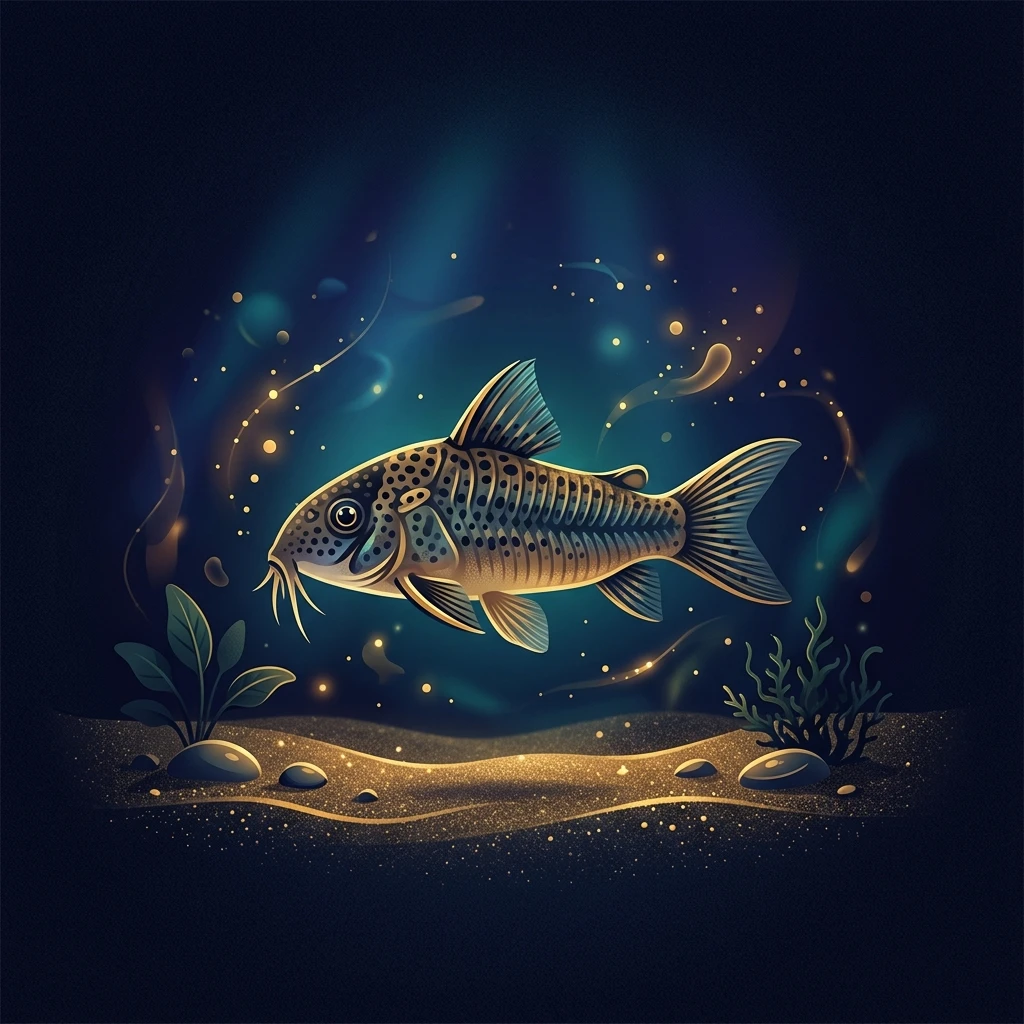
Native to the freshwater rivers of South America’s Amazon basin, the Corydoras Catfish (‘Cory’) is a beloved bottom-dwelling armored catfish cherished by aquarists worldwide for its cute barbels and industrious bottom-scanning swimming style. While famously peaceful, Corydoras catfish possess delicate sensory barbels around their mouths that easily erode or develop bacterial infections if kept on sharp gravel or dirty substrates. Furthermore, they are highly sensitive to nitrogenous waste buildup (ammonia and nitrite) and possess a specialized physiological mechanism for ‘intestinal respiration,’ darting to the surface to gulp air when dissolved oxygen drops. In this guide, presents a 3-step daily care routine to decode your Corydoras’ body language and protect its health.
Veterinary & Behavioral Evidence
This content is based on Ornamental Fish International (OFI) & World Aquatic Veterinary Medical Association (WAVMA) Care Standards.
 FreshSelf
Keep pet food and supplements perfectly fresh!
FreshSelf
Keep pet food and supplements perfectly fresh!






1. Corydoras Body Language: Surface Gulping (Intestinal Respiration) and Clamped Fins (Glass Surfing)
Corydoras Body Language: Surface Gulping (Intestinal Respiration) and Clamped Fins (Glass Surfing)
Corydoras catfish signal water parameters and environmental distress through surface movements and fin posture. Darting rapidly to the waterline to gulp air before returning to the bottom 'Surface Gulping / Intestinal Respiration' is a unique physiological trait that doubles as an indicator of low dissolved oxygen or rising nitrites. Conversely, holding fins tightly against their body or frantically swimming up and down glass walls 'Clamped Fins / Glass Surfing' is an explicit signal of acute water shock, ammonia toxicity, or severe stress.
2. Corydoras Catfish (Corydoras)‘s Body Language & Behavioral Signals
Darting Rapidly to the Water Surface to Gulp Air (Surface Gulping / Intestinal Respiration)
A natural physiological adaptation for oxygen intake, but excessive frequency indicates hypoxia or poor filtration.
Occasional gulping is normal; if frequent, immediately increase aeration/bubblers and test ammonia/nitrite levels.
Holding Fins Clamped Against Body or Pacing Glass Walls Up and Down (Clamped Fins & Glass Surfing)
Signals severe water contamination, sudden temperature drops, or bacterial skin/barbel irritation.
Check temperature (22–26°C), perform a 20–30% water change with conditioned water, and vacuum substrate detritus.
3. Customized 3-Step Home Care Routine for Corydoras Catfish (Corydoras)
Morning: Water Climate (22–26°C) Check & Sinking High-Protein Pellet Feeding
Feed specialized sinking wafers/pellets directly to the bottom so mid-water fish do not starve your bottom-dwelling Corys.
Afternoon: Soft Sand Substrate Inspection & Oxygenation / Aeration Check
Ensure smooth, fine sand substrate (smooth river sand) is present to protect delicate barbels, maintaining high dissolved oxygen levels.
Evening: Substrate Vacuuming (Weekly 10–20% Water Change) & Schooling Group Check
Vacuum uneaten food and waste from the substrate bed to prevent bacterial barbel rot, keeping them in groups of 5 or more.
📌 Frequently Asked Questions (FAQ)
Why are my Corydoras' barbels melting away or eroding (Barbel Erosion)? ▼
Corydoras barbels are crucial sensory organs used to forage for food in substrate. Sharp, coarse gravel creates micro-cuts on the barbels, and when uneaten food rots on the substrate bed, opportunist bacteria invade these wounds, causing 'barbel erosion' or melting. To prevent this, always use soft, fine sand and siphon substrate detritus regularly.
Are Corydoras Catfish 'scavengers' that eat fish poop and tank waste? ▼
Absolutely not! Corydoras do not eat fish feces, and relying solely on leftover flakes from surface feeders leads to slow starvation. They are omnivorous/carnivorous bottom feeders that require targeted feeding with high-protein sinking wafers, live tubifex worms, or frozen bloodworms.