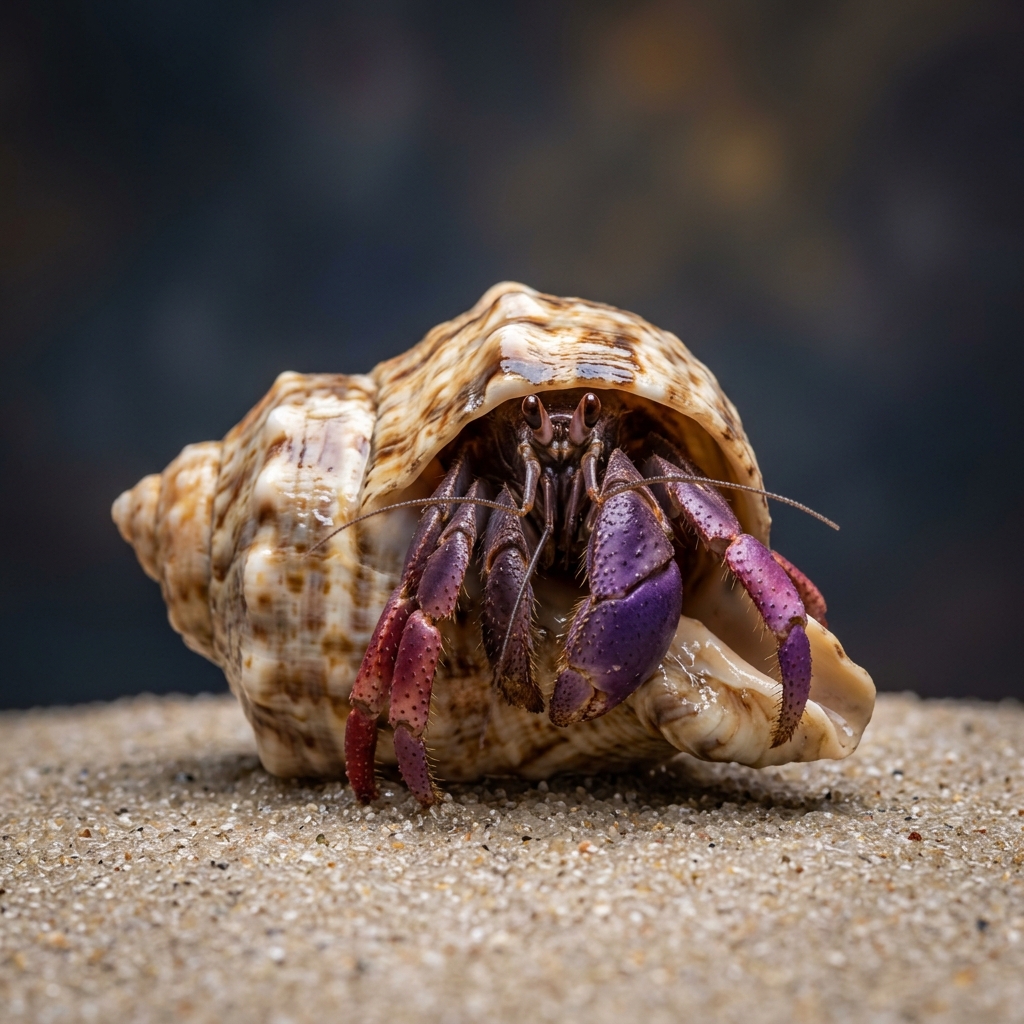
The Purple Pincher Hermit Crab (Coenobita clypeatus) is the most cherished land hermit crab species worldwide, recognized by its distinct purple large claw, round eyes, and lifelong need to swap shells as it grows. Though terrestrial, they breathe via modified gills, making habitat humidity (75–85%) critical to their survival. Additionally, they require a deep substrate—at least three times their height—of sand and coconut fiber to burrow safely during ecdysis (molting). Being social animals, they thrive in groups rather than solitary setups. In this guide, breaks down hermit crab behaviors and outlines a 3-step daily care routine.
Veterinary & Behavioral Evidence
This content is based on Hermit Crab Association (HCA) & Exotic Pet Veterinary Clinical Protocols.
 FreshSelf
Keep pet food and supplements perfectly fresh!
FreshSelf
Keep pet food and supplements perfectly fresh!







1. Purple Pincher Communication: Shell Hiding and Antenna Waving
Purple Pincher Communication: Shell Hiding and Antenna Waving
When feeling threatened or startled, hermit crabs retract into their shell and block the entrance with their large claw ('Shell Hiding'). When feeling safe and curious, they extend their body and rapidly wave their antennae ('Antenna Waving') to sample scent molecules and inspect surroundings.
2. Purple Pincher Hermit Crab (Coenobita clypeatus)‘s Body Language & Behavioral Signals
Retracting Inside & Blocking Entrance (Shell Hiding)
A defensive reflex indicating fear or stress caused by handling, bright lights, or unfamiliar sounds.
Never force them out of their shell; dim the tank lighting and allow them to emerge when comfortable.
Rapid Antenna Waving & Active Exploration (Antenna Waving)
Indicates a curious, confident state as they actively hunt for food or explore new items.
Provide fresh food and ensure both freshwater and saltwater pools are accessible.
3. Customized 3-Step Home Care Routine for Purple Pincher Hermit Crab (Coenobita clypeatus)
Morning: Environment Check (24-28°C / 75-85% Humidity) & Water Replenishment
Maintain 75-85% relative humidity for gill respiration. Clean and refill both dechlorinated freshwater and marine saltwater pools.
Afternoon: Substrate Moisture Audit & Shell Selection Prep
Ensure sand/coco-fiber substrate is deep enough (3x crab height) and holds sandcastle consistency. Provide various natural, non-painted spare shells.
Evening: Calcium & Protein Night Feeding & Molter Safety
Offer protein, calcium powder, and fresh produce before nighttime activity. Never dig up a hermit crab that has burrowed for molting.
📌 Frequently Asked Questions (FAQ)
My hermit crab dug under the sand and hasn't come out for weeks. Is it dead? ▼
No. Hermit crabs burrow deep into moist substrate to undergo molting (shedding their exoskeleton). During molting, their soft new body is extremely fragile. Never dig them up or disturb the sand, as this can be fatal. They will emerge naturally when finished.
Why do land hermit crabs require saltwater? ▼
Land hermit crabs need saltwater to maintain internal osmotic balance and shell water composition. Use marine aquarium salt (e.g., Instant Ocean) dissolved in dechlorinated water, never table salt or iodized salt. Always provide separate freshwater and saltwater dishes.