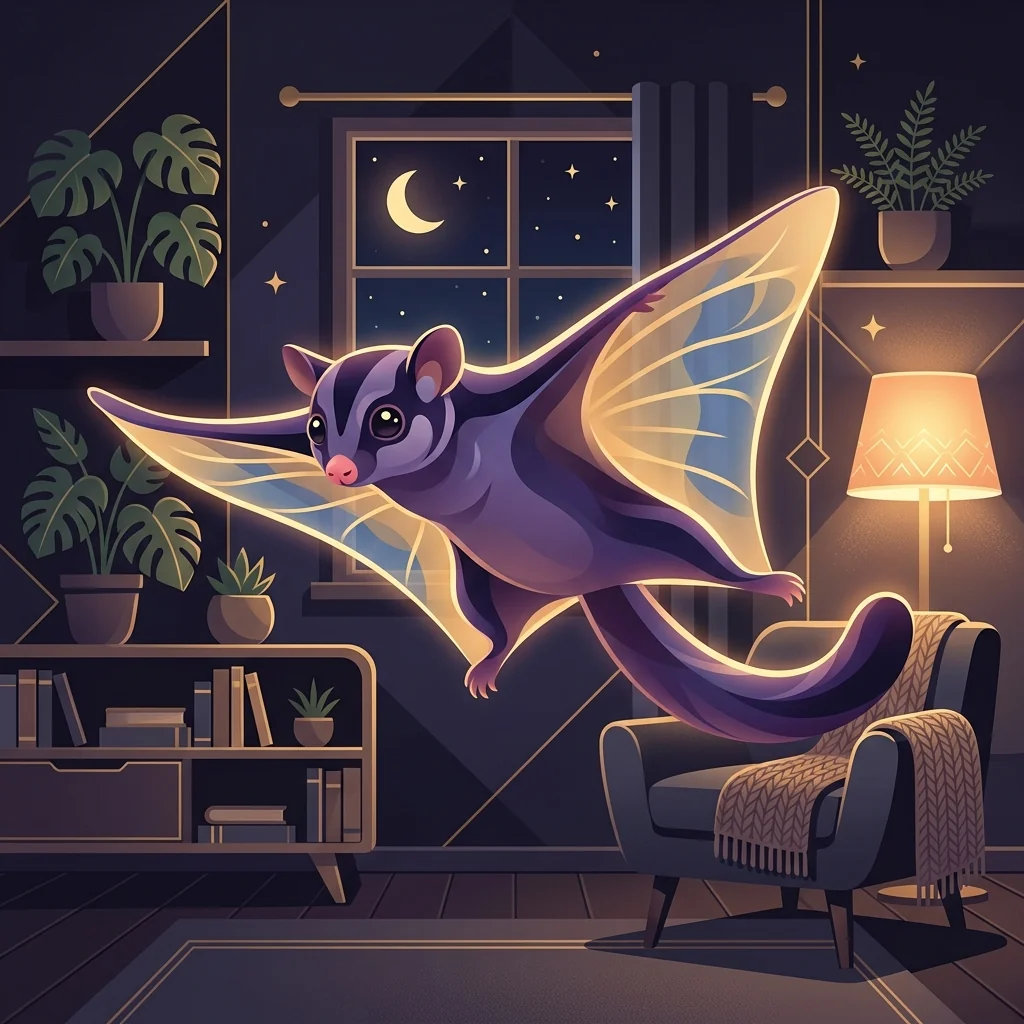
Famous for gliding through the air with their patagium, Sugar Gliders (Petaurus breviceps) are small arboreal marsupials cherished worldwide. Possessing intense social instincts from their wild colony life, housing a single glider often leads to severe depression and self-mutilation. Furthermore, an improper diet lacking balanced calcium and phosphorus (2:1 ratio) triggers Metabolic Bone Disease (MBD), causing fatal hind-limb paralysis. In this guide, presents a 3-step daily care routine to read your Sugar Glider’s body signals, prevent paralysis, and maintain mental well-being.
Veterinary & Behavioral Evidence
This content is based on Association of Exotic Mammal Veterinarians (AEMV) Marsupial Care Standards.
 FreshSelf
Keep pet food and supplements perfectly fresh!
FreshSelf
Keep pet food and supplements perfectly fresh!







1. Sugar Glider Body Language: Crabbing Sounds and Pouch Cuddling
Sugar Glider Body Language: Crabbing Sounds and Pouch Cuddling
Sugar Gliders express emotional states clearly through vocalizations and pouch behaviors. Emitting a loud, buzzing rasping noise 'Crabbing' is an explicit alarm signal of intense fear, threat, or startle. Conversely, quietly snuggling inside a bonding pouch while sharing body heat 'Pouch Cuddling' is a supreme affectionate signal demonstrating deep trust and colony acceptance.
2. Sugar Glider (Petaurus breviceps)‘s Body Language & Behavioral Signals
Rapid Buzzing and Rasping Alarm Noise (Crabbing)
An instinctual defensive threat call produced when feeling terrified by sudden handling or strange environments.
Do not force physical contact; move their sleeping pouch to a dark, quiet area to let them regain calm.
Snuggling Inside the Owner's Bonding Pouch (Pouch Cuddling)
A bonding signal indicating that the glider accepts the owner's scent and warmth as part of their colony.
Gently stroke the outside of the pouch during daytime rest to reinforce scent recognition and bond safety.
3. Customized 3-Step Home Care Routine for Sugar Glider (Petaurus breviceps)
Morning: Night Food Removal & Thermal Check (24°C–27°C / 75°F–80°F)
Remove uneaten fresh fruit and protein mixes post-nocturnal activity to prevent spoilage, ensuring cage warmth stays at 24°C–27°C.
Afternoon: Dark Sleep Environment & Pair/Colony Housing Monitoring
Ensure quiet sleep in fleece pouches and avoid solitary housing to prevent severe depression, grooming loss, and self-mutilation.
Evening: Specialized Diet (HPW/BML 2:1 Ca:P Ratio) & Vertical Gliding Encouragement
Feed specialized protein formulations (HPW/BML) with balanced calcium alongside fresh vegetables, encouraging vertical climbing and leaping.
📌 Frequently Asked Questions (FAQ)
Why is my Sugar Glider suddenly dragging its hind legs? ▼
This indicates 'Hind-limb Paralysis' caused by Calcium Deficiency (MBD / Nutritional Osteodystrophy). Fruit-heavy diets raise phosphorus, stripping calcium from bones. Seek immediate exotic vet care and feed a strict HPW/BML diet with a 2:1 Calcium to Phosphorus ratio.
Can I keep only one Sugar Glider as a pet? ▼
It is strongly discouraged. Sugar Gliders are colony marsupials that live in groups of 6 to 10 in the wild. A solitary glider frequently develops severe depression, leading to self-mutilation (chewing off their own tail, fur, or pouch). Always house them in pairs or small groups.