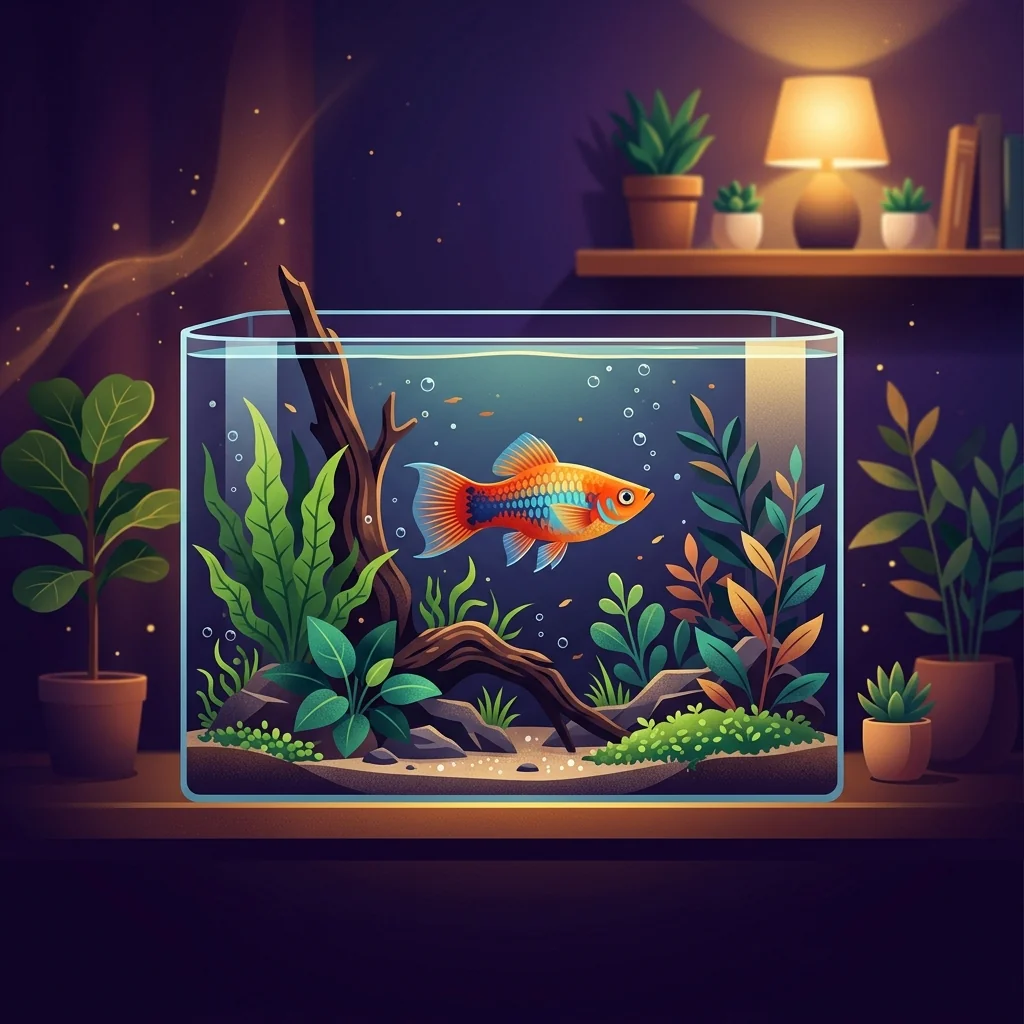
Instantly recognizable by the black silhouette resembling a Mickey Mouse face at the base of their caudal fin, Mickey Mouse Platies (Xiphophorus maculatus) are among the most popular tropical livebearers worldwide. As livebearers that give birth to free-swimming fry rather than laying eggs, they breed easily; however, sudden temperature drops below 22°C (72°F) or deteriorating water quality make them vulnerable to ‘Ich’ (White Spot Disease) and fin clamping. Furthermore, adult platies exhibit ‘Fry Cannibalism’, frequently preying on newborn fry if hiding spaces are absent. In this guide, presents a 3-step daily care routine to read your Platy’s signals and protect its health.
Veterinary & Behavioral Evidence
This content is based on Ornamental Fish International (OFI) & American Livebearer Association (ALA) Care Standards.
 FreshSelf
Keep pet food and supplements perfectly fresh!
FreshSelf
Keep pet food and supplements perfectly fresh!






1. Mickey Mouse Platy Body Language: Fin Clamping / Flashing and Pre-Parturition Hiding
Mickey Mouse Platy Body Language: Fin Clamping / Flashing and Pre-Parturition Hiding
Mickey Mouse Platies express water quality stress, parasitic infections, and impending labor through fin postures and swimming behavior. Swimming with dorsal and caudal fins held tightly against the body 'Fin Clamping' alongside scraping against substrate or decor 'Flashing' signals water degradation (ammonia/nitrite spikes) or external parasite infections like Ich. Conversely, a pregnant female developing a boxy, squarish abdomen and hiding vertically among dense plants 'Pre-Parturition Hiding (Maternity Hiding)' indicates she is about to give birth.
2. Mickey Mouse Platy (Xiphophorus maculatus)‘s Body Language & Behavioral Signals
Clamping Fins Tightly & Scraping Against Substrate (Fin Clamping / Flashing)
An early warning signal of poor water quality (ammonia/nitrite spikes), thermal shock, or external parasite/Ich infestation.
Immediately test water parameters and temperature (keep at 22°C–26°C / 72°F–79°F), perform a 20–30% water change, and administer Ich medication or aquarium salt treatment if white spots appear.
Developing a Squarish Belly & Hiding Vertically in Plant Corners (Maternity Hiding)
A classic pre-parturition behavior shown by pregnant females about to drop live fry.
Transfer the pregnant female to a breeding box (isolation breeder) or provide dense hiding mosses (Java moss, Guppy grass) to prevent adult fry cannibalism.
3. Customized 3-Step Home Care Routine for Mickey Mouse Platy (Xiphophorus maculatus)
Morning: Water Temp (22°C–26°C) & pH (7.0–8.2) Check & Feeding
Verify heater operation and water parameters, feeding a small pinch of premium tropical flakes or mini pellets that can be consumed within 2–3 minutes.
Afternoon: Plant Cover Inspection & Gravid Female Observation
Ensure aquatic plant cover (Java moss, Micro-sorium) is dense for fry protection, observing female abdomen shape and gravid spot expansion.
Evening: Siphon Waste/Uneaten Food & Maintain 8–10 Hour Sleep Cycle
Siphon out feces and leftover food from substrate to maintain pristine water quality, turning off lights at night to ensure adequate rest.
📌 Frequently Asked Questions (FAQ)
My Platy has tiny white salt-like spots and is flashing against rocks. Is it Ich? ▼
Yes, this is 'Ich' (White Spot Disease), a common parasitic infection triggered by sudden temperature fluctuations or cold water below 22°C (72°F). To treat it, slowly raise water temperature to 27°C–28°C (80°F–82°F), perform partial water changes, and administer Ich medication or maintain a 0.3%–0.5% aquarium salt bath.
How can I prevent adult Platies from eating their newborn fry during birth? ▼
Platies naturally exhibit 'Fry Cannibalism'. When a female's abdomen becomes squarish ('L'-shaped) and her gravid spot darkens, move her to a separate breeding trap before birth. If letting her give birth in the main tank, plant dense floating mosses like Java moss or Guppy grass to provide crucial refuges for newborn fry.