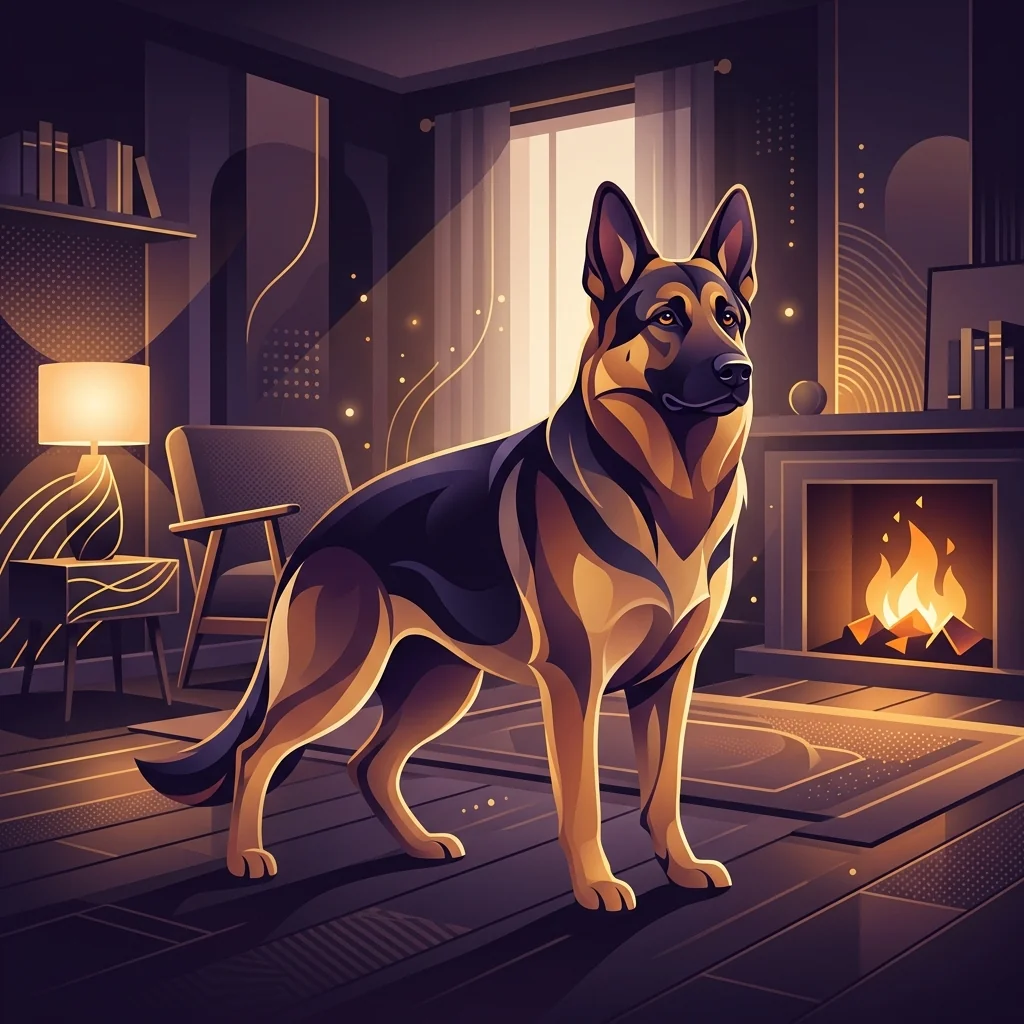
German Shepherds are renowned worldwide as top police, military, and family dogs due to their exceptional intelligence, bravery, and loyalty. However, without adequate physical and mental stimulation matching their strong working drive, they can develop boundary aggression or destructive behaviors from stress. Additionally, their body structure makes them prone to hip and elbow dysplasia, and their dense double coat results in heavy shedding. In this guide, presents a 3-step daily care routine to decode your German Shepherd’s body language and keep their joints and coat healthy.
Veterinary & Behavioral Evidence
This content is based on World Union of German Shepherd Dog Clubs (WUSV) & German Shepherd Dog Club of America (GSDCA) Veterinary Standards.
 FreshSelf
Keep pet food and supplements perfectly fresh!
FreshSelf
Keep pet food and supplements perfectly fresh!









1. German Shepherd Body Language: Ear Angles and Focus Signals
German Shepherd Body Language: Ear Angles and Focus Signals
German Shepherds express emotions clearly through ear movements and posture. Pricking their ears forward while standing tall indicates an 'Alert Posture', an instinctual state for monitoring surroundings. Conversely, 'Head Tilting' while listening is a high-level cognitive focus signal to pinpoint sound location and understand owner intent.
2. German Shepherd Dog’s Body Language & Behavioral Signals
Ears Pricked Forward & Rigid Stance (Alert & Guarding Posture)
A strong environmental monitoring warning caused by external stimuli or strangers.
Issue a calm disengagement command without tightening the leash, redirecting their focus back to the owner.
Head Tilting Left and Right While Staring (Head Tilting)
An active curiosity and cognitive focus aimed at analyzing the owner's voice and visual cues.
Repeat commands in a clear, upbeat tone and immediately reward correct .
3. Customized 3-Step Home Care Routine for German Shepherd Dog
Morning: Interval Walking Combined with Obedience Training
Combine walking with precise commands like 'stay' or 'heel' to burn mental and physical energy simultaneously.
Afternoon: Advanced Nosework & Working Simulation Games
Provide complex puzzle toys or scent search games to satisfy their working drive and prevent boredom.
Evening: Double Coat Deshedding Brushing & Hip Warm Massage
Remove dead undercoat fur with a slicker brush and undercoat rake, followed by a gentle massage on heavy-bearing hip joints.
📌 Frequently Asked Questions (FAQ)
How can I prevent hip dysplasia in my German Shepherd? ▼
While genetics play a major role, maintaining an ideal weight and joint care are crucial. Cover slippery indoor floors with mats, avoid sudden weight gains or high-impact jumping during growth, and provide joint supplements continuously.
Why do German Shepherds shed so much and how often should I brush them? ▼
German Shepherds have a dense double coat and are nicknamed 'German Shedders' due to constant heavy shedding. Brush daily for 5-10 minutes with an undercoat rake, and increase brushing and baths during seasonal coat blows to prevent skin issues.