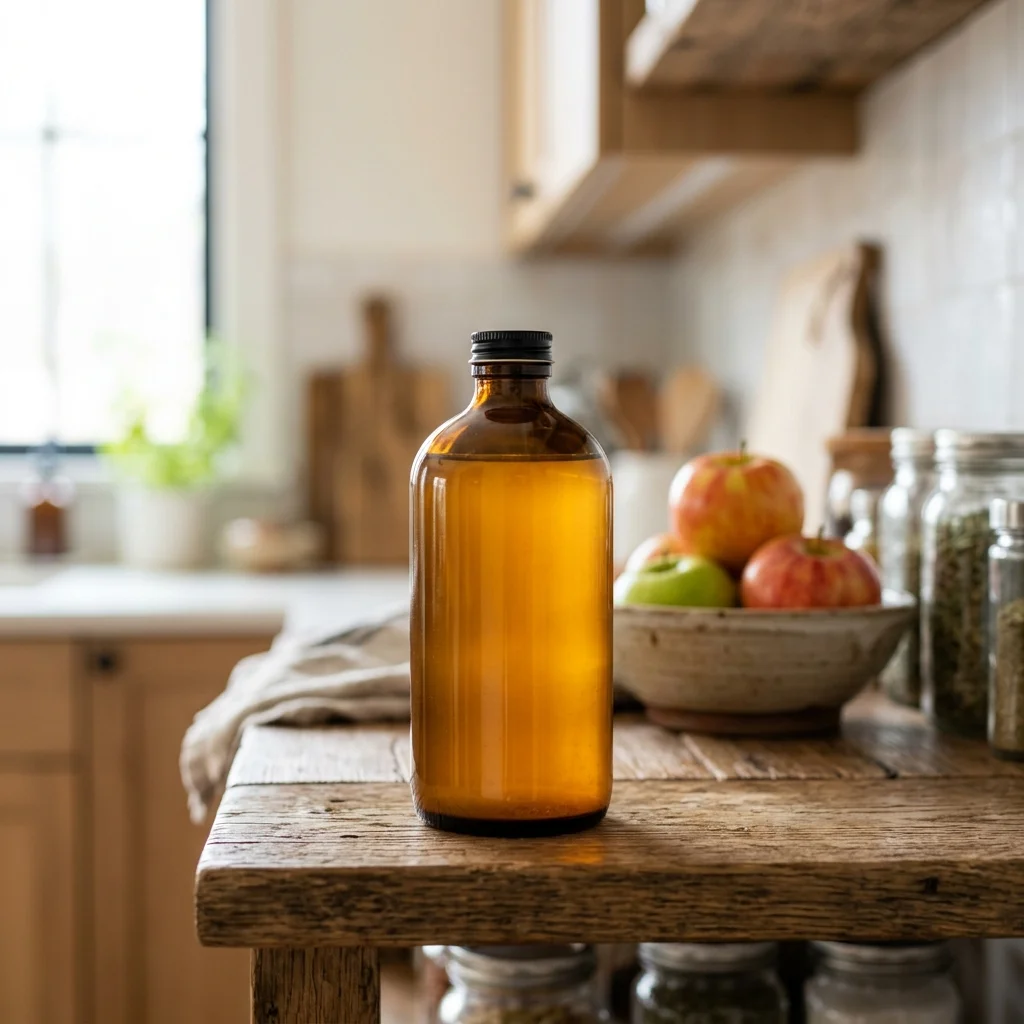
Have you ever stored apple cider vinegar only to notice cloudy sediment or gelatinous floaters forming inside the bottle? 🍎
Apple cider vinegar contains approximately 5–6% acetic acid with a low pH of 2–3, giving it strong self-preserving properties that naturally inhibit microbial growth. However, in raw or unfiltered varieties, prolonged exposure to oxygen can reactivate Acetobacter bacteria, forming a gelatinous mass known as the ‘Mother of Vinegar.’
In this guide, based on official guidelines from the USDA and The Vinegar Institute, we share a 3-step scientific storage method to preserve the acidity, flavor, and beneficial organic acids of apple cider vinegar. 🛡️
Food Safety & Scientific Evidence
This content is based on USDA & MFDS & The Vinegar Institute.
 FreshSelf
Zero waste! Your smart storage assistant
FreshSelf
Zero waste! Your smart storage assistant









1. Scientifically Proven Storage Guide
Store in a cool, dark pantry at 15–20°C — Sealed Pantry Storage (2+ Years / Indefinite) 📦
Apple cider vinegar does not require refrigeration and remains completely stable at cool room temperature. 💡 Storage Tip: Keep it sealed in a dark cabinet (15–20°C / 59–68°F). Thanks to its self-preserving nature, it retains quality for over 2 years after opening (virtually indefinite).
Seal lid tightly after use to prevent oxygen exposure — Airtight Sealing 🍾
Prolonged oxygen exposure in raw vinegar accelerates Acetobacter activity, altering acidity or increasing floaters. 💡 Storage Tip: Wipe the bottle neck clean with a dry cloth after use and seal the cap tightly to block air entry.
Manage natural sediment ('Mother') by shaking or straining — Mother Management 🍎
Gelatinous sediment floating or settling at the bottom of unfiltered vinegar is 'Mother of Vinegar,' not spoilage. 💡 Storage Tip: It is completely safe and rich in natural enzymes. Simply shake gently before use or strain through cheesecloth if preferred.
2. Essential Storage Rules and Cautions
Ultraviolet light and high ambient heat near stove tops degrade acetic acid concentrations and destroy delicate organic compounds over time. Always store in a dark, cool pantry or cabinet.
Due to its strong acidity (pH 2–3), apple cider vinegar reacts directly with metals like iron or aluminum, causing container corrosion and chemical leaching. Always store in glass bottles or food-grade plastic containers.
📌 Frequently Asked Questions (FAQ)
Jelly-like strands or sediment formed in my apple cider vinegar. Has it gone bad? ▼
Not at all! This is the 'Mother of Vinegar,' a harmless, natural complex of Acetobacter bacteria and organic acids formed upon exposure to oxygen. It contains beneficial enzymes and acids, making it completely safe to consume or strain.
Does apple cider vinegar need to be refrigerated after opening? ▼
No! Thanks to its 5–6% acetic acid concentration and low pH (2–3), apple cider vinegar is self-preserving against spoilage organisms. Storing it sealed in a cool, dark pantry at 15–20°C is the optimal method.