Avocado oil is a gold-standard healthy fat known for its high smoke point and rich nutritional profile, perfect for sautéing, frying, and salad dressings! 🥑🫒
Avocado oil is exceptionally high in heart-healthy monounsaturated fatty acids, particularly oleic acid. However, unrefined or virgin avocado oil contains residual chlorophyll, which acts as a potent ‘photosensitizer’ when exposed to light, dramatically accelerating photo-oxidation. Continuous light exposure produces unstable hydroperoxides, causing rancidity and destroying valuable nutrients.
In this guide, based on scientifically verified guidelines from the USDA, FDA, and MFDS, we present a 3-step optimal storage strategy to block photo-oxidation and preserve the freshness of avocado oil. 🛡️
Food Safety & Scientific Evidence
This content is based on USDA & FDA & MFDS.
 FreshSelf
Zero waste! Your smart storage assistant
FreshSelf
Zero waste! Your smart storage assistant









1. Scientifically Proven Storage Guide
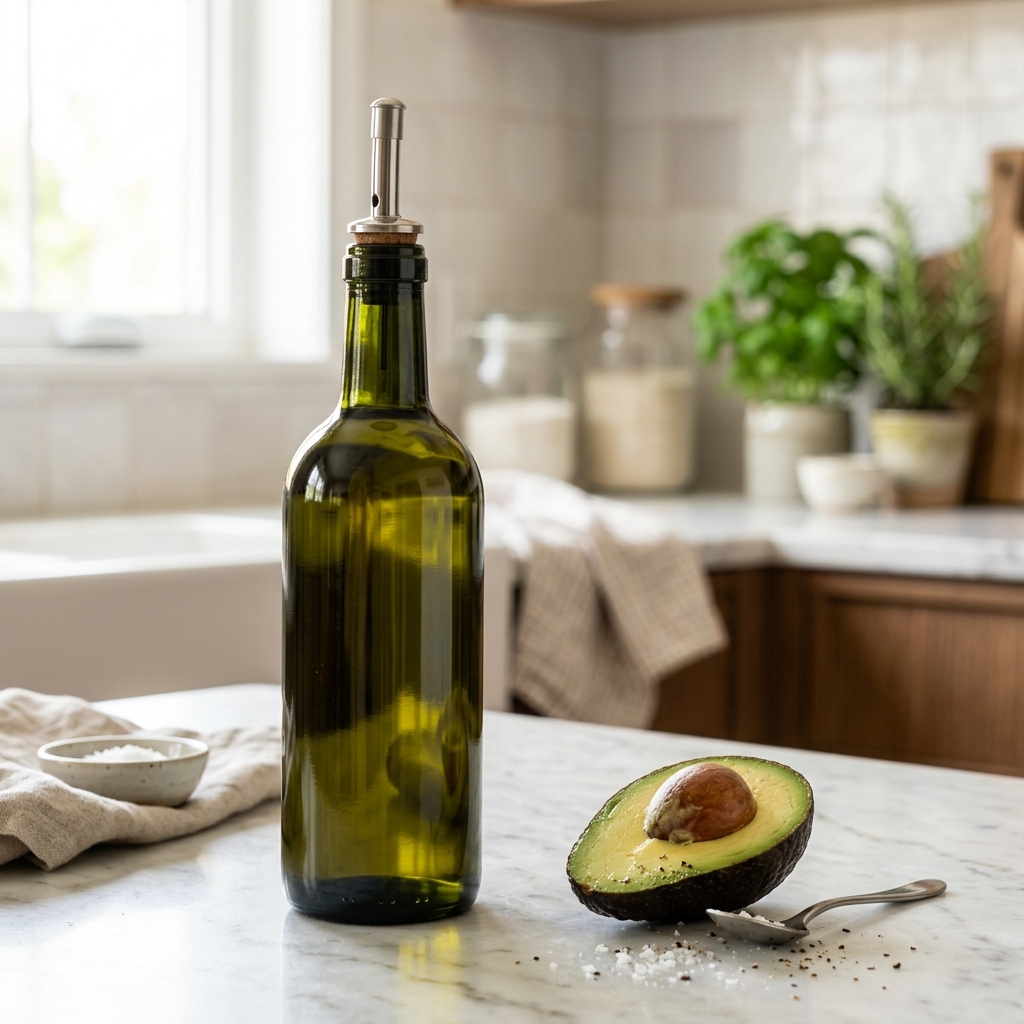
Store in UV-blocking dark glass bottles (amber or dark green glass) — Block Photo-Oxidation & Hydroperoxides 🍾
Always purchase or transfer avocado oil into dark amber or green glass bottles (Dark Glass Bottle). 💡 Storage Tip: Dark glass physically filters out damaging ultraviolet and visible light wavelengths, stopping chlorophyll-mediated photo-oxidation and hydroperoxide buildup.
Keep in a cool, dark place (15–25°C) away from heat sources — Cool Pantry Storage (6–8 Months After Opening) 🚪
Store the dark glass bottle inside a cool kitchen cabinet or dark pantry away from direct sunlight. 💡 Storage Tip: Maintaining a stable temperature between 15–25°C (59–77°F) away from ovens or stovetops keeps the oil fresh without rancidity for 6 to 8 months after opening.
Seal the cap tightly immediately after use — Minimize Oxygen Exposure 🔒
Atmospheric oxygen is the primary trigger for auto-oxidation in oils. 💡 Storage Tip: Wipe the bottle neck clean after pouring and tighten the cap securely. Minimizing headroom oxygen exposure maximizes oxidative stability.
2. Essential Storage Rules and Cautions
Residual chlorophyll in avocado oil absorbs light energy to generate reactive oxygen species, rapidly oxidizing oleic acid. Additionally, ambient heat from stovetops doubles the rate of chemical oxidation; both light and heat must be blocked simultaneously.
Refrigerating avocado oil causes its monounsaturated fats to solidify into a cloudy, butter-like consistency (turbidity/clouding). While it thaws back to a clear liquid at room temperature, repeated temperature fluctuations degrade oil quality. Cool pantry storage at 15–25°C is ideal.
📌 Frequently Asked Questions (FAQ)
My avocado oil formed white cloudy lumps at the bottom. Has it gone bad? ▼
No, it hasn't gone bad! This is a natural physical process called clouding, where monounsaturated fatty acids solidify in cooler temperatures. Placing the bottle in a warm room (15–20°C) restores it to a clear liquid state without affecting nutrition or flavor.
My avocado oil smells stale or paint-like. Is it still safe to use? ▼
No, absolutely not! A stale, paint-like, or harsh rancid odor indicates that light and oxygen have broken down hydroperoxides into harmful aldehydes and secondary oxidation products. Rancid oil should be discarded immediately.