Did you know that covering leftover watermelon with plastic wrap can multiply food poisoning bacteria on the surface by over 3,000 times? Today, FreshSnap shares KCA-approved safe watermelon sealing and storage hacks.
Verified Scientific Authority
This storage guide is verified based on official guidelines from the KCA & MFDS.
1. Why store like this? Scientific facts
Understanding the unique characteristics of each ingredient and following the proper storage method is extremely important for maintaining freshness and hygiene.
2. Scientifically Proven Storage Guide
Never cover with plastic wrap directly — Prevent food poisoning ❌🍉
Covering a cut watermelon directly with plastic wrap creates a humid seal that causes bacteria to multiply thousands of times over, increasing the risk of food poisoning. Never store cut watermelon with just plastic wrap.
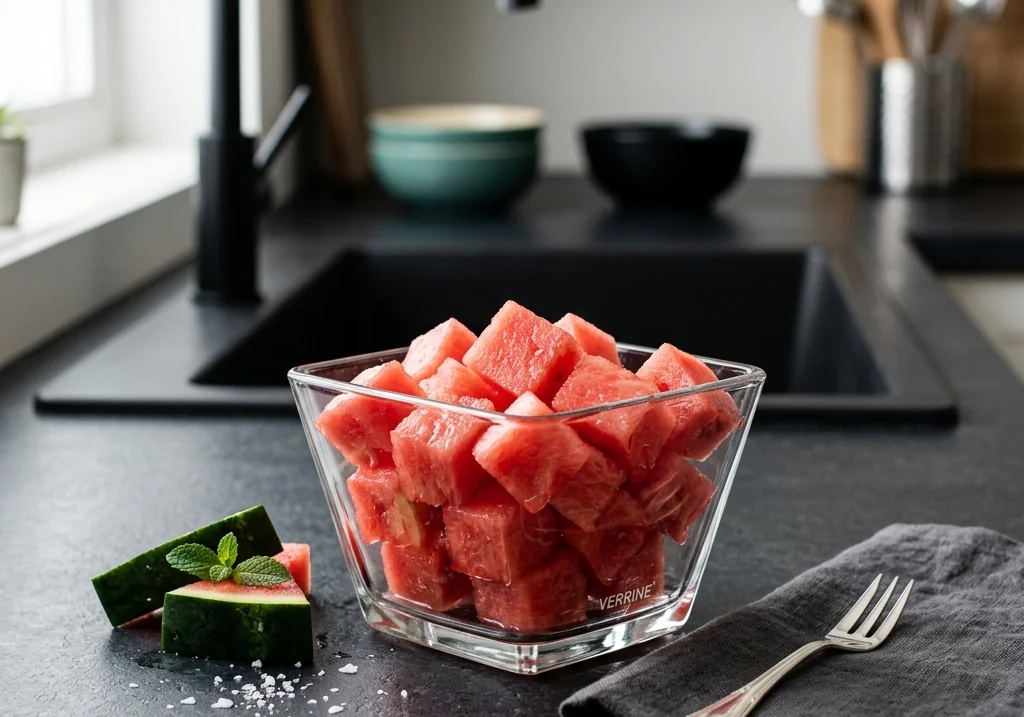
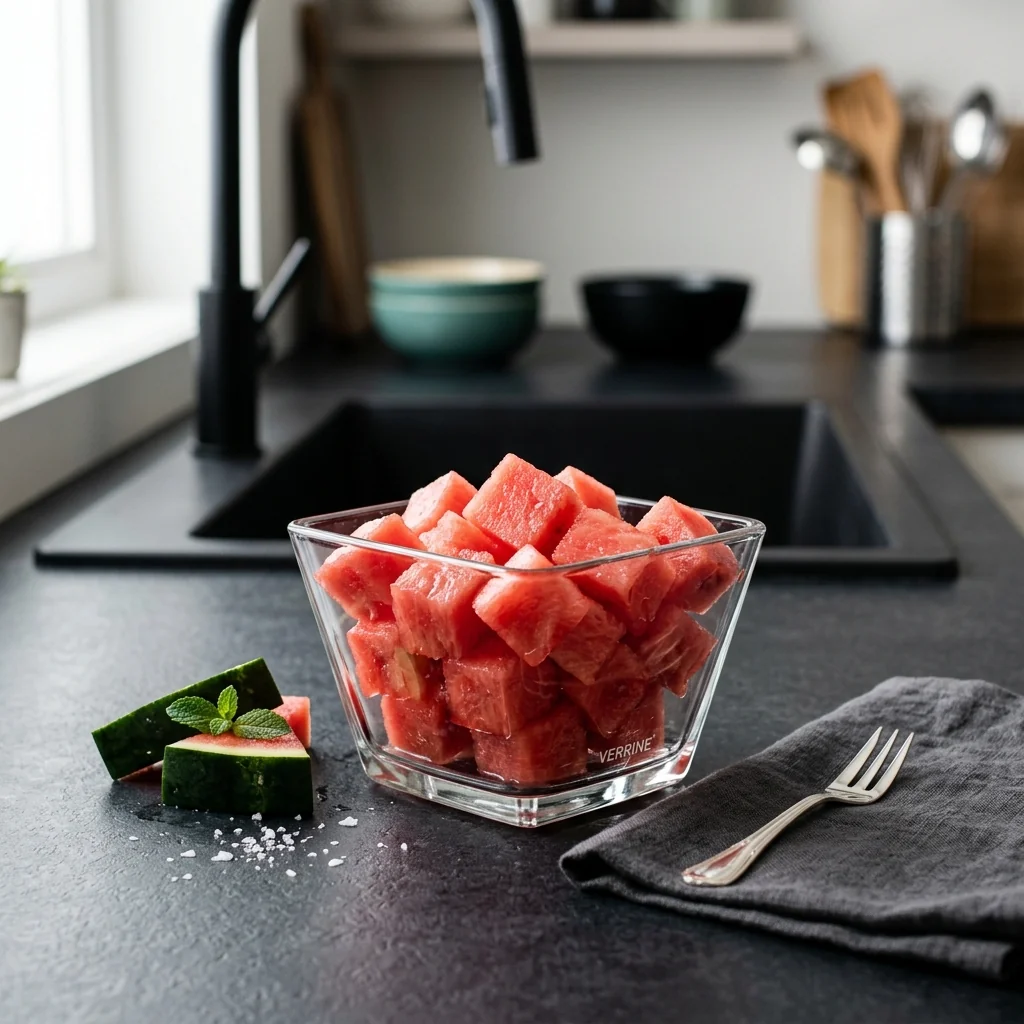
Cut off rind and cube into airtight containers — Refrigerated Storage (7Days) 📦
Carefully slice off the rind to prevent surface dust and bacteria from touching the red pulp. Chop the fruit into bite-sized cubes and store them in a clean, sanitized airtight container with the lid tightly closed.
Store deep inside the crisper drawer at a stable 0–4°C ❄️
Place the airtight container deep inside the crisper drawer or on the inner shelf of the refrigerator. Storing it in an area with minimal temperature fluctuation keeps the watermelon crisp and preserves its sweetness.
3. Crucial Rules and Cautions
Plastic wrap traps moisture and promotes fast bacterial growth. Cut surface contamination is highly dangerous.
Cut off the rind completely, dice the flesh, and keep sealed inside airtight containers in the fridge.
📍 Frequently Asked Questions (FAQ)
Is it dangerous to store cut watermelon wrapped only in plastic wrap? ▼
Very dangerous. Studies show wrapping cut watermelon increases bacterial levels by 3,000 times in a week. Cut the flesh into cubes and store in sealed containers.
Can I put a whole watermelon directly in the coldest part of the fridge? ▼
Whole watermelon suffers chilling injury in direct cold air, making the flesh mealy. Wrap it in a thick towel and store it in a cool pantry or crisper.