Have you ever stored premium balsamic vinegar for salad dressings only to notice sediment forming or its aroma weakening over time? 🍾
Crafted from concentrated grape must, high-grade balsamic vinegar possesses a high acetic acid concentration (pH 2.5–3.0) and natural sugar content. This hostile environment makes microbial growth impossible, giving it a virtually indefinite self-preserving shelf life. However, exposure to direct sunlight or stove heat destroys delicate aromatic esters and polyphenols, while refrigeration causes sugar crystallization.
Based on official guidelines from the Consorzio Tutela Aceto Balsamico di Modena (CABM) and the USDA, this 3-step scientific storage guide explains how to preserve the rich flavor and quality of balsamic vinegar indefinitely. 🛡️
Food Safety & Scientific Evidence
This content is based on CABM & USDA & MFDS.
 FreshSelf
Zero waste! Your smart storage assistant
FreshSelf
Zero waste! Your smart storage assistant









1. Scientifically Proven Storage Guide
Store in a cool, dark pantry at 15–25°C — Sealed Dark Room Storage (Indefinite) 🍾
The optimal environment for balsamic vinegar is a dark room temperature space between 15–25°C (59–77°F). 💡 Storage Tip: Keep it inside a dark kitchen cabinet or pantry out of direct light to maintain stability indefinitely.
Seal the cap tightly right after use — Flavor & Acidity Protection 🧴
Leaving the bottle open allows acetic acid and volatile ester compounds to evaporate into the air. 💡 Storage Tip: Wipe the bottle rim with a dry cloth after use and seal tightly to lock in volatile aromas.
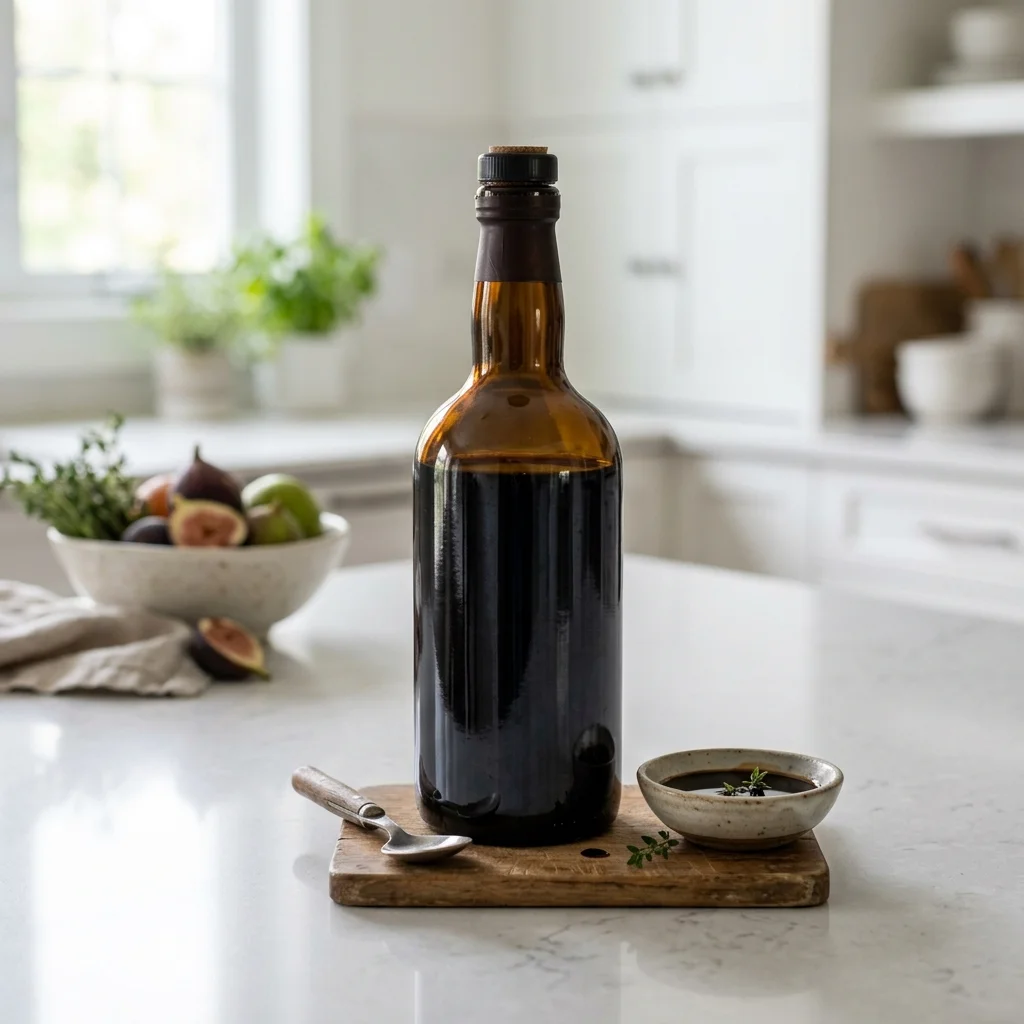
Keep in dark glass bottles to block light — Light Shielding 🫙
Clear glass containers allow UV rays to penetrate and degrade polyphenol flavor compounds. 💡 Storage Tip: Always keep balsamic vinegar in dark amber or green glass bottles to protect it from light degradation.
2. Essential Storage Rules and Cautions
Placing balsamic vinegar near sunny windows or cooking stoves oxidizes and degrades delicate aromatic ester compounds, accelerating polyphenol polymer sedimentation.
Refrigerating balsamic vinegar (0–4°C / 32–39°F) triggers sugar and tartaric acid crystallization, ruining its velvety texture and suppressing aromatic volatility.
📌 Frequently Asked Questions (FAQ)
Does balsamic vinegar really last forever without going bad? ▼
Yes! When stored properly in a cool, dark place, balsamic vinegar has an indefinite shelf life. Its high acetic acidity (pH 2.5–3.0) and natural grape sugar concentration prevent any bacterial or fungal growth.
Is sediment or cloudiness at the bottom of the balsamic vinegar bottle a sign of spoilage? ▼
Not at all! Sediment is a natural byproduct of aging where grape polyphenols and tartaric acid bind together into polymers. It is completely non-toxic and does not affect quality or taste.