Have you ever left fresh basil or parsley in the fridge only to find it blackened or slimy the next day? 🌿
Fresh herbs have rapid respiration and transpiration rates after harvest. Different herbs react very differently to temperature—for instance, putting basil directly into a cold fridge causes chilling injury that completely destroys the leaves.
In this guide, introduces a scientifically proven 3-step herb storage guide based on guidelines from agricultural and food science experts to keep your basil and parsley fresh and vibrant. 🛡️
Food Safety & Scientific Evidence
This content is based on RDA & USDA & UC Davis Postharvest Center.
 FreshSelf
Zero waste! Your smart storage assistant
FreshSelf
Zero waste! Your smart storage assistant









1. Scientifically Proven Storage Guide
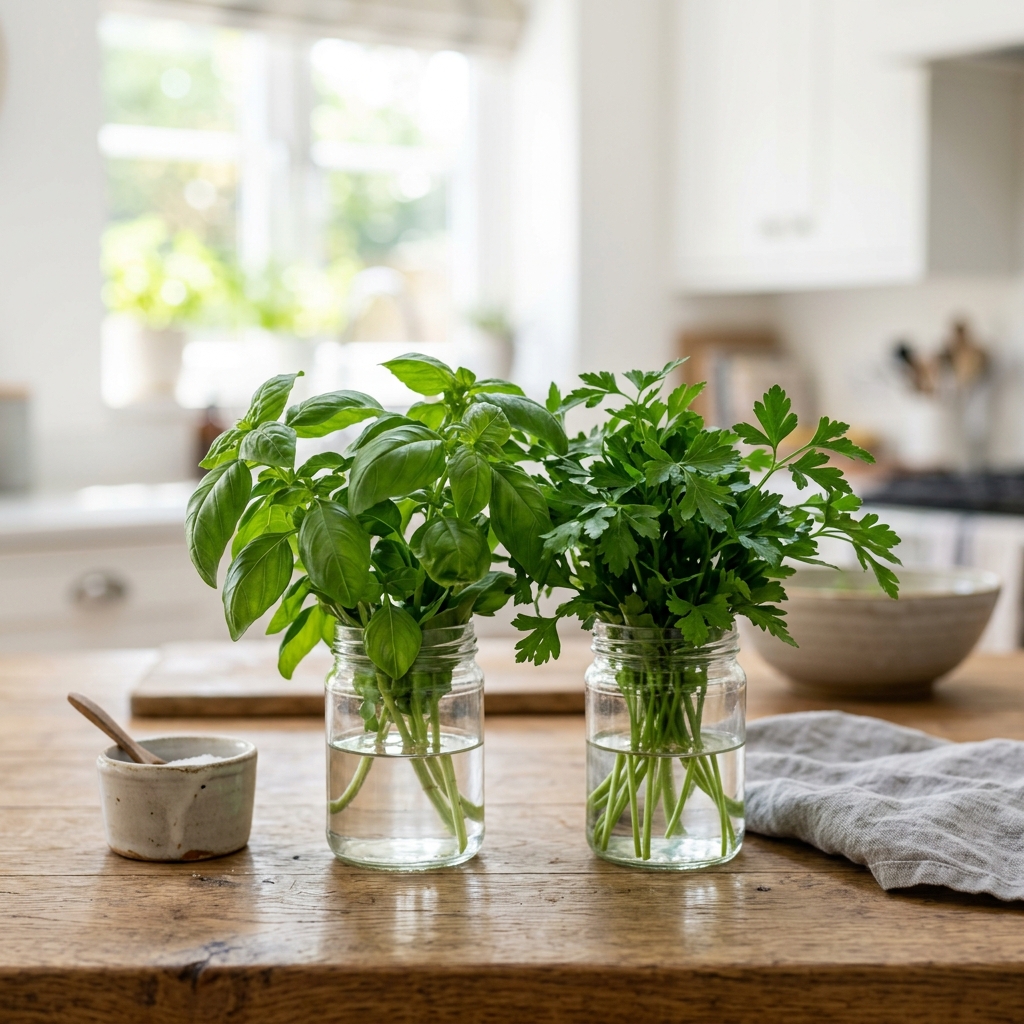
Basil: Trim stems and store in a water jar at room temp (15–20°C) — Room Temp Bouquet Method 🌸
Cold-sensitive basil thrives at cool room temperature. 💡 Storage Tip: Trim 1 cm off the stems, place upright in a jar filled with 1–2 cm of water, and loosely cover the leaves with a plastic bag at room temperature (15–20°C / 59–68°F) for 7–10 days.
Parsley & Cilantro: Trim stems, place in a water jar, cover with plastic, and refrigerate (0–4°C) — Cold Bouquet Method ❄️
Cold-hardy herbs like parsley, cilantro, and dill prefer cold refrigeration. 💡 Storage Tip: Trim stems, place upright in a jar with water, cover loosely with a plastic bag, and refrigerate on the fridge door shelf (0–4°C) for 2–3 weeks.
Wrap in damp paper towels or freeze in oil ice trays — Long-Term Storage 🧊
When water jar storage is not feasible, humidity-controlled wrapping or oil freezing is ideal. 💡 Storage Tip: Wrap herbs in slightly damp paper towels inside a Ziploc bag in the fridge (7–10 days), or freeze chopped herbs in olive oil using ice cube trays (-18°C) for up to 6 months.
2. Essential Storage Rules and Cautions
Exposing basil to temperatures below 10°C triggers chilling injury, damaging cell membranes and turning the leaves black while destroying its essential aromatic oils. Basil must be kept at room temperature like cut flowers.
Trapping excess water on herb leaves before storage causes moisture buildup inside sealed containers, leading to rapid decay, sliminess, and bacterial/mold growth. Wash herbs right before cooking.
📌 Frequently Asked Questions (FAQ)
My basil turned black after putting it in the fridge. Is it still usable? ▼
Blackened basil leaves result from chilling injury, which breaks cell walls and activates polyphenol oxidase enzymes. While not toxic, the leaves lose their essential aroma and collapse in texture, making them unsuitable for fresh garnishes or pesto.
Is there a way to revive wilted parsley or basil? ▼
Yes! Trim 0.5–1 cm off the stem ends at a 45-degree angle and submerge the stems in cold ice water for 10–15 minutes. Osmotic pressure will pull water up the vascular system, restoring crispness and vitality.