Have you ever bought juicy, sweet peaches and put them in the fridge, only to find them flavorless, dry, and mealy a few days later? 🍑
Peaches are extremely sensitive to temperature changes and impact. Keeping them at temperatures that are too low for too long triggers ‘chilling injury,’ making the flesh dry, fibrous, and tasteless. Improper storage leads to lost sweetness, softening, and mold growth.
In this guide, introduces a scientifically proven 3-step storage guide based on expert guidelines to maintain the luscious sweetness and juiciness of your peaches perfectly. 🛡️
Food Safety & Scientific Evidence
This content is based on RDA & USDA & MFDS.
 FreshSelf
Zero waste! Your smart storage assistant
FreshSelf
Zero waste! Your smart storage assistant






1. Scientifically Proven Storage Guide
Ripen at cool room temperature — Maximize Sweetness & Aroma 📦
Allow firm or unripened peaches to sit at cool room temperature (15–20°C / 59–68°F) out of direct sunlight for 1–3 days to ripen naturally. 💡 Storage Tip: Ensure peaches do not touch each other. Wait until they yield slightly to gentle pressure and emit a sweet fragrance.
Wrap in paper towels or newspaper & store in the crisper drawer — Cold Storage (7 Days) ❄️
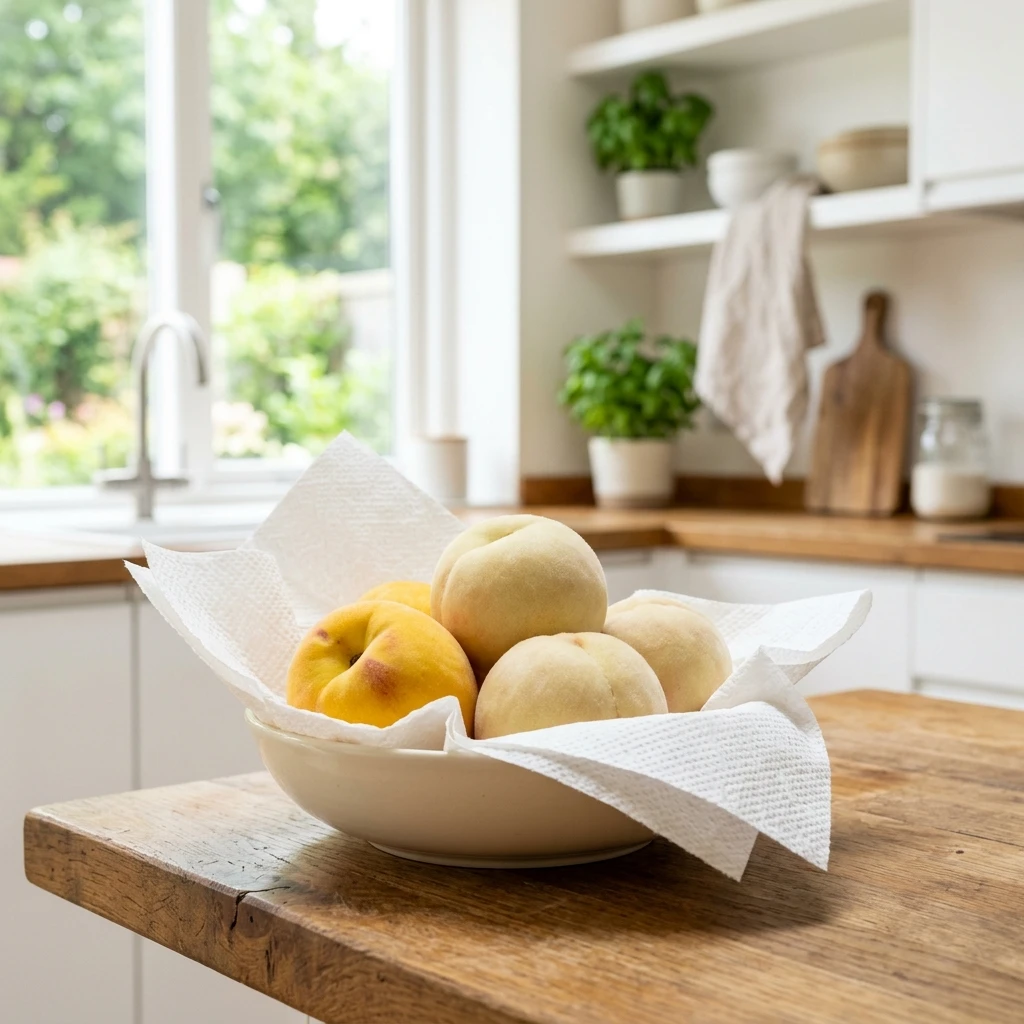
Once fully ripe, transfer peaches to the refrigerator crisper drawer to extend shelf life. 💡 Storage Tip: Wrap each peach individually in paper towels or newspaper to cushion and absorb moisture, then place in a Ziploc bag in the crisper drawer (8–10°C / 46–50°F). Take them out 1 hour before eating to restore sweetness.
Peel, slice & freeze or make peach preserves — Long-Term Storage (90 Days) 🧊
For long-term storage, freezing or preserving in syrup is best. 💡 Storage Tip: Peel, pit, and slice peaches, then freeze them in a single layer before transferring to an airtight Ziploc bag (-18°C or below), or cook them with sugar syrup to make preserves. Enjoy for over 3 months.
2. Essential Storage Rules and Cautions
Storing peaches on standard fridge shelves or at ultra-cold temperatures for prolonged periods causes chilling injury, turning the flesh dry and mealy while destroying sweetness and aroma. Keep them in the vegetable crisper drawer (8–10°C) after ripening and consume quickly.
Water on peach skins invites mold and accelerates spoilage. Separate bruised or damaged peaches immediately to consume first, and wash peaches right before eating.
📌 Frequently Asked Questions (FAQ)
Why do refrigerated peaches lose their sweetness? ▼
Low temperatures suppress flavor compounds and temporarily dull sweetness perception. Taking refrigerated peaches out to room temperature 1–2 hours before eating allows the flesh to warm up, restoring their natural aroma and rich sweetness.
Are there differences in storing white, yellow, and nectarine peaches? ▼
The fundamental rules (ripen at room temperature, store in crisper drawer) apply to all types. However, nectarines and firm white peaches have firmer flesh and last longer at room temperature, while soft white and yellow peaches soften quickly and should be monitored closely before moving to cold storage.