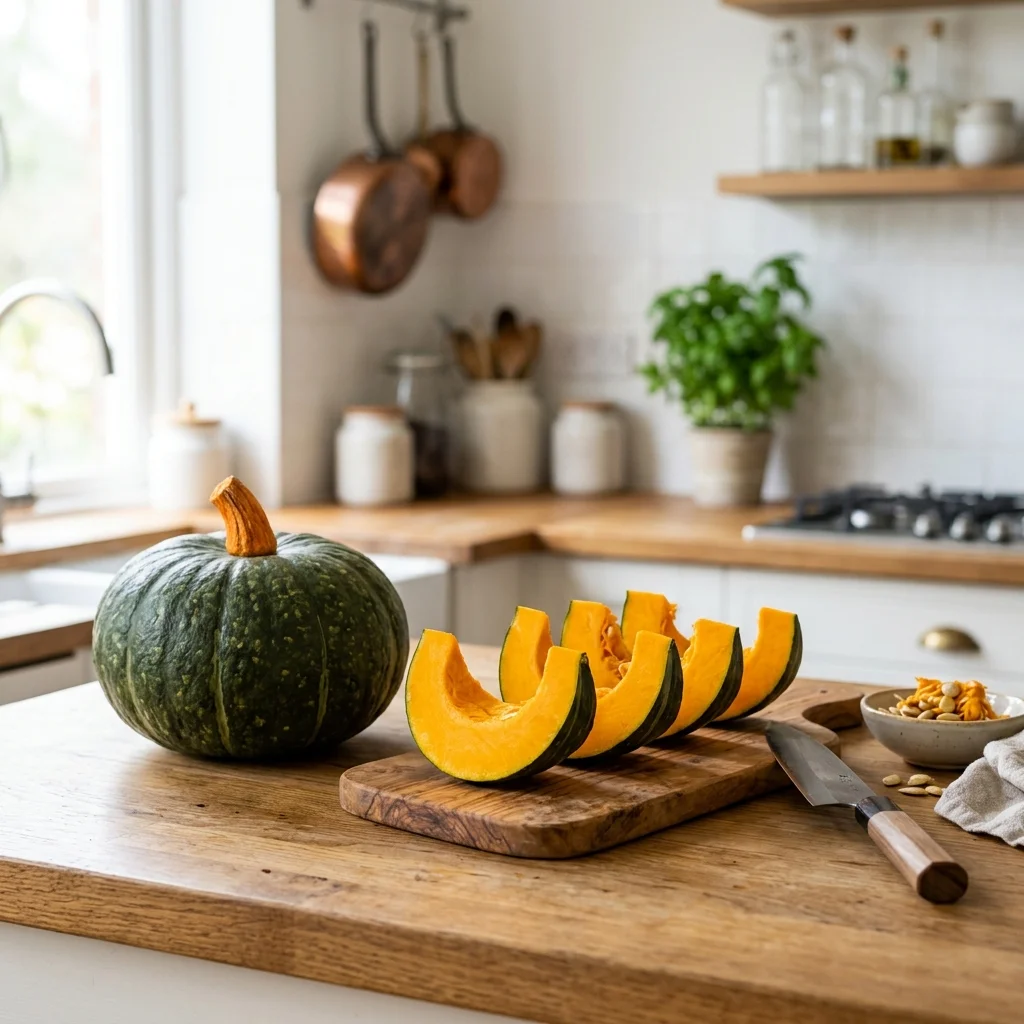
Have you ever bought a firm, sweet pumpkin or squash, only to find mold growing from the stem or the cut surfaces drying out and spoiling in the fridge? 🎃
Pumpkins and hard squashes have thick skins ideal for long-term storage, but they are highly sensitive to temperature and moisture. Whole pumpkins stored in humid or overly cold conditions develop stem rot, while cut pumpkins left with their seeds and pulpy centers deteriorate within days due to bacterial soft rot.
In this guide, introduces a scientifically proven 3-step storage guide recommended by agriculture and food safety experts to preserve sweet flavor and dense texture for up to 3 months. 🛡️
Food Safety & Scientific Evidence
This content is based on RDA & USDA & MFDS.
 FreshSelf
Zero waste! Your smart storage assistant
FreshSelf
Zero waste! Your smart storage assistant







1. Scientifically Proven Storage Guide
[Whole] Store upright in a cool, dry place at 10–15°C — Optimal Pantry Storage (1–2 Months) ☀️
Whole pumpkins thrive in dark, well-ventilated room temperature environments. 💡 Storage Tip: Wipe off dry dirt and place the pumpkin stem-side up on newspaper or cardboard in a cool cabinet (10–15°C / 50–59°F). Curing at room temperature enhances sweetness.
[Cut] Scoop seeds, wrap in plastic wrap, and refrigerate — Cold Storage (7–10 Days) 📦
Exposed flesh oxidizes and loses moisture rapidly upon cutting. 💡 Storage Tip: Thoroughly scrape out seeds and pulp with a spoon, pat the cut surface dry with paper towels, wrap tightly with plastic wrap without air pockets, and store in the crisper drawer (5–8°C).
[Long-Term] Steam/slice and freeze — Frozen Storage (3+ Months) ❄️
Pre-cooking before freezing preserves flavor and prevents waterlogging upon thawing. 💡 Storage Tip: Microwave or steam sliced pumpkin briefly until slightly tender, let cool completely, portion into Ziploc freezer bags, and store below -18°C (-0.4°F).
2. Essential Storage Rules and Cautions
The optimal storage temperature for whole pumpkins is 10–15°C (50–59°F). Exposing them to cold, humid refrigerator air (0–4°C) causes chilling injury, leading to rapid decay and mold growth around the stem.
The moist inner cavity containing seeds and pulp is prone to rapid microbial growth. Leaving the seeds attached causes cut pumpkin pieces to turn soft, slimy, and moldy within a few days.
📌 Frequently Asked Questions (FAQ)
My pumpkin stem turned white or powdery. Is it still safe to eat? ▼
A dry, powdery white film on a hardened stem is often a natural sign of curing and sugar concentration as moisture evaporates. However, if it looks like fuzzy mold or smells sour, cut away a generous portion around the stem or discard the pumpkin if soft rot has spread.
Is there a trick to safely cutting hard pumpkins or kabocha squash? ▼
Hard squashes can be difficult and dangerous to slice raw. Microwaving a clean, whole pumpkin for 2–3 minutes softens the outer rind just enough, allowing a knife to slice through smoothly without slipping.