Have you ever put an unripe avocado in the refrigerator only to have its flesh turn black, stringy, and mealy? 🥑
Avocados are climacteric fruits that continue to respire and ripen after being harvested. Storing them at the wrong temperature can permanently halt ripening or destroy their internal cellular structure, requiring special care.
In this guide, shares a scientifically proven 3-step storage guide based on official recommendations from the California Avocado Commission (CAC) and the USDA to maximize freshness and preserve flavor and nutrients. 🛡️
Food Safety & Scientific Evidence
This content is based on CAC & USDA & MFDS.
 FreshSelf
Zero waste! Your smart storage assistant
FreshSelf
Zero waste! Your smart storage assistant









1. Scientifically Proven Storage Guide
Store in a paper bag at room temperature before fully ripe — Room Temp Storage (5 Days) 🥑
Firm, unripe avocados must be kept at a room temperature of 15–20°C (59–68°F) to ripen normally. 💡 Storage Tip: Place avocados in a paper bag with an apple or banana. The ethylene gas released by these fruits concentrates inside the bag, accelerating and stabilizing the avocado's ripening process.
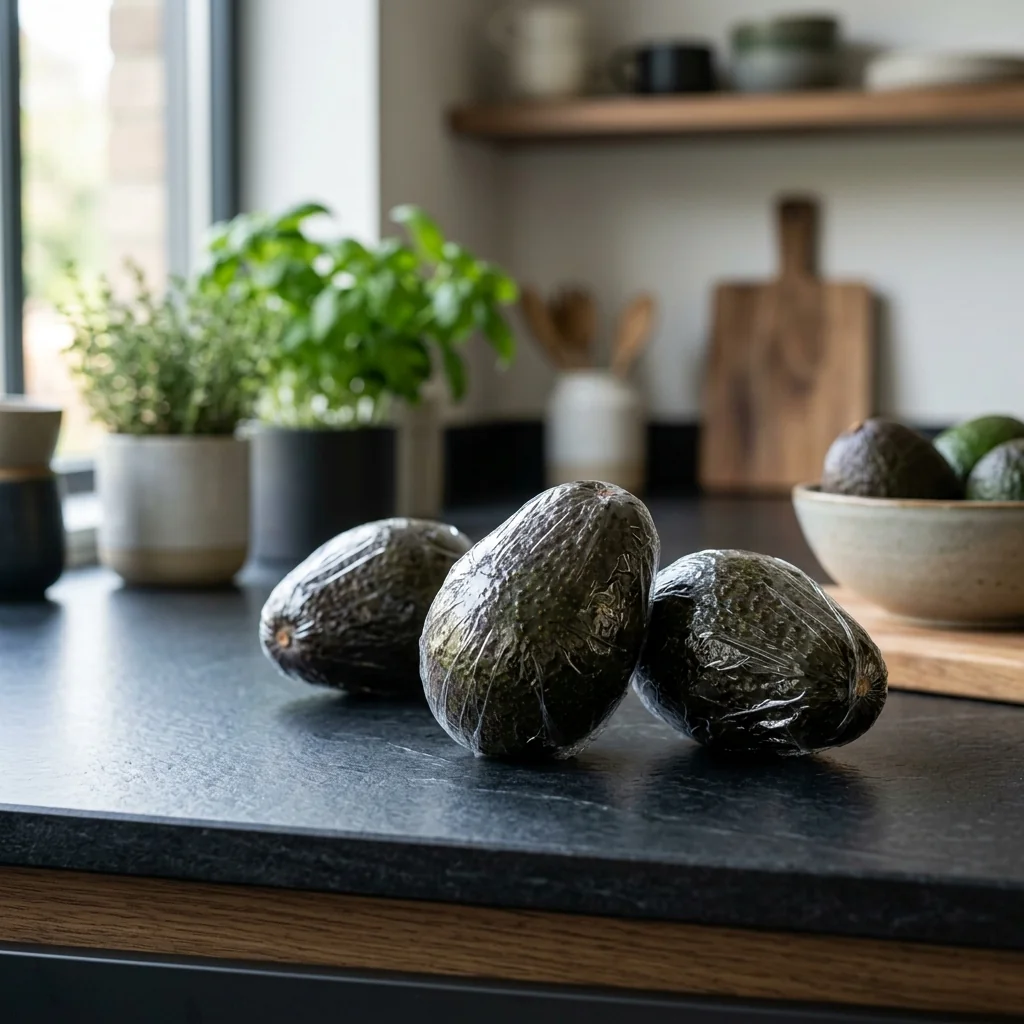
Wrap individually with plastic wrap and refrigerate once ripe — Cold Storage (7 Days) ❄️
An avocado is fully ripe when its skin turns dark purplish-black and yields gently to soft pressure. 💡 Storage Tip: Immediately wrap fully ripe avocados individually in plastic wrap and store them in the refrigerator crisper drawer. Low temperatures slow down respiration, preventing over-ripening and spoilage.
Brush cut surfaces with lemon juice and seal tightly — Prevent Browning 🍋
When storing an unused avocado half, keep the pit embedded in the flesh. 💡 Storage Tip: Brush a thin layer of lemon juice (or olive oil) over the cut surface, then wrap tightly with plastic wrap to block air. The acidity of the lemon and the barrier of oil effectively inhibit polyphenol oxidase activity, preventing browning.
2. Essential Storage Rules and Cautions
Exposing hard, green avocados to low temperatures (below 7°C / 45°F) causes chilling injury. Cellular tissue breaks down, permanently stopping the ripening process and leaving the flesh black, stringy, and mealy even if moved back to room temperature.
If large black spots cover the skin and the fruit feels excessively soft when lightly squeezed, the flesh inside has likely rotted. Blackened vascular strands running through the flesh also indicate spoilage, so exercise caution before consuming.
📌 Frequently Asked Questions (FAQ)
Why shouldn't unripe avocados be refrigerated? ▼
Placing hard green avocados in low temperatures suppresses enzymatic activity, permanently halting the ripening process and causing chilling injury that turns the flesh black. Always ripen them at room temperature until the skin turns dark brown before refrigerating.
How do I store a leftover avocado half without browning? ▼
Keep the seed in place, brush a thin layer of lemon juice or olive oil on the exposed surface, wrap tightly with plastic wrap to eliminate air contact, and store in an airtight container in the fridge.