Famous for its mild flavor and tender white flakes, cod is one of the world’s most beloved fish, featured in Fish & Chips, Bacalhau, and savory stews! However, have you ever stored cod only to find it emitting a strong fishy odor or becoming mushy and falling apart? 🐟
Fresh cod flesh naturally contains odorless trimethylamine oxide (TMAO). Over time after harvest, microbial enzymes (such as Pseudomonas) reduce TMAO into trimethylamine (TMA), the primary chemical compound responsible for strong fishy off-odors. Additionally, cod’s myosin proteins are particularly susceptible to rapid freeze denaturation, breaking connective tissues and making the texture dry and mealy if improperly frozen.
In this guide, we introduce a scientifically proven 3-step cod storage guide based on guidelines from leading marine and food safety authorities to suppress fishy odors and preserve its firm texture. 🛡️
Food Safety & Scientific Evidence
This content is based on NIFS & NOAA & USDA & MFDS.
 FreshSelf
Zero waste! Your smart storage assistant
FreshSelf
Zero waste! Your smart storage assistant









1. Scientifically Proven Storage Guide
Wipe moisture dry and wrap tightly — Absorb Moisture & Block Air 📦
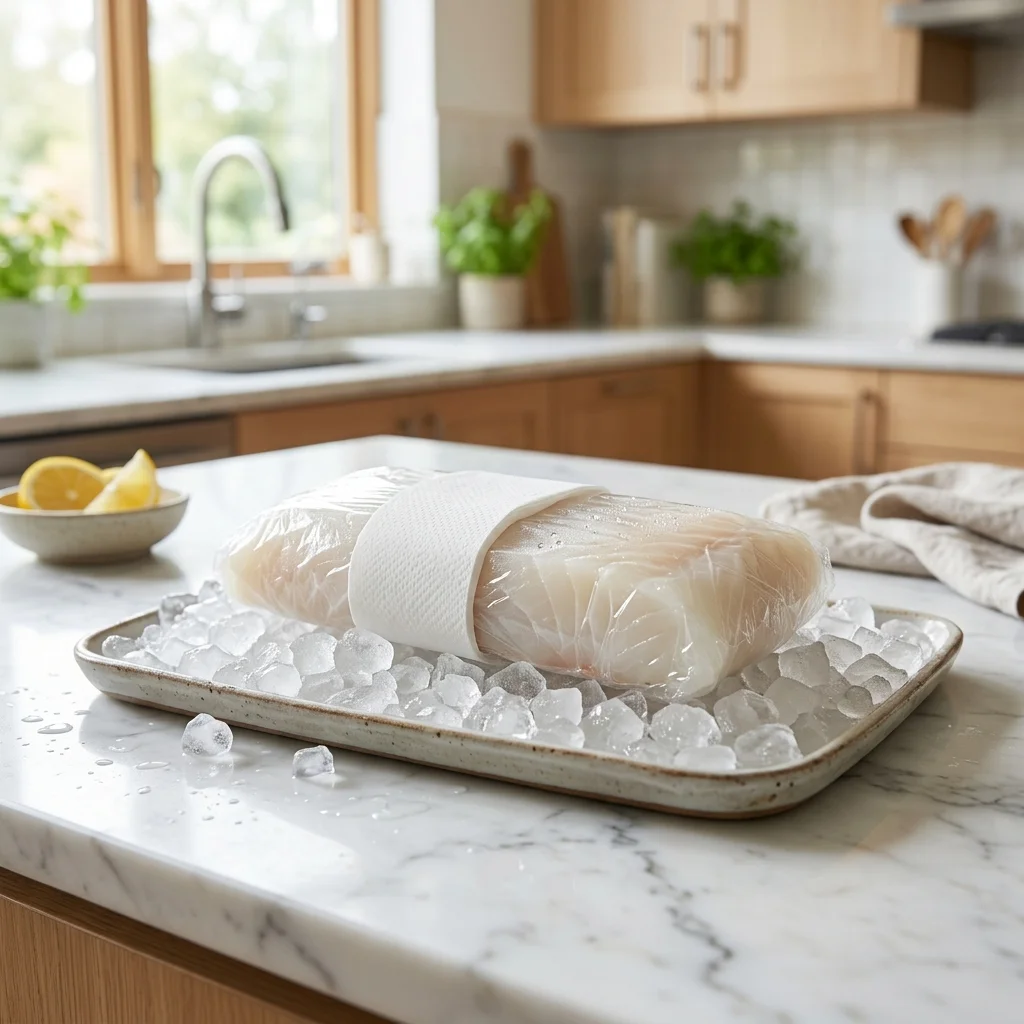
Thoroughly wipe surface moisture off the cod fillet, wrap it in absorbent paper towels or food-grade paper, and seal tightly with plastic wrap. 💡 Storage Tip: Absorbing exuded moisture and blocking air contact prevents TMAO reduction and tissue breakdown.
Store at 0–1°C surrounded by ice — Ultra-Cold Refrigeration (1–2 Days) ❄️
The optimal temperature to prevent cod spoilage and odor formation is 0–1°C (32–34°F). 💡 Storage Tip: Place wrapped cod in an airtight container with ice packs surrounding it in the fridge. This halts bacterial growth like *Pseudomonas*, maintaining peak freshness for 1 to 2 days.
Vacuum-seal and flash freeze below -18°C — Freezer Storage (3 Months) 🧊
To preserve cod long-term, you must minimize myosin protein freeze denaturation. 💡 Storage Tip: Wipe surface dry, vacuum-seal (or remove all air from a freezer Ziploc bag), and flash freeze below -18°C (0°F). Preventing large ice crystal formation ensures firm texture without fishy smell for over 3 months.
2. Essential Storage Rules and Cautions
Drip released on the cod's surface serves as a breeding ground for microorganisms and accelerates the reduction of TMAO to TMA, causing a strong fishy odor. Always wipe the flesh completely dry with absorbent paper towels before storing.
Lean cod flesh undergoes rapid protein denaturation when exposed to oxygen, leading to dry texture and microbial growth. Keep cod sealed tightly at 0–1°C to block air contact and temperature spikes.
📌 Frequently Asked Questions (FAQ)
What is the best way to remove fishy odors from cod before cooking? ▼
Soaking cod in rice water or milk for 10–15 minutes allows milk proteins (casein) or starch particles to absorb trimethylamine (TMA). Additionally, lightly applying lemon juice or vinegar neutralizes TMA due to weak acidity, significantly reducing odors.
What is the best way to thaw frozen cod? ▼
To prevent drip loss and protein denaturation caused by sudden temperature changes, transfer frozen cod to the refrigerator (0–4°C / 32–39°F) 12–24 hours before cooking for slow thawing. Thawing in warm water or a microwave causes muscle tissue shrinkage, mealiness, and strong fishy odors.