Have you ever bought expensive beef and put it in the fridge for a few days, only to find the surface turned dark brown or developed an off-odor from blood drippings? 🥩
Beef is rich in moisture and protein, making it highly susceptible to rapid lipid oxidation and bacterial growth. How you control surface blood (drip) and oxygen exposure makes a drastic difference in flavor, tenderness, and juiciness.
In this guide, shares a scientifically proven 3-step storage guide based on fresh meat safety guidelines from the Ministry of Food and Drug Safety (MFDS) and the USDA to prevent browning and moisture loss while keeping your beef fresh. 🛡️
Food Safety & Scientific Evidence
This content is based on MFDS & USDA.
 FreshSelf
Zero waste! Your smart storage assistant
FreshSelf
Zero waste! Your smart storage assistant





1. Scientifically Proven Storage Guide
Wipe off surface moisture and blood (drip) thoroughly — Prevent Off-Odors & Spoilage 🥩
The blood and liquid (drip) exuded on the beef surface cause gamey odors and serve as an ideal nutrient medium for spoilage bacteria. 💡 Storage Tip: Right before cooking or storing, firmly press paper towels onto the meat surface to absorb all excess moisture and drip, suppressing microbial growth and rancidity.
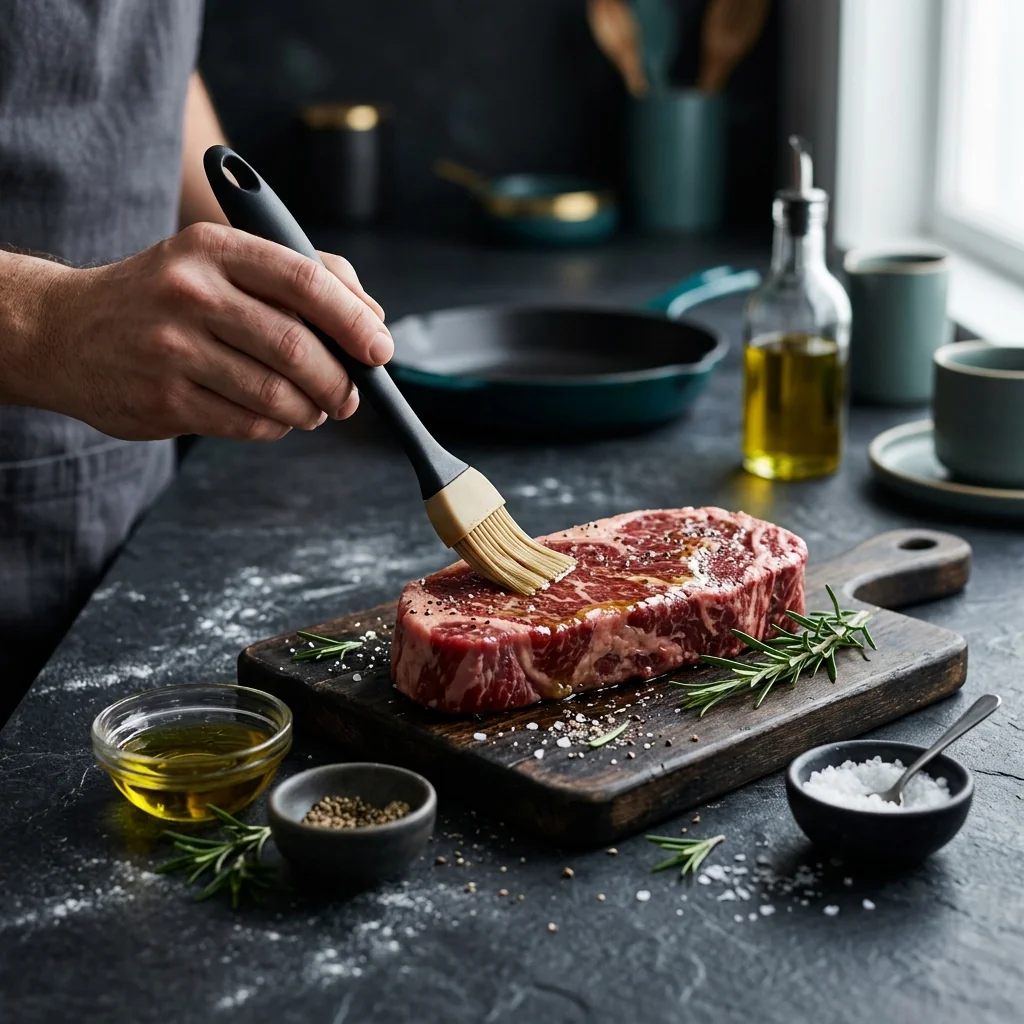
Lightly coat the surface with cooking oil (olive oil) — Oil Barrier against Oxygen 🫒
Spread a thin layer of cooking oil or olive oil over the dry beef surface. 💡 Storage Tip: The oil film acts as a barrier preventing atmospheric oxygen from directly contacting the meat, significantly delaying lipid oxidation and myoglobin browning while locking in internal moisture.
Wrap tightly with plastic wrap excluding air pockets — Cold Storage (3 Days), Frozen (90 Days) 📦
Portion the oil-coated beef into single meal servings and wrap tightly with plastic wrap to eliminate all air gaps. 💡 Storage Tip: Place wrapped beef inside a Ziploc bag or airtight container for double sealing. It stays fresh for up to 3 days in the refrigerator meat drawer (0–2°C) and up to 90 days in the freezer (-18°C) without freezer burn.
2. Essential Storage Rules and Cautions
When meat slices overlap or are sealed tightly without air, a purplish-brown color forms because oxygen cannot react with the myoglobin protein. This is completely normal. Exposing the beef to air for 15–20 minutes triggers a bloom phenomenon, restoring its bright cherry-red color. Discard the meat only if it emits a sour, offensive odor or feels tacky/slimy.
Soaking frozen beef in hot water or leaving it on the counter exposes it to the dangerous temperature zone (4–60°C / 40–140°F), where foodborne bacteria multiply exponentially. It also causes heavy drip loss, making the meat tough and dry. Always transfer it to the refrigerator (below 4°C) 24 hours prior to cooking for slow, safe thawing.
📌 Frequently Asked Questions (FAQ)
The inside of my packaged beef turned brown. Is it spoiled? ▼
Most likely not. Myoglobin, the protein responsible for beef color, temporarily turns purplish-brown (deoxymyoglobin) when oxygen is absent. If exposed to air for 15–20 minutes, it will reoxygenate back to a bright red color. However, if accompanied by a foul odor or sticky texture, discard it immediately.
What is the safest and best way to thaw frozen beef? ▼
The safest and highest-quality method is refrigerator thawing. Transfer frozen beef to the fridge (below 4°C) 12–24 hours before cooking. Slow thawing minimizes drip and moisture loss, preserving flavor and texture while keeping the meat out of the bacterial growth danger zone (4–60°C).