Have you ever placed bell peppers in the refrigerator only to find them watery, soft, and pitted after a few days? 🫑
Bell peppers consist of over 90% water, making them highly sensitive to moisture and cold temperatures. Storing them below 7°C triggers ‘chilling injury,’ causing cell walls to break down, resulting in surface pitting and soft rot. Excess surface moisture also breeds mold around the stem.
In this guide, introduces a scientifically proven 3-step bell pepper storage guide recommended by agriculture and food safety experts to maximize crispness and sweetness. 🛡️
Food Safety & Scientific Evidence
This content is based on RDA & USDA & MFDS.
 FreshSelf
Zero waste! Your smart storage assistant
FreshSelf
Zero waste! Your smart storage assistant


1. Scientifically Proven Storage Guide
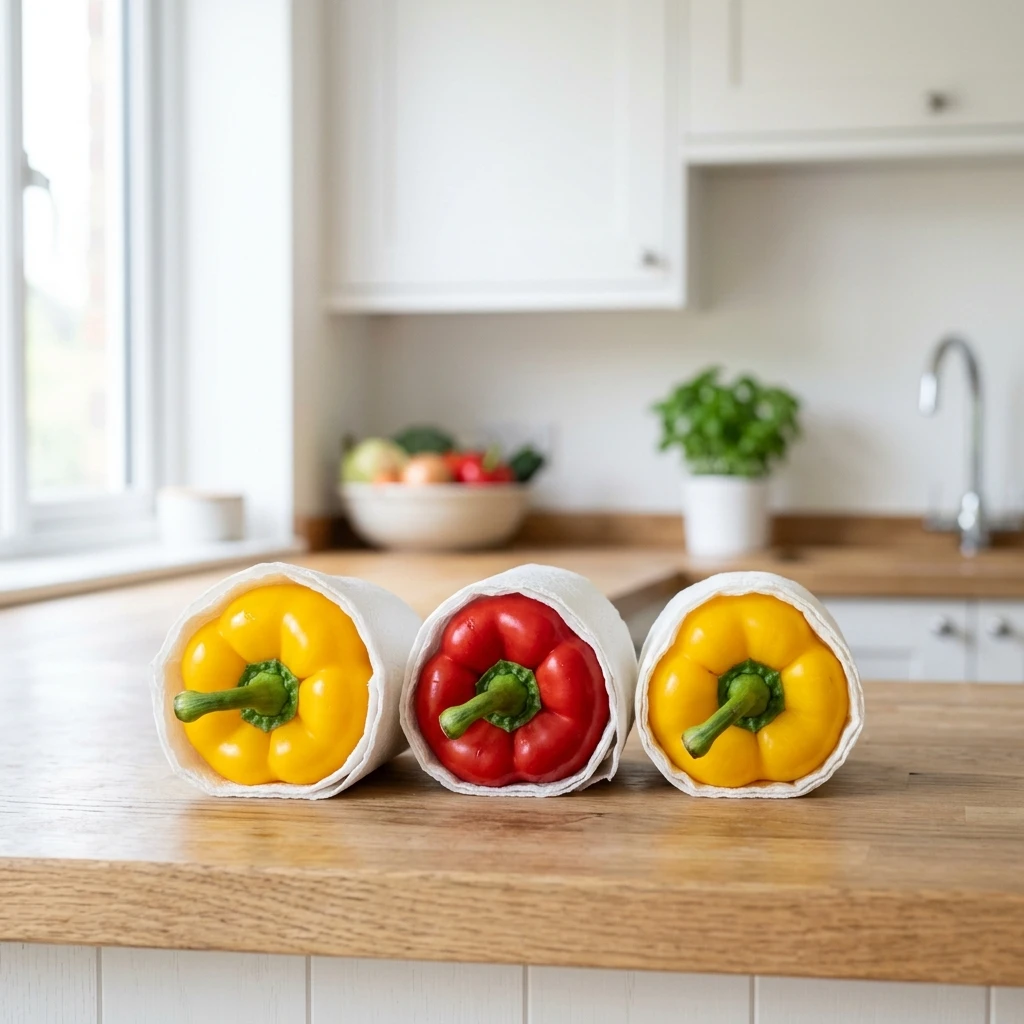
Wipe dry and wrap individually in paper towels — Moisture Control 📦
Managing moisture is key to preventing decay. 💡 Storage Tip: Do not wash. Gently wipe off surface dampness with a dry cloth or paper towel, then wrap each bell pepper individually in a paper towel with the stem facing up.
Seal in plastic wrap and store in the crisper drawer — Cold Storage (10–14 Days) ❄️
Wrapping prevents moisture loss while blocking external contaminants. 💡 Storage Tip: Place paper-wrapped peppers inside sealed plastic wrap or a Ziploc bag, and store in the refrigerator crisper drawer (7–10°C) to maintain crispness for 10 to 14 days.
Deseed, slice, and freeze remaining cut peppers — Frozen Storage (3–6 Months) ❄️
Sliced peppers lose moisture rapidly if kept refrigerated. 💡 Storage Tip: Remove seeds and inner pith, pat dry, slice into bite-sized pieces, seal in freezer bags, and freeze below -18°C for use in cooked dishes for 3 to 6 months.
2. Essential Storage Rules and Cautions
Water trapped around the stem or skin crevices creates a breeding ground for mold and bacteria. Keep bell peppers dry and wipe away any dirt with a paper towel before storage; wash only right before cooking.
Bell peppers are cold-sensitive crops. Prolonged exposure to temperatures below 5°C causes pitting (sunken spots) and breakdown of cell tissue, leading to moisture loss. Store them in the warmer crisper drawer (7–10°C).
📌 Frequently Asked Questions (FAQ)
How should I store half a used bell pepper? ▼
Remove all inner seeds and white pith, then pat the cut surfaces dry with a paper towel. Wrap the cut pepper tightly in plastic wrap to block air exposure and store it in the crisper drawer, using it within 3 to 4 days.
Can I eat frozen bell peppers raw in a salad? ▼
Freezing ruptures the cell walls of bell peppers, causing them to lose crunch and turn soft upon thawing. Frozen bell peppers are best cooked directly without thawing in stir-fries, soups, sauces, or pasta dishes.