Have you ever opened a jar or can of olives, thrown away the brine, or left it in the fridge only to find the olives dried out, soft, and covered in mold? 🫒
Olives have a high fat content and delicate moisture balance, making them oxidize rapidly and turn mushy when exposed to air. Once opened, if the storing liquid dries out, mold and bacteria can easily flourish on the surface.
In this guide, introduces a scientifically proven 3-step storage guide based on expert guidelines to preserve the firm texture and rich flavor of your olives for a long time. 🛡️
Food Safety & Scientific Evidence
This content is based on RDA & USDA & MFDS.
 FreshSelf
Zero waste! Your smart storage assistant
FreshSelf
Zero waste! Your smart storage assistant




1. Scientifically Proven Storage Guide
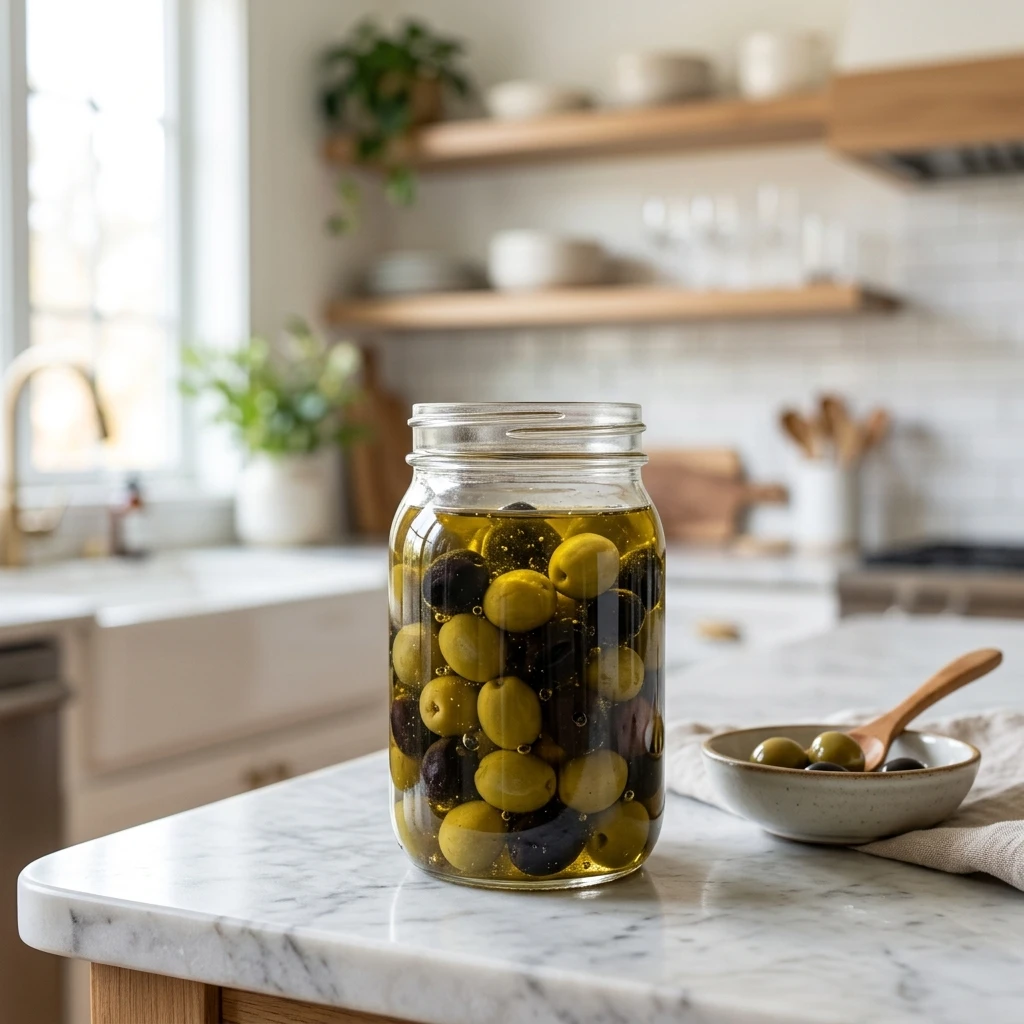
Keep fully submerged in brine in a glass container — Oxygen & Oxidation Barrier 📦
Exposing olive surfaces to air causes softening and mold growth. 💡 Storage Tip: Do not leave olives in open cans; transfer them to a glass jar or airtight plastic container and submerge them completely in their brine. Preventing surface exposure is key.
Refrigerate at 0–4°C — Cold Storage (21 Days) ❄️
Opened olives spoil rapidly at room temperature and must be refrigerated immediately. 💡 Storage Tip: Store the submerged olives in an airtight container on an inner refrigerator shelf (0–4°C / 32–39°F). They will maintain crispness and flavor for up to 3 weeks (21 days).
Top with olive oil or freeze dry olives — Long-Term Storage (90 Days) 🧊
If brine is insufficient or you wish to store olives over a month, use oil sealing or freezing. 💡 Storage Tip: Pour a thin layer of extra virgin olive oil over the top to seal out oxygen, or drain olives and freeze them in an airtight Ziploc bag below -18°C for over 3 months of usability.
2. Essential Storage Rules and Cautions
The saltwater or oil inside olive containers acts as an essential barrier against oxygen and evaporation. Draining the liquid causes olives to dry out instantly and oxidize, creating an ideal environment for mold.
Scooping olives with fingers or a used fork introduces bacteria into the brine, corrupting the entire jar. Always use a clean, completely dry spoon or fork.
📌 Frequently Asked Questions (FAQ)
What should I do if there is not enough brine left after opening? ▼
Dissolve 1 tsp of salt (approx. 5g) in 1 cup of water (200ml) to create a simple brine solution and top up the jar until all olives are covered. Alternatively, pour olive oil over them to prevent any exposure to air.
The oil or brine turned white and cloudy in the fridge. Is it spoiled? ▼
No, it is completely safe. The monounsaturated fats in olive oil naturally solidify and crystallize at low temperatures (below 4–5°C). This is a physical reaction that does not affect safety or taste, and it will liquefy again at room temperature.