Have you ever found your container of miso or fermented soybean paste turning dark black, drying out on top, or puffing up with gas? 🍲
Even after fermentation is complete, active proteases (protein-decomposing enzymes) and free amino acids remain inside miso and doenjang. Exposure to room temperature and oxygen triggers continuous non-enzymatic Maillard browning, turning the paste dark, altering flavor, and releasing CO₂ gas through heat-resistant yeast fermentation.
Based on official guidelines from the MFDS and USDA, this 3-step scientific airtight storage guide explains how to block Maillard browning and keep the vibrant color and deep flavor of miso fresh for over a year. 🛡️
Food Safety & Scientific Evidence
This content is based on MFDS & USDA & NRIB.
 FreshSelf
Zero waste! Your smart storage assistant
FreshSelf
Zero waste! Your smart storage assistant









1. Scientifically Proven Storage Guide
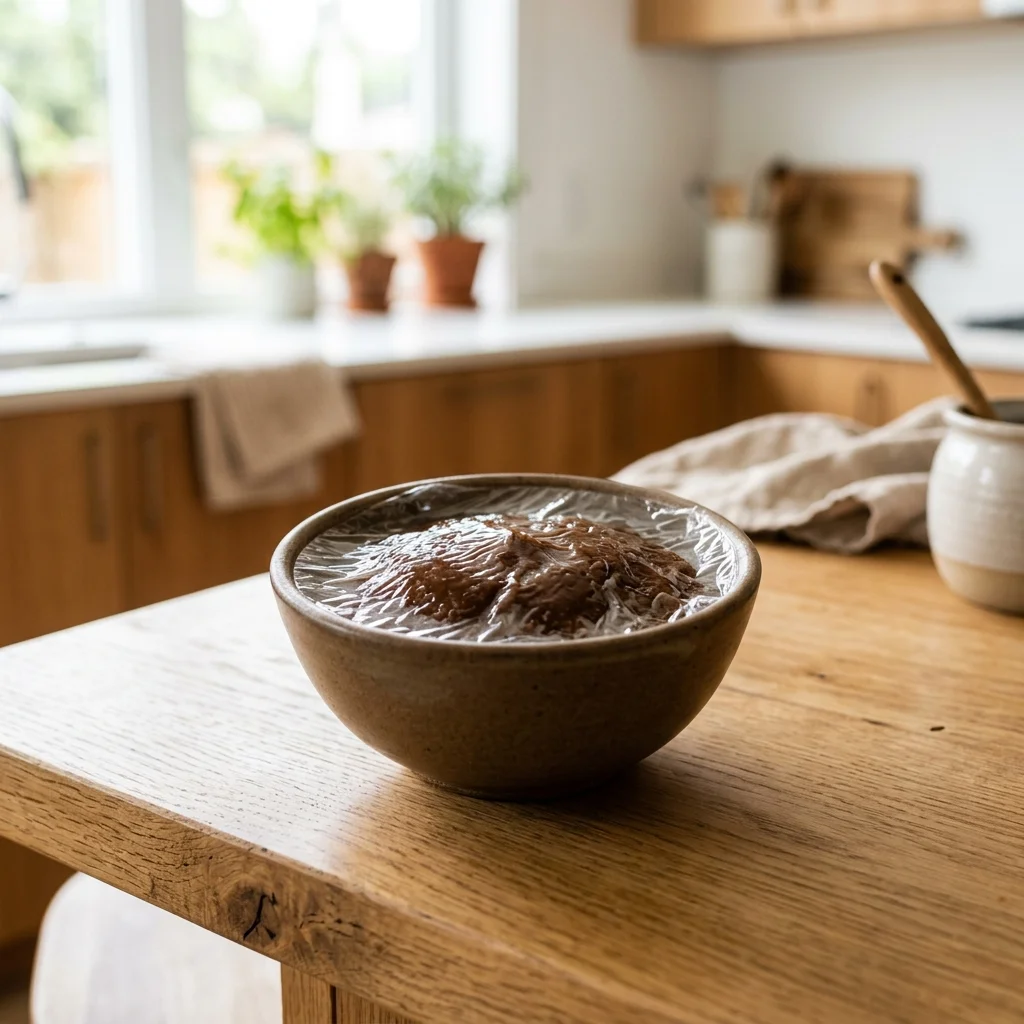
Press plastic wrap directly against the surface to block air — Air-barrier Sealing 🧴
Smooth out the paste in its container and press a layer of plastic wrap tightly onto the surface (Air-barrier). 💡 Storage Tip: Eliminating air contact stops oxygen-driven Maillard browning, surface crusting, and aerobic mold growth.
Store in cold refrigeration at 0–4°C — Cold Refrigeration (365+ Days) ❄️
Maillard reactions and enzyme activities slow down dramatically at lower temperatures. 💡 Storage Tip: Keep in a fridge at 0–4°C (32–39°F). The browning rate is significantly reduced, preserving original flavor and color for over a year.
Portion and freeze for long-term storage — Freezer Storage (365+ Days) 🧊
High salt and amino acid concentrations prevent miso from freezing solid even at -18°C (0°F), keeping it scoopable. 💡 Storage Tip: Freeze in airtight containers; you can scoop it out directly with a spoon without defrosting.
2. Essential Storage Rules and Cautions
Exposing miso to room temperature (above 20°C / 68°F) accelerates Maillard browning, turning the paste dark red or black. Residual yeasts also cause over-fermentation, producing sourness, harsh bitterness, and CO₂ gas that swells the container.
Oxygen contact causes surface oxidation, drying out the top layer and encouraging mold growth. Using wet or dirty utensils introduces micro-organisms that cause spoilage.
📌 Frequently Asked Questions (FAQ)
Is it safe to eat miso or soybean paste that has turned dark black on top? ▼
Yes, it is completely safe to eat. The color change is caused by the non-enzymatic Maillard browning reaction between amino acids and sugars, which is non-toxic. However, as it darkens, it may develop a sour or bitter edge. Pressing plastic wrap onto the surface and refrigerating prevents this.
Why does my miso container puff up with gas? ▼
Residual heat-resistant yeasts inside the fermented paste feed on remaining sugars and produce carbon dioxide (CO₂) gas when exposed to warm temperatures and air. Keeping the paste at 0–4°C and sealed from oxygen stops gas production.