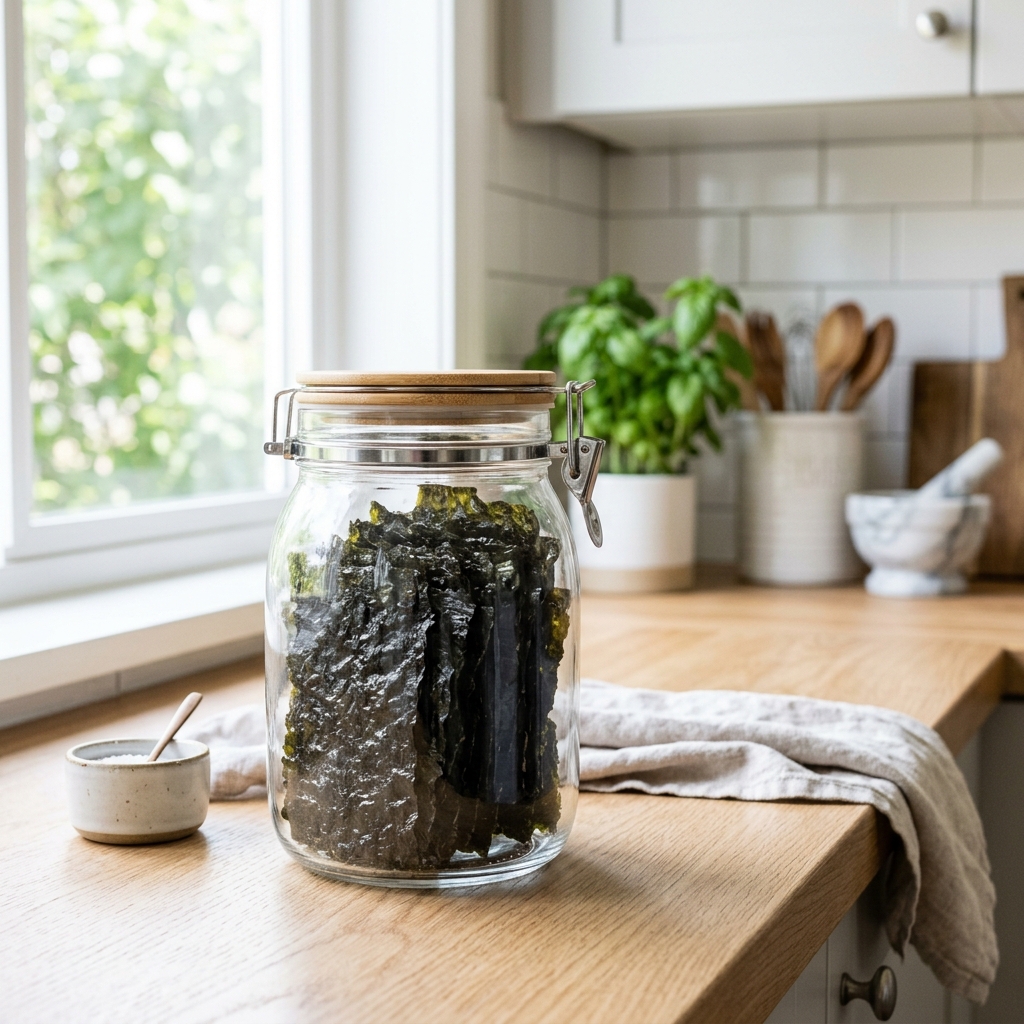
Have you ever opened a fresh pack of crispy seaweed, only to find it soggy and smelling of stale oil (rancidity) a short time later? 🍙
Dried seaweed has a highly porous structure with extreme moisture-absorbing capacity, soaking up humidity from the air like a sponge. For seasoned seaweed containing oil and salt, exposure to moisture, oxygen, and light rapidly accelerates lipid oxidation, spoiling its flavor and ruining its crunch.
In this guide, introduces a scientifically proven 3-step storage guide based on guidelines from the National Institute of Fisheries Science (NIFS), MFDS, and MAFF to keep your dried and seasoned seaweed perfectly crispy and flavorful. 🛡️
Food Safety & Scientific Evidence
This content is based on NIFS & MFDS & MAFF.
 FreshSelf
Zero waste! Your smart storage assistant
FreshSelf
Zero waste! Your smart storage assistant









1. Scientifically Proven Storage Guide
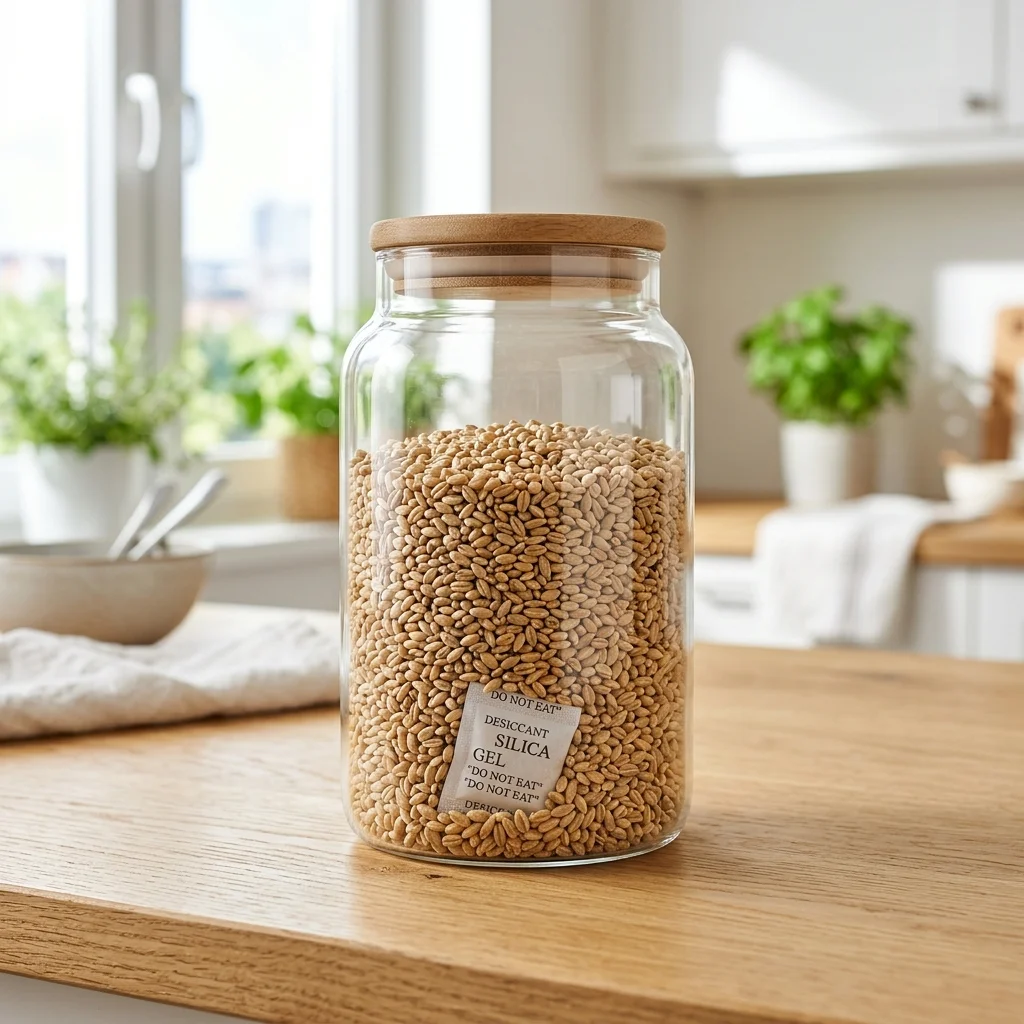
Store in an airtight container with a desiccant (silica gel) — Moisture Barrier 📦
Leaving opened seaweed at room temperature causes it to absorb humidity and lose its crunch within hours. 💡 Storage Tip: Place leftover seasoned or unseasoned seaweed in an airtight Ziploc bag or container along with a desiccant packet (silica gel) or paper towel to seal out moisture.
Double-seal and freeze below -18°C — Cold Freezer Storage (180–360 Days) ❄️
Freezing is the absolute best method for long-term storage. Sub-zero temperatures halt lipid oxidation and suppress moisture activity. 💡 Storage Tip: Squeeze out excess air, double-seal in a Ziploc bag, and freeze below -18°C (0°F). This preserves its original crispness and rich flavor for 6 months to 1 year.
Restore soggy seaweed by microwave or light roasting — Recrisp Hack ⚡
Seaweed that has accidentally absorbed moisture can regain its crunch once the water is evaporated. 💡 Storage Tip: Place soggy sheets on a plate and microwave for 15–20 seconds, or lightly toast in an unoiled pan over low heat to evaporate residual moisture and revive crispness.
2. Essential Storage Rules and Cautions
High humidity makes seaweed soft and soggy, while sunlight (UV rays) breaks down green chlorophyll pigments, turning the sheets purple/reddish. For seasoned seaweed, light and air rapidly oxidize oil, creating harmful rancid compounds.
If cold seaweed removed from the freezer is unsealed immediately, temperature differences cause instant moisture condensation inside the package, making the sheets soggy. Allow sealed seaweed to adapt to room temperature for 5–10 minutes before opening.
📌 Frequently Asked Questions (FAQ)
My seaweed turned reddish-purple. Is it still safe to eat? ▼
Purple or reddish discoloration occurs when sunlight and humidity destroy green chlorophyll, exposing red phycoerythrin pigments. While not toxic, it signifies significant loss of nutrients and flavor, and for seasoned seaweed, oil rancidity has likely occurred. Discarding it is recommended.
Is there a difference in storing seasoned vs. unseasoned dried seaweed (nori)? ▼
Both types keep best when frozen away from moisture and air. However, seasoned seaweed contains oil and carries a high risk of rancidity, so it should be consumed quickly or kept frozen. Plain unseasoned nori can last relatively long at room temperature if sealed tightly in a cool, dark place with paper towels or silica gel.