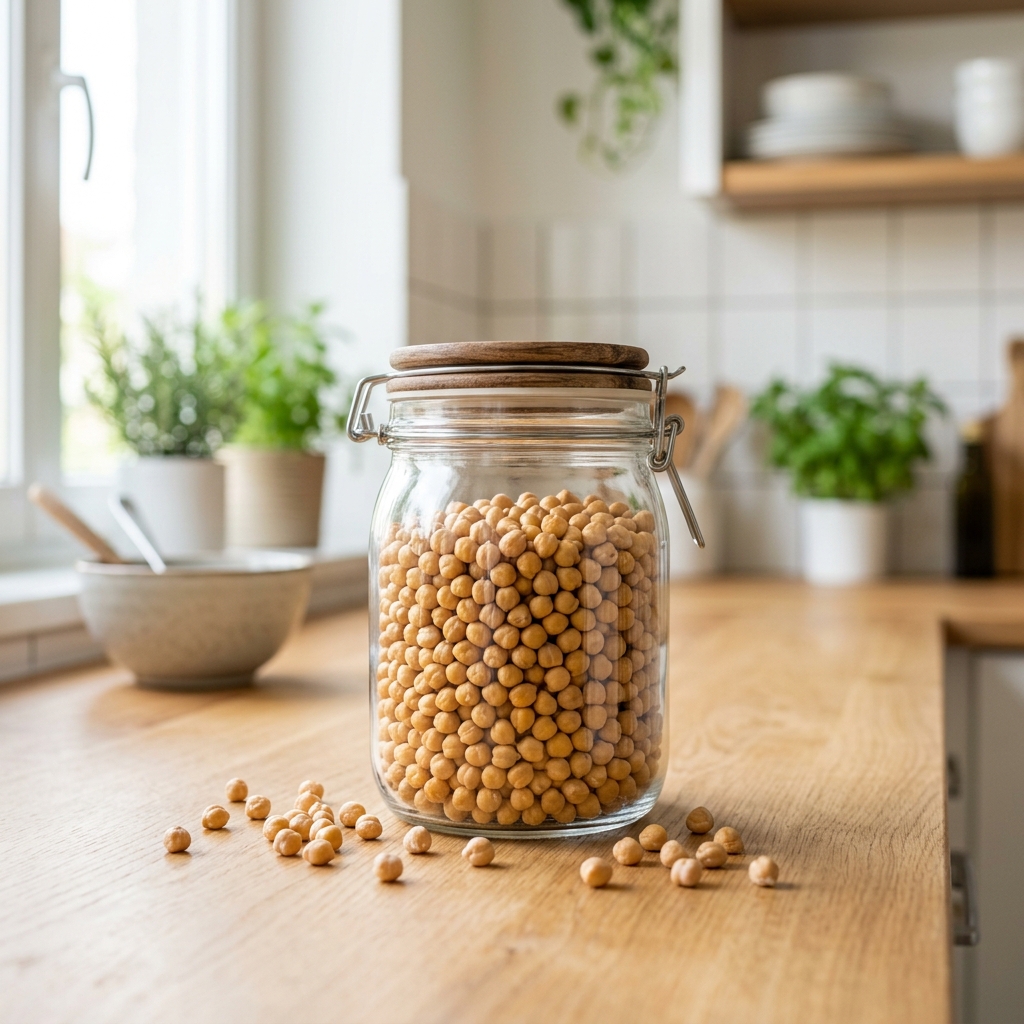
Chickpeas (garbanzo beans) are versatile, delicious legumes popular in salads, hummus, curries, and stews! 🫘
Packed with plant-based protein and fiber, chickpeas are a beloved superfood. However, their storage rules differ dramatically depending on the form (dry vs. canned). Dry chickpeas exposed to moisture can breed dangerous molds that produce cancer-causing aflatoxins. On the other hand, leaving opened canned chickpeas in their original metal cans allows tin and iron ions to leach into the food due to oxidation.
In this guide, based on scientifically verified guidelines from the USDA, FDA, and MFDS, we present a 3-step optimal storage strategy to keep your chickpeas safe and nutritious. 🛡️
Food Safety & Scientific Evidence
This content is based on USDA & FDA & MFDS.
 FreshSelf
Zero waste! Your smart storage assistant
FreshSelf
Zero waste! Your smart storage assistant






1. Scientifically Proven Storage Guide
Store dry chickpeas in sealed containers below 60% humidity — Prevent Aflatoxin Mold (1–2 Years) 📦
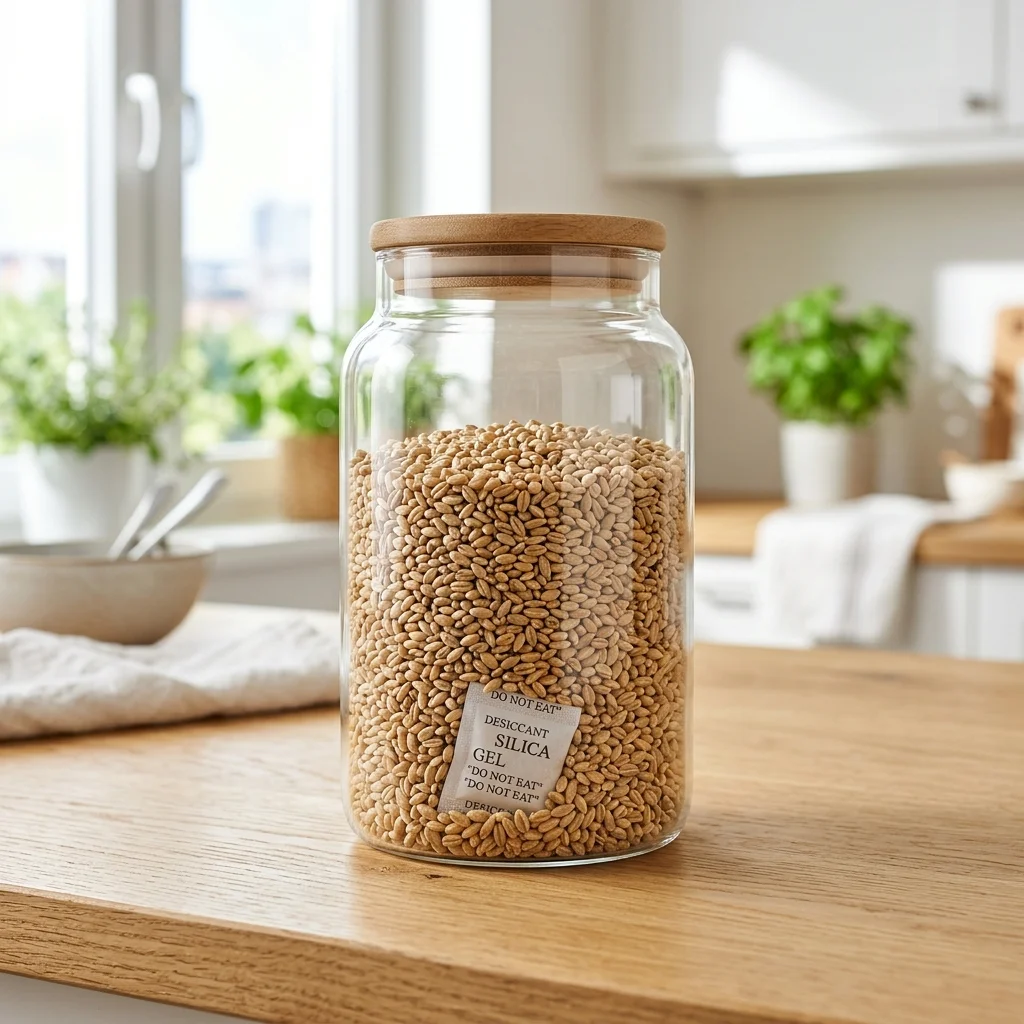
Dry chickpeas must be kept below 12% moisture content and 60% relative humidity. 💡 Storage Tip: Store them in an airtight container or Ziploc bag with a desiccant (silica gel) in a cool, dark pantry. This completely prevents mold germination, keeping dry chickpeas safe for 1 to 2 years.
Immediately transfer opened canned chickpeas into glass or PP containers — Prevent Metal Leaching 🫙
Right after opening, pour the chickpeas along with their liquid (aquafaba) into a glass jar or food-grade polypropylene (PP) airtight container. 💡 Storage Tip: Removing contents from the metal can prevents chemical oxidation, metal leaching, discoloration, and off-flavors.
Refrigerate transferred (or cooked) chickpeas at 0–4°C or freeze — Cold Storage (Refrigerated 3–4 Days / Frozen 3–6 Months) ❄️
Keep transferred canned chickpeas or home-cooked chickpeas in an airtight container in the main fridge compartment at 0–4°C (32–39°F) and consume within 3 to 4 days. 💡 Storage Tip: For long-term storage, drain cooked chickpeas, portion them into Ziploc freezer bags, and freeze (-18°C / 0°F or lower) for 3 to 6 months.
2. Essential Storage Rules and Cautions
Once a can is opened, oxygen enters and accelerates the oxidation and leaching of metals like tin and iron into the liquid and beans. This alters flavor and poses a chronic health risk; always transfer opened canned beans into glass or PP airtight containers.
When dry chickpea moisture content exceeds 12% or relative humidity rises above 60%, Aspergillus mold spores can germinate. This mold produces aflatoxins—potent, heat-stable mycotoxins known to cause liver damage.
📌 Frequently Asked Questions (FAQ)
My dry chickpeas developed white powder or spots. Can I wash and boil them to eat? ▼
No, absolutely not! White powder or spots on dry beans strongly indicate mold growth capable of producing toxic aflatoxins. Aflatoxins are heat-stable and cannot be destroyed by washing or boiling at 100°C. Discard moldy dry chickpeas immediately.
Is it okay to cover an opened can of chickpeas with plastic wrap and put it in the fridge? ▼
No! Covering the top with plastic wrap still leaves the inner metal surface and cut rim exposed to oxygen inside the container, promoting tin and iron leaching. Always transfer the entire contents into a glass or food-safe plastic container before refrigerating.