Have you ever bought fresh zucchini only to find it soft, mushy, or moldy after a few days in the fridge? 🥒
Zucchini contains over 90% water, making it extremely sensitive to moisture, temperature fluctuations, and chilling injury. Leaving it unprotected in the refrigerator causes moisture evaporation and skin shriveling, while trapped humidity leads to softening and decay.
In this guide, introduces a scientifically proven 3-step storage guide based on expert guidelines from agricultural and food safety authorities to maximize your zucchini’s crispness and shelf life. 🛡️
Food Safety & Scientific Evidence
This content is based on RDA & USDA & MFDS.
 FreshSelf
Zero waste! Your smart storage assistant
FreshSelf
Zero waste! Your smart storage assistant









1. Scientifically Proven Storage Guide
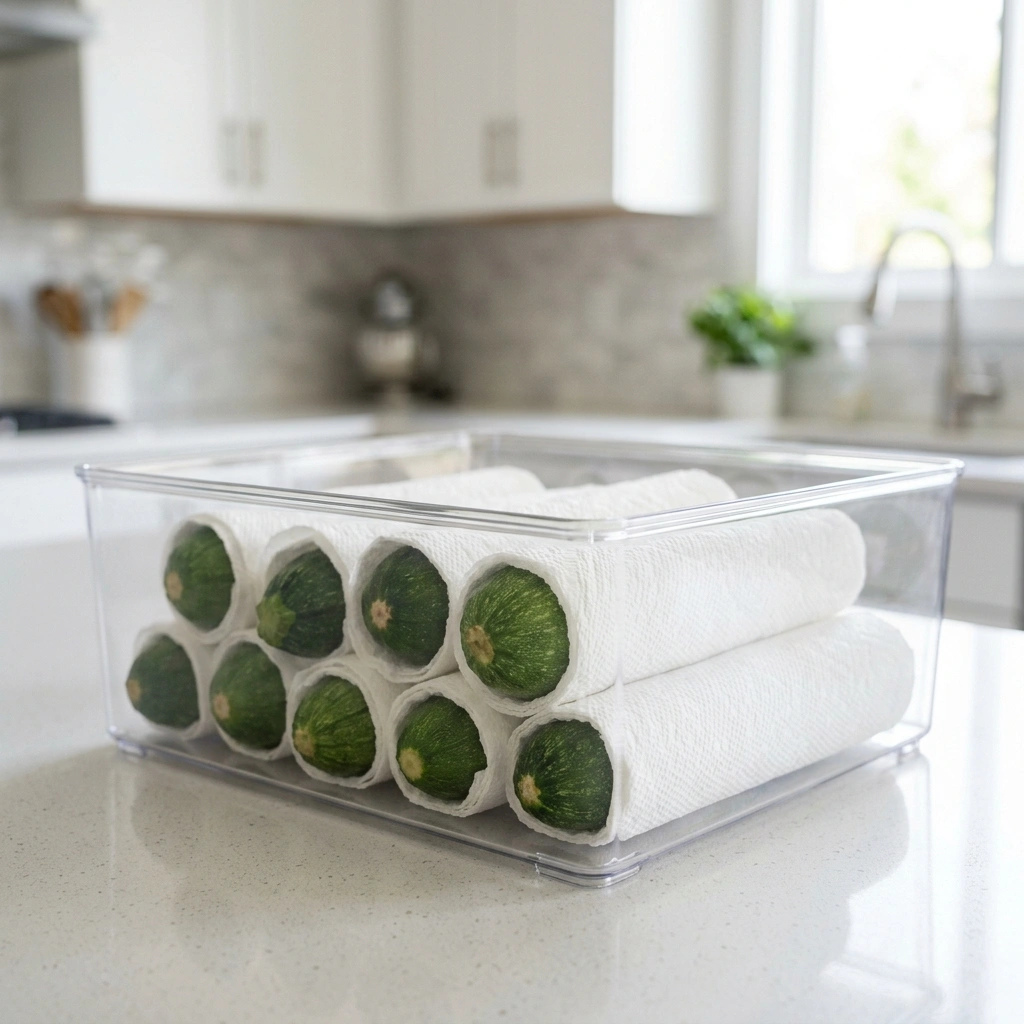
Wrap individually with paper towels — Moisture Control Wrapping 🧻
Condensation from the zucchini's natural respiration leads to surface softening. 💡 Storage Tip: Wrap each dry, unwashed zucchini in a paper towel or newspaper. The paper absorbs excess moisture released by the vegetable, preventing decay.
Place in a plastic bag in the crisper drawer — Cold Storage (7–10 Days) 🥒
Enclosing wrapped zucchini in a perforated plastic bag prevents moisture loss while maintaining airflow. 💡 Storage Tip: Place wrapped zucchini in a bag left slightly open and store in the refrigerator crisper drawer (4–7°C / 39–45°F). It will stay crisp for 7 to 10 days.
Slice, blanch, and freeze for long-term storage — Freezer Storage (1–2 Months) 🧊
For extended storage, slicing and blanching preserves texture and nutrients before freezing. 💡 Storage Tip: Slice zucchini to desired shapes, blanch briefly in boiling salted water, pat completely dry, and store in airtight Ziploc bags below -18°C for 1 to 2 months.
2. Essential Storage Rules and Cautions
Storing wet zucchini traps moisture on the skin, causing it to soften rapidly and creating an ideal environment for mold growth. Wipe off dirt or debris with a dry cloth or paper towel, and wash right before cooking.
Zucchini is sensitive to cold temperatures (below 0–2°C) and suffers from chilling injury, leading to pitting, water-soaked spots, and decay. Keep it in the warmer crisper drawer of your refrigerator.
📌 Frequently Asked Questions (FAQ)
How should I store partially used or cut zucchini? ▼
Cut surfaces lose moisture quickly and are vulnerable to bacteria. Tightly wrap the cut end with plastic wrap or a paper towel, seal it in a Ziploc bag, refrigerate, and consume within 2 to 3 days.
Is it safe and hygienic to store zucchini without washing it first? ▼
Yes, it is safer. Leaving zucchini unwashed prevents excess moisture from triggering decay. Simply wipe off dry dirt before storing, and wash thoroughly under running water right before cooking.