Have you ever bought freshly roasted coffee beans only to find their rich aroma faded and flavor turned flat or bitter after just a few days? ☕
From the moment coffee beans are roasted, they begin releasing carbon dioxide while rapidly oxidizing upon contact with oxygen, moisture, light, and heat. Because coffee beans have a porous structure, they absorb surrounding moisture and odors like a sponge, making proper storage the single most critical factor determining coffee flavor.
In this guide, introduces a scientifically proven 3-step storage guide recommended by the Specialty Coffee Association (SCA) and coffee experts to preserve rich aroma and freshness. 🛡️
Food Safety & Scientific Evidence
This content is based on SCA & USDA.
 FreshSelf
Zero waste! Your smart storage assistant
FreshSelf
Zero waste! Your smart storage assistant









1. Scientifically Proven Storage Guide
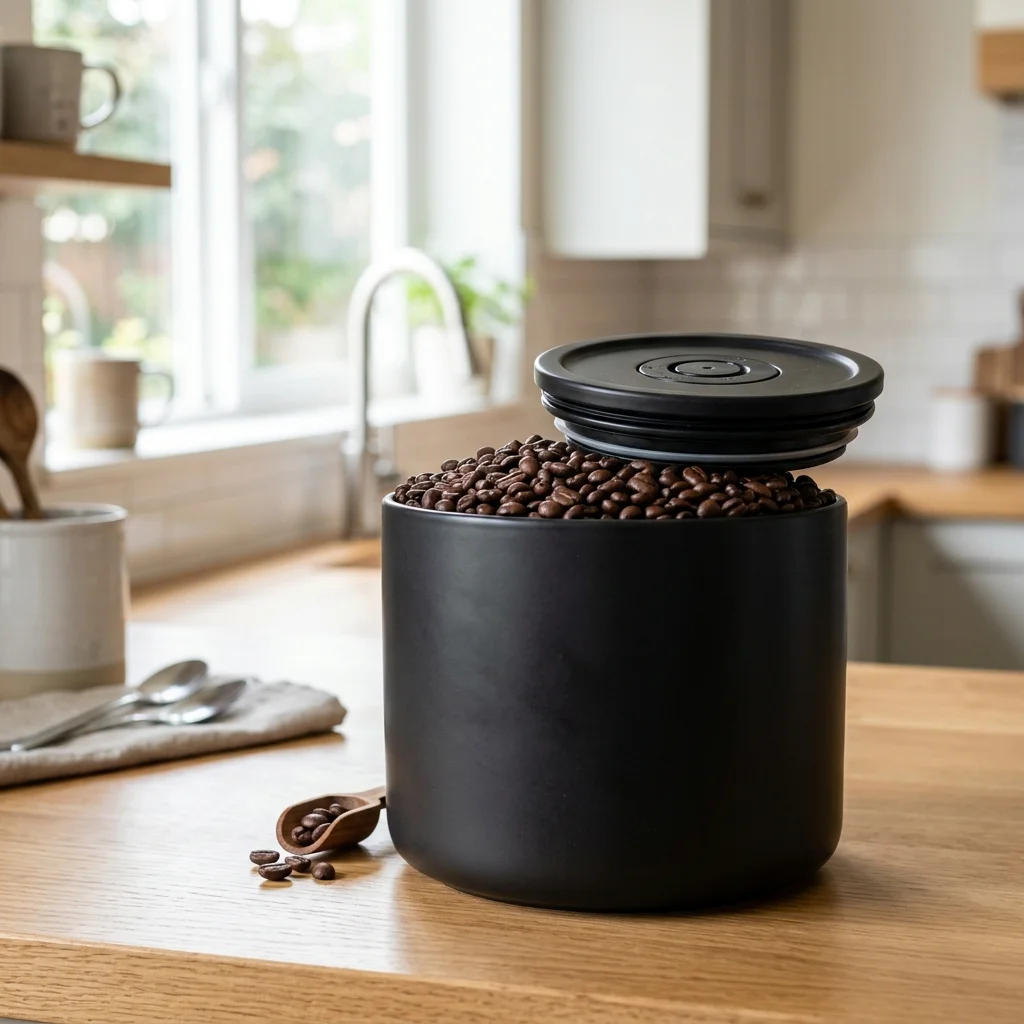
Use an opaque airtight container with a one-way valve — Block Oxygen & Release CO2 📦
Freshly roasted beans release carbon dioxide, making a one-way degassing valve essential to vent gas while preventing oxygen intake. 💡 Storage Tip: Keep beans in their original valve-equipped foil bag or transfer them to a dark, vacuum-sealed airtight container.
Store in a cool, dark place at 15–25°C — Block Heat & Direct Light 🌡️
For every 10°C rise in temperature, the oxidation rate of coffee beans roughly doubles. 💡 Storage Tip: Keep containers away from heat sources like stoves, ovens, and sunny windowsills. Store in a cool, dark pantry or cabinet with stable ambient temperatures.
Portion and freeze for long-term storage — Long-Term Storage (1–3 Months) ❄️
If you cannot consume your beans within 1–2 weeks, freezing them in portioned batches is recommended. 💡 Storage Tip: Seal single-use portions in airtight Ziploc bags and freeze below -18°C. Never open the container until it fully thaws to room temperature to prevent condensation.
2. Essential Storage Rules and Cautions
Refrigerators have high moisture levels and strong food odors that porous coffee beans readily absorb. Furthermore, taking beans in and out causes temperature fluctuations and condensation on the beans, destroying aromatic oils and causing rapid oxidation.
Ultraviolet (UV) rays and light break down surface lipids (essential oils), triggering rancidity and destroying delicate aromatic compounds. Use opaque, light-blocking airtight containers instead of clear glass jars.
📌 Frequently Asked Questions (FAQ)
How does the shelf life differ between whole bean and ground coffee? ▼
Ground coffee increases the surface area exposed to oxygen by hundreds of times, causing rapid flavor loss within hours or days. To enjoy fresh coffee, store beans whole and grind them immediately before brewing.
What is the peak freshness window for roasted coffee beans? ▼
Coffee beans undergo a 2–3 day degassing phase after roasting, with the peak flavor window occurring within 2 weeks. When kept in an opaque, airtight container at room temperature, consume within 1 month of the roast date.