Have you ever bought a whole box of sweet tangerines only to find the bottom layers crushed, mushy, and covered in green mold? 🍊
Tangerines have high moisture content and thin peels, making them prone to crushing, humidity trapped between fruits, and rapid decay. In particular, microscopic mold spores on the peel proliferate explosively when exposed to moisture and ambient warmth.
In this guide, introduces a scientifically proven 3-step tangerine storage guide recommended by agriculture and food safety experts to keep your citrus sweet, firm, and mold-free. 🛡️
Food Safety & Scientific Evidence
This content is based on RDA & USDA & MFDS.
 FreshSelf
Zero waste! Your smart storage assistant
FreshSelf
Zero waste! Your smart storage assistant







1. Scientifically Proven Storage Guide
Wash in diluted saltwater and dry thoroughly — Mold Spore Removal & Drying 💧
Washing away microscopic mold spores and impurities from the peel dramatically extends shelf life. 💡 Storage Tip: Soak tangerines in mild saltwater (or baking soda water) for 1–2 minutes, then dry each fruit completely with paper towels or a dry cloth.
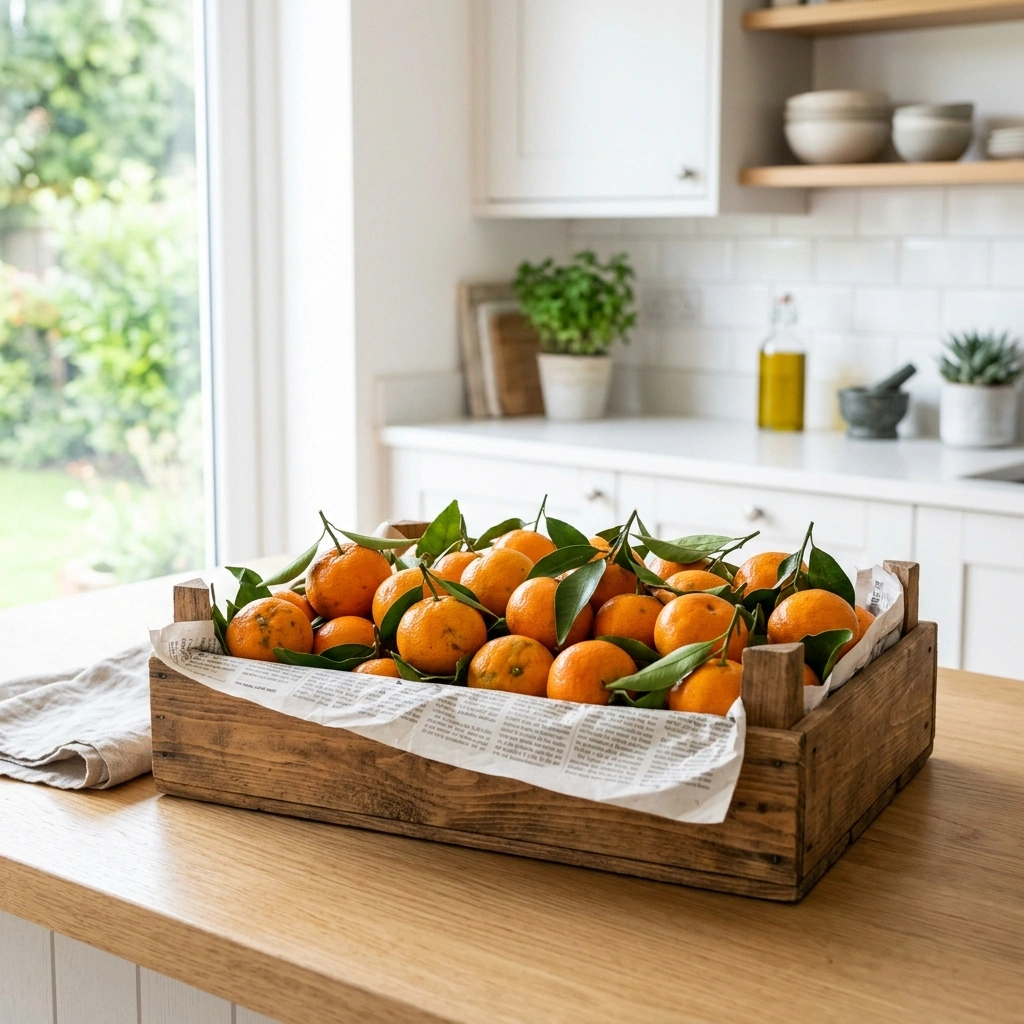
Layer with newspaper or paper towels — Moisture Control & Cushioning 📰
Preventing fruits from touching directly while ensuring adequate ventilation is essential. 💡 Storage Tip: Line the bottom of a storage box with newspaper or paper towels, place tangerines in a single layer without touching, cover with another sheet of newspaper, and repeat.
Store in a cool, ventilated area at 3–7°C — Cool Storage (2–3 Weeks) ❄️
Excessive room warmth increases respiration, causing acidity and flavor loss, while freezing temperatures induce chilling injury. 💡 Storage Tip: Store in a shaded, well-ventilated balcony or pantry (3–7°C). If indoor temperatures are high, store in the refrigerator crisper drawer wrapped in paper.
2. Essential Storage Rules and Cautions
When blue or green mold forms on a tangerine's surface, spores rapidly spread to neighboring fruits. Discard moldy tangerines immediately, separate adjacent fruit, wash them thoroughly, dry them completely, and consume them first.
Stacking tangerines in deep boxes crushes the bottom fruits under weight, causing them to burst and leak juice. Trapped moisture spreads throughout the box, serving as the primary trigger for mold proliferation.
📌 Frequently Asked Questions (FAQ)
Can I just cut off the moldy part of a tangerine and eat the rest? ▼
Absolutely not. Citrus fruits are soft and watery, meaning mold hyphae and spores penetrate deep into the pulp long before mold becomes visible on the outside. Always discard moldy tangerines entirely.
Is it better to store tangerines in the refrigerator or at room temperature? ▼
In winter, storing tangerines in a cool, well-ventilated balcony (3–7°C) is ideal for preserving sweet flavor. However, if indoor heat is high or long-term storage is needed, wrapping them in newspaper and placing them in the refrigerator crisper drawer is safest.