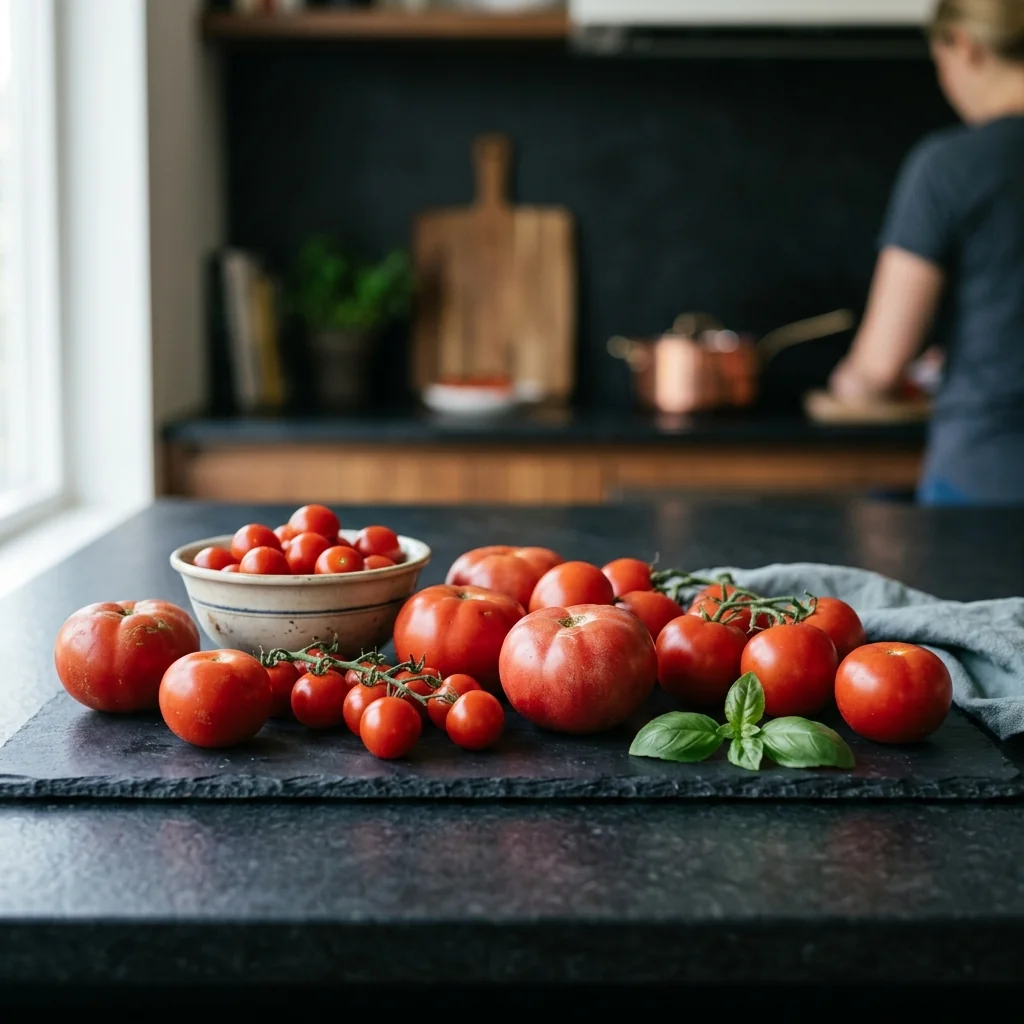
Do you routinely put freshly bought tomatoes straight into the refrigerator? 🍅
Storing unripened tomatoes at cold temperatures below 12°C (54°F) causes ‘Chilling Injury.’ Cold air permanently inactivates the enzymes responsible for synthesizing key volatile aroma compounds, breaking down cell membranes and leaving the flesh mealy, watery, and flavorless.
In this guide, shares a scientifically proven 3-step storage guide based on guidelines from the USDA and RDA to maximize tomato flavor, control ripening, and prevent mold growth. 🛡️
Food Safety & Scientific Evidence
This content is based on RDA & USDA & CDC.
 FreshSelf
Zero waste! Your smart storage assistant
FreshSelf
Zero waste! Your smart storage assistant





1. Scientifically Proven Storage Guide
Ripen at room temperature in the shade before fully ripe — Room Temp Storage (5–7 Days) 🌿
Keep unripe green/pink tomatoes at cool room temperature (15–20°C / 59–68°F) away from direct sunlight. 💡 Storage Tip: Remove the green stems and store tomatoes stem-side down on a flat surface to distribute weight and prevent bottom bruising.
Remove green stems before storing — Prevent Mold & Punctures ✂️
The green calyx (stem) of a tomato retains moisture and harbors fungal spores (Botrytis). 💡 Storage Tip: Plucking the stems before storage prevents them from puncturing adjacent tomato skins and reduces mold infection rates by over 80%.
Refrigerate only fully ripe tomatoes wrapped in paper towels — Cold Storage (7–10 Days) ❄️
Fully red, ripe tomatoes spoil quickly if left at room temperature. 💡 Storage Tip: Pluck the stems, wrap each ripe tomato individually in paper towels or newspaper, and store them in the crisper drawer (8–10°C / 46–50°F) to shield against direct cold air and moisture loss.
2. Essential Storage Rules and Cautions
Refrigerating green or pink unripened tomatoes halts the natural ripening process, hardens the skin, and collapses internal cell walls. They will never resume normal flavor development even if returned to room temperature.
Tomatoes emit ethylene gas as they ripen. Storing them in sealed bags alongside heavy ethylene producers like apples or bananas causes rapid over-ripening, softening, and mold.
📌 Frequently Asked Questions (FAQ)
What is the scientific reason for NOT refrigerating unripe tomatoes? ▼
Exposing tomatoes to temperatures below 12°C (54°F) permanently halts the enzymatic synthesis of C6 volatile organic compounds that create fresh tomato flavor. Cold air damages cell membranes, causing water loss and a mealy texture that cannot be reversed even after moving the tomato back to room temperature.
Should fully ripe red tomatoes also be kept at room temperature? ▼
No. Fully ripe red tomatoes left at room temperature will over-ripen, soften, and rot within days due to their high respiration rate and ethylene production. Once fully ripe, pluck the stems, wrap each tomato in a paper towel, store them in the refrigerator crisper drawer (8–10°C), and consume within 3 to 5 days.