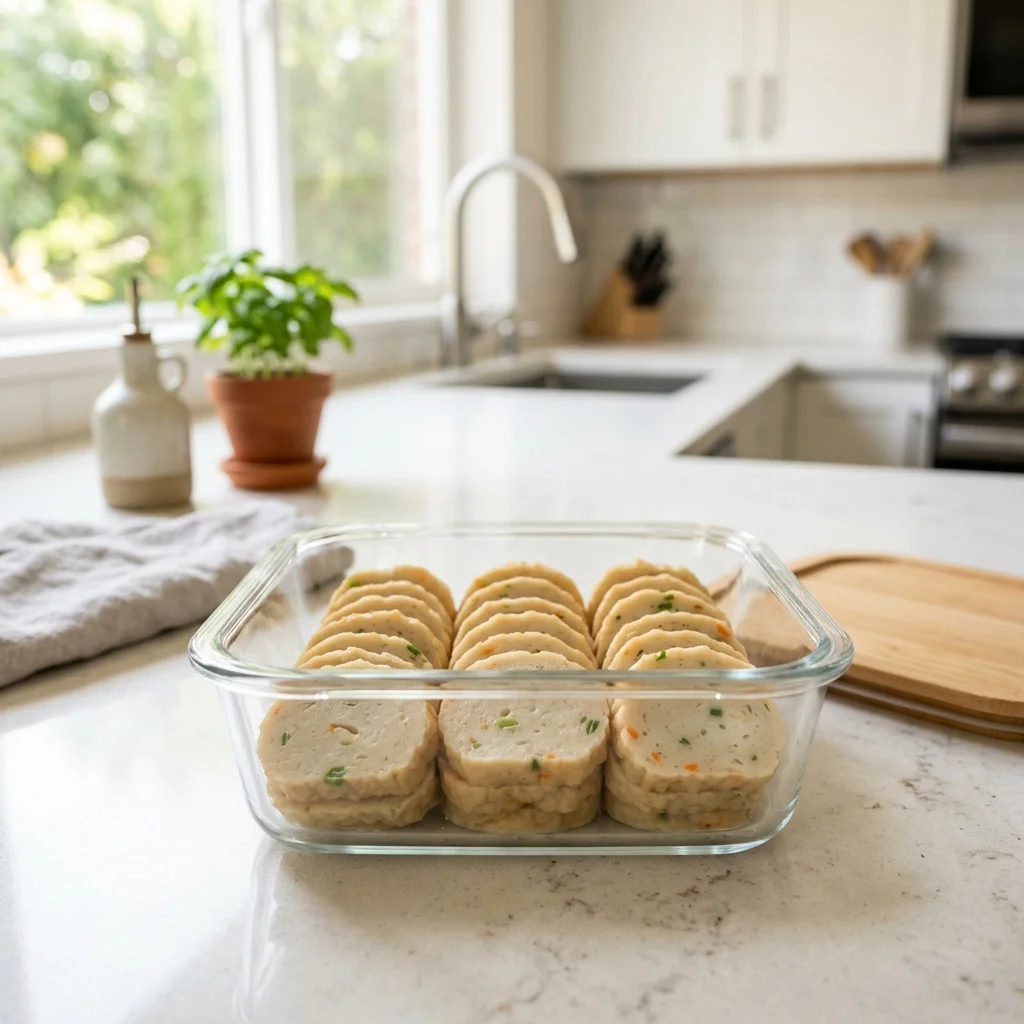
Fish cakes (eomuk) are a beloved, versatile ingredient used in soups, stir-fries, braises, and tteokbokki. But have you ever placed a package of fish cakes in the fridge only to find them slimy with an off-odor just a few days later? 🍢
Fish cakes have high moisture and protein content, and their surfaces are coated in frying oil. When exposed to oxygen, surface lipids oxidize rapidly, creating an ideal breeding ground for spoilage bacteria. This is why their refrigerated shelf life is very short (3 to 5 days). In this guide, introduces a scientifically proven 3-step fish cake storage guide based on expert guidelines to remove surface oil and extend their fresh taste and chewy texture for up to 1 to 2 months. 🛡️
Food Safety & Scientific Evidence
This content is based on MFDS & USDA & FDA.
 FreshSelf
Zero waste! Your smart storage assistant
FreshSelf
Zero waste! Your smart storage assistant









1. Scientifically Proven Storage Guide
Blanch briefly in boiling water to remove surface oil — Oil-Removing Blanching 🫖
The frying oil on fish cake surfaces oxidizes quickly upon air exposure, accelerating spoilage. 💡 Storage Tip: Blanch fish cakes in boiling water for 10 to 20 seconds or pour hot boiling water evenly over them. This removes oxidized oil, impurities, and surface microbes, ensuring a cleaner taste and improved hygiene.
Dry thoroughly, portion into single-use sizes, and freeze — Freezer Storage (30–60 Days) 🧊
Moisture control followed by freezing is essential for long-term freshness. 💡 Storage Tip: Pat blanched fish cakes completely dry with paper towels, let cool, cut into portion sizes, divide into airtight Ziploc bags, and freeze (-18°C or lower). Preserves fresh flavor and chewy texture for 1 to 2 months.
Wrap in paper towels and seal for short-term refrigeration — Cold Storage (3–5 Days) ❄️
For fish cakes to be used within a few days, moisture management is still key. 💡 Storage Tip: Wrap unblanched raw fish cakes in paper towels to absorb surface condensation, place in a sealed bag with air removed, and refrigerate in the crisper drawer (0–4°C).
2. Essential Storage Rules and Cautions
Because fish cakes have high moisture activity and surface oil, spoilage bacteria and Listeria monocytogenes can grow even at refrigeration temperatures (0–4°C). Consume opened fish cakes quickly within 3 to 5 days.
Freezing blanched fish cakes while still wet causes excessive ice crystal formation, breaking down the fish protein gel structure and leaving them spongy upon thawing. Cool, drain, and dry completely before freezing.
📌 Frequently Asked Questions (FAQ)
My fish cakes feel slimy and have a sour smell. Can I wash or blanch them and still eat them? ▼
No, absolutely not! A slimy surface or sour odor indicates that bacteria have multiplied rapidly, causing protein breakdown and fat rancidity. Even if boiled, bacterial toxins may remain, so discard them immediately.
How should frozen fish cakes be thawed? ▼
Rapidly thawing frozen fish cakes at room temperature causes liquid loss (drip) and leaves the texture spongy. Slow-thaw them in the refrigerator overnight, or add them directly from the freezer into boiling soups or stews without thawing to preserve their firm, springy texture.