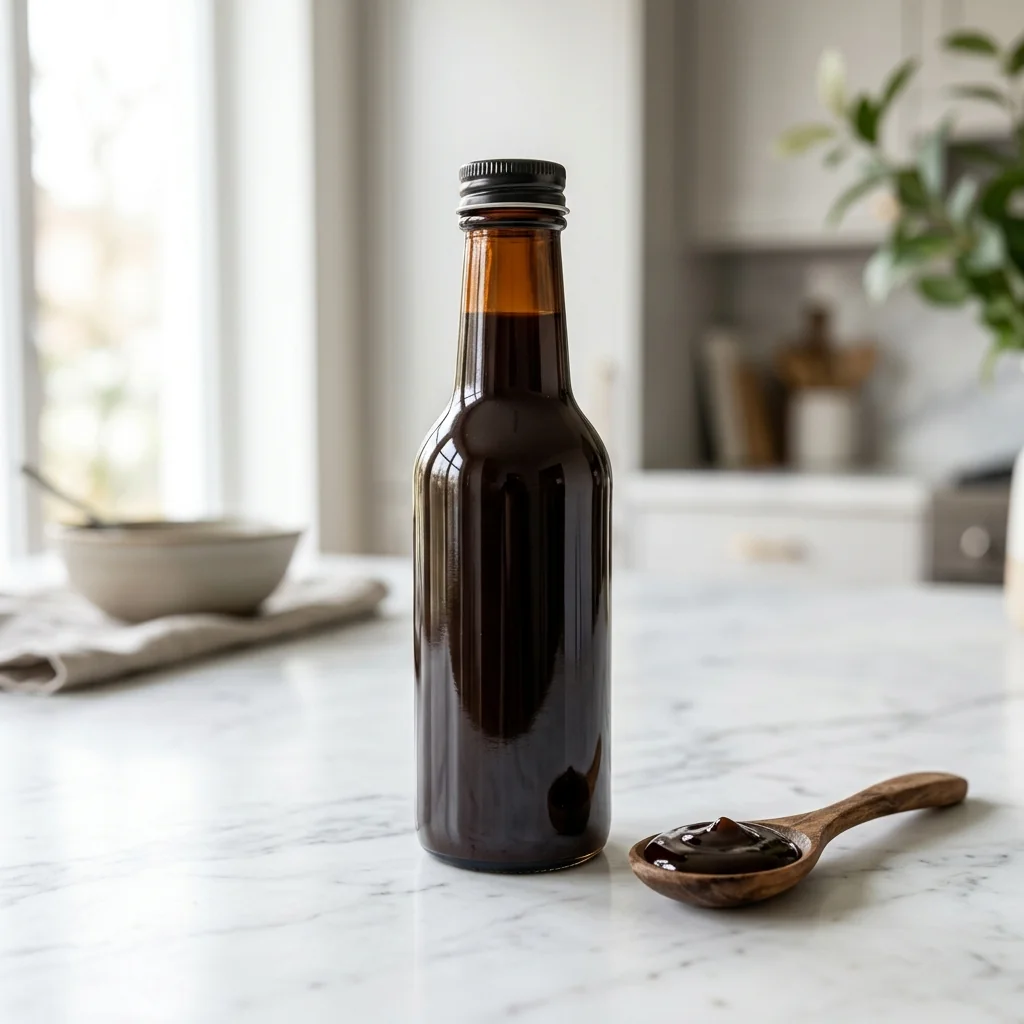
Have you ever stored opened oyster sauce in your kitchen cupboard next to the stove like soy sauce, only to find fuzzy mold growing around the cap or the flavor turning sour? 🦪
Unlike soy sauce, oyster sauce contains high amounts of proteins, organic extracts, and sugars alongside salt. Once opened, exposure to ambient room air creates an ideal breeding ground for mold spores (such as Penicillium). Heat and humidity near cooking stations drastically accelerate spoilage, making immediate refrigeration essential.
In this guide, shares a scientifically proven 3-step oyster sauce storage guide based on guidelines from the FDA and MFDS to prevent mold and preserve rich umami flavor safely. 🛡️
Food Safety & Scientific Evidence
This content is based on FDA & MFDS & RDA & USDA.
 FreshSelf
Zero waste! Your smart storage assistant
FreshSelf
Zero waste! Your smart storage assistant






1. Scientifically Proven Storage Guide
Wipe bottle neck and cap clean after use — Prevent Contamination & Mold 🧻
Sauce residue left around the bottle mouth combines with moisture in the air to become a breeding ground for mold spores. 💡 Storage Tip: Thoroughly wipe the rim with a clean paper towel immediately after use and seal tightly. This vital step stops mold from penetrating inside.
Refrigerate at 0–4°C immediately after opening — Cold Storage (3–6 Months) ❄️
Low temperatures suppress mold spore germination and microbial growth while preventing flavor degradation from oxidation. 💡 Storage Tip: Store opened oyster sauce in the refrigerator door or main compartment at 0–4°C. This maintains umami freshness for 3–6 months.
Store unopened bottles in a cool, dark pantry — Pantry Storage 🏺
Unopened oyster sauce is commercially sterile and stable at room temperature. 💡 Storage Tip: Keep unopened bottles in a cool, dry pantry or cupboard away from direct sunlight and heat (10–20°C). It stays fresh until the printed expiration date.
2. Essential Storage Rules and Cautions
Unlike soy sauce or vinegar, oyster sauce is rich in proteins and sugars. Leaving it at room temperature after opening leads to mold growth, separation, and flavor spoilage. Heat from cooking stoves accelerates microbial blooms, so always refrigerate after opening.
Sauce left around the bottle opening or inside the cap dries out in air and becomes the primary target for mold colonization. Always wipe the bottle neck clean with a paper towel after use before sealing.
📌 Frequently Asked Questions (FAQ)
I see white or green spots around the bottle cap. Can I scoop them off and use the rest? ▼
No, absolutely not. Even if invisible to the naked eye, mold spores and mycotoxins can easily spread throughout liquid sauces. If any mold is detected, discard the entire bottle immediately.
Can I freeze oyster sauce for long-term storage? ▼
While possible, it is generally not recommended. Oyster sauce's high salt and sugar content prevents complete freezing, but extreme cold can alter its viscosity and cause thickening agents to separate upon thawing. Refrigeration is sufficient to keep opened sauce safe for 3–6 months.