Duck meat is one of the most widely consumed poultry items globally after chicken and turkey, highly prized for roasting, smoking, and stews! However, have you ever stored duck meat only to find it developing a stale odor or off-flavor (warmed-over flavor)? 🦆
Compared to chicken or beef, duck meat contains a significantly higher proportion of unsaturated fatty acids such as oleic and linoleic acids, leading to extremely rapid lipid oxidation. When exposed to atmospheric oxygen, its peroxide value increases rapidly, resulting in rancid off-odors and texture degradation.
In this guide, we introduce a scientifically proven 3-step duck meat storage guide based on official guidelines from livestock and food safety authorities to prevent lipid rancidity and preserve flavor and freshness. 🛡️
Food Safety & Scientific Evidence
This content is based on RDA & USDA & MFDS.
 FreshSelf
Zero waste! Your smart storage assistant
FreshSelf
Zero waste! Your smart storage assistant









1. Scientifically Proven Storage Guide
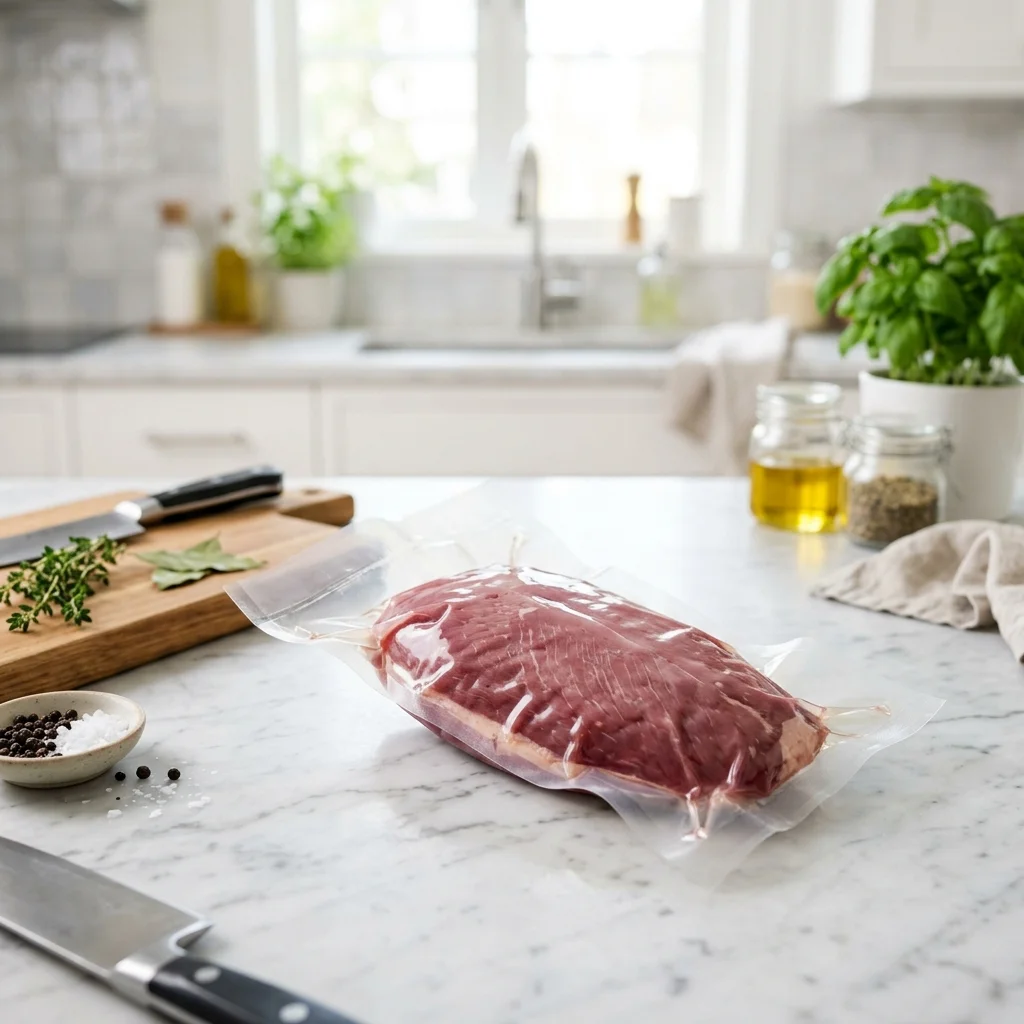
Wipe dry and vacuum packaging — Oxygen-Blocking Seal 📦
Wipe surface moisture and blood thoroughly with paper towels, then seal completely using a vacuum sealer or tight wrapping. 💡 Storage Tip: Vacuum packaging blocks oxygen ingress, fundamentally suppressing autoxidation of unsaturated fatty acids and peroxide formation.
Refrigerate at 0–2°C — Short-Term Storage (1–2 Days) ❄️
If cooking fresh duck meat within a couple of days, keep it at ultra-cold temperatures (0–2°C / 32–36°F) to prevent microbial proliferation. 💡 Storage Tip: Place vacuum-sealed duck meat in the coldest part of the fridge crisper drawer and cook within 1 to 2 days.
Flash freeze below -18°C — Long-Term Storage (3–6 Months) 🧊
To maintain duck meat quality over extended periods, flash freezing is necessary to minimize connective tissue breakdown. 💡 Storage Tip: Portion duck meat into meal sizes, vacuum seal, and flash freeze in the freezer (-18°C / 0°F or colder). This halts lipid oxidation and preserves flavor for 3 to 6 months.
2. Essential Storage Rules and Cautions
Unsaturated fatty acids in duck meat oxidize rapidly upon contact with oxygen, driving up peroxide values. Furthermore, surface blood and purge (drip) foster bacterial growth; wipe dry with paper towels before sealing.
Freezing and thawing cycles break cell membranes and connective tissues, causing excessive drip loss and explosive lipid oxidation rates. Consume thawed duck meat on the same day.
📌 Frequently Asked Questions (FAQ)
Why does leftover cooked duck meat develop an unpleasant odor (warmed-over flavor)? ▼
The unpleasant off-flavor that develops when reheating leftover cooked duck is known as 'warmed-over flavor.' It occurs when heat-cleaved unsaturated fatty acids and myoglobin iron react with oxygen during storage. Keep cooked duck in airtight containers in the fridge and consume promptly.
What is the best way to thaw frozen duck meat? ▼
To prevent purge loss and connective tissue destruction from thermal shock, transfer frozen duck meat to the refrigerator (0–4°C / 32–39°F) 12 to 24 hours prior to cooking. Thawing in warm water or at room temperature accelerates drip loss, lipid oxidation, and bacterial growth.