Plums are beloved worldwide during the summer for their sweet, tangy flavor and rich, juicy flesh! 🍑
Have you ever bought a box of plums, left them in the pantry only for them to turn mushy and moldy overnight? Or put hard, sour plums straight into the fridge only to find them tasteless and mealy?
Plums are climacteric fruits with thin, delicate skin that makes them highly vulnerable to mechanical damage. Knowing the exact timing to transition plums from room-temperature ripening to cold refrigeration is the key secret to maximizing sweetness and freshness. In this guide, introduces a scientifically proven 3-step plum storage guide based on expert agricultural guidelines to boost sweetness and keep your plums crisp and juicy for 2 to 3 weeks. 🛡️
Food Safety & Scientific Evidence
This content is based on RDA & USDA & MFDS.
 FreshSelf
Zero waste! Your smart storage assistant
FreshSelf
Zero waste! Your smart storage assistant





1. Scientifically Proven Storage Guide
Ripen firm plums at cool room temperature (18–22°C) — Room Temp Ripening (2–4 Days) 🧺
This essential ripening step maximizes sugar levels and fragrance. 💡 Storage Tip: Spread unwashed plums in a single layer in a paper box or tray away from direct sunlight in a well-ventilated, cool room. They are fully ripe when the stem end feels slightly soft to a gentle touch and gives off a sweet aroma.
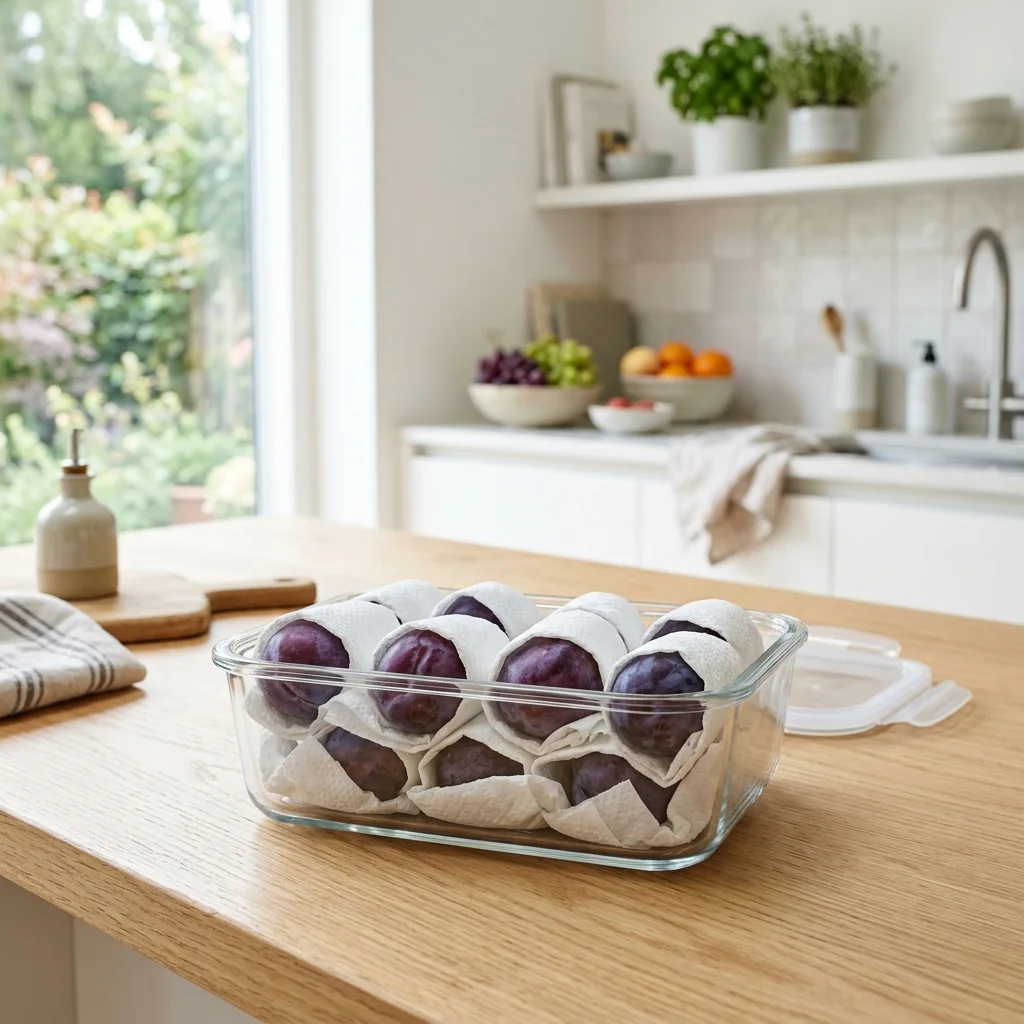
Wrap individually in paper towels and place in airtight containers — Cushioned Packaging 📦
Ripe plums become highly sensitive to moisture and physical impact. 💡 Storage Tip: Wrap each ripe, unwashed plum individually in a paper towel or newspaper sheet to absorb excess condensation and prevent friction. Place them gently in a sturdy airtight container.
Store at low refrigeration temperature (0–2°C) — Cold Storage (7–14 Days) ❄️
This refrigeration step locks in the peak freshness of fully ripened plums. 💡 Storage Tip: Place the container of individually wrapped plums in the refrigerator crisper drawer (0–2°C / 32–36°F). Low temperatures halt over-ripening and decay, preserving sweet juiciness for 1 to 2 weeks.
2. Essential Storage Rules and Cautions
Placing firm, unripened plums below 5°C (41°F) triggers chilling injury. Respiratory ripening stops, internal moisture dries up, the flesh turns mealy, and sugars fail to develop. Always ripen at room temperature before chilling.
Plums have delicate skins and soft flesh. When stacked together, the contact pressure causes bruising and moisture breakdown. These bruised spots become primary targets for mold spores (such as brown rot), so keep them cushioned and spaced apart.
📌 Frequently Asked Questions (FAQ)
Should I wash off the white powdery coating on plum skins before storing? ▼
No, absolutely not! The white powder on plums is natural bloom (epicuticular wax), which is harmless and non-toxic. Bloom is the plum's natural protective shield that prevents moisture evaporation and wards off pests and microbes. Keep it intact during storage and wash right before eating.
My plum has turned soft, mushy, and is leaking juice. Is it still safe to eat? ▼
If a plum becomes soft and leaks juice, fungal spores (such as Monilinia brown rot) or bacteria have likely invaded the damaged tissue. Microscopic toxins spread quickly through soft fruit flesh, so discard damaged plums immediately and isolate them from healthy ones.