Have you ever brought home crisp fresh basil, put it in the refrigerator crisper drawer, and found it turned completely black and wilted the next day? 🌿
Basil is a tropical and subtropical herb that is extremely sensitive to cold temperatures. When exposed to temperatures below 10°C (50°F)—such as a standard refrigerator at ~4°C—it suffers from ‘chilling injury,’ causing its cell membranes to collapse and the leaves to blacken rapidly.
In this guide, based on scientific guidelines from the USDA and the UC Davis Postharvest Technology Center, we share a 3-step storage method to maintain fresh basil’s vibrant aroma and freshness. 🛡️
Food Safety & Scientific Evidence
This content is based on USDA & MFDS & UC Davis Postharvest Center.
 FreshSelf
Zero waste! Your smart storage assistant
FreshSelf
Zero waste! Your smart storage assistant








1. Scientifically Proven Storage Guide
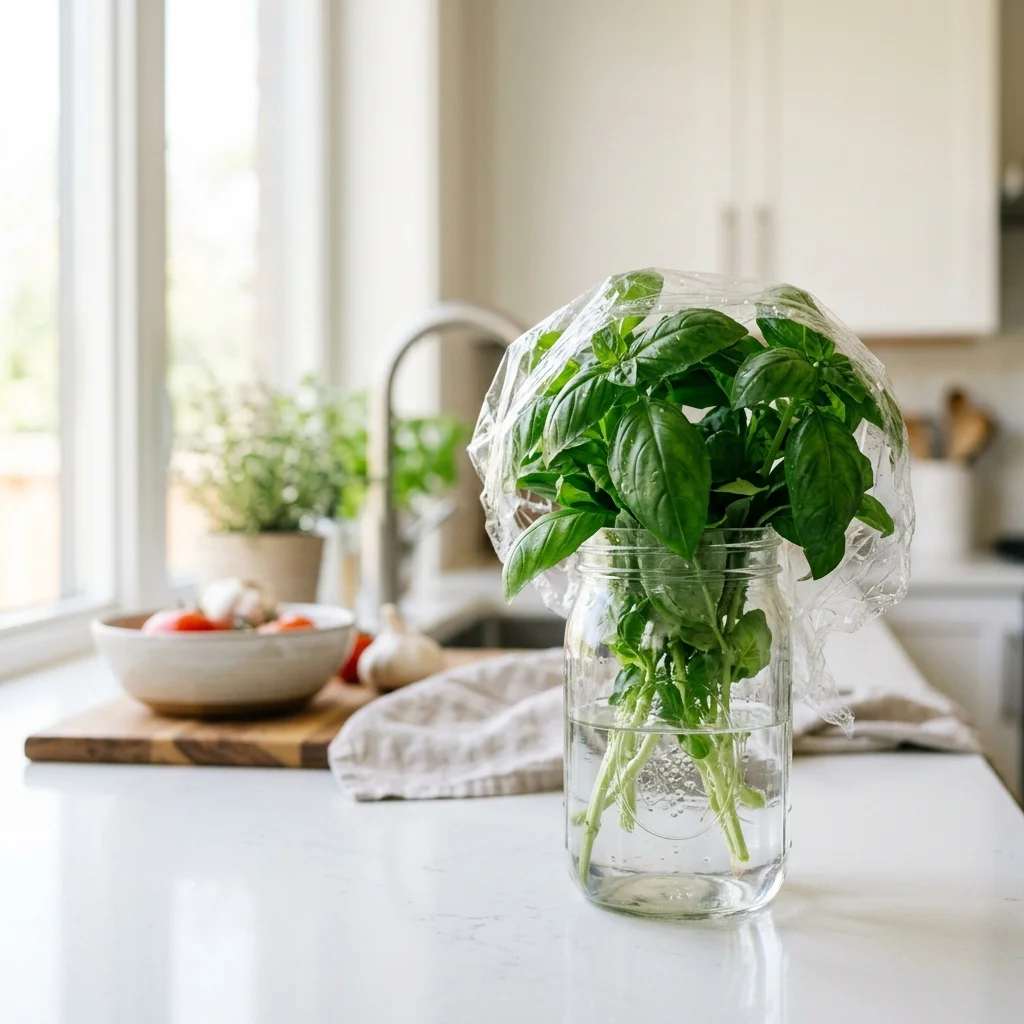
Trim stems and store at room temperature like a bouquet — Room Temp Water Storage (7–14 Days) 🌿
Basil stays fresh longest when placed in water at room temperature (12–15°C / 54–59°F). 💡 Storage Tip: Trim the stem ends diagonally, place stems upright in a glass of water, and loosely cover the top with a plastic bag. This prevents moisture loss and chilling injury, keeping it fresh for 1 to 2 weeks.
Keep away from direct sunlight and heat — Environment Control ☀️
Exposing basil to strong sunlight or heat near cooking appliances will cause leaves to wilt and yellow quickly. 💡 Storage Tip: Place the jar in a cool, shaded area (12–15°C) away from direct sunlight and change the water every 1 to 2 days.
Freeze chopped basil with olive oil for long-term storage — Oil Cube Freezing (90–180 Days) 🧊
For long-term storage exceeding two weeks, freezing basil with olive oil is the best method. 💡 Storage Tip: Chop clean, completely dry basil leaves, place them into an ice cube tray, and submerge in olive oil. The oil creates a complete oxygen barrier, locking in flavor without browning for use in pastas or stews.
2. Essential Storage Rules and Cautions
Exposing fresh basil to temperatures below 10°C breaks down cellular tissue and activates polyphenol oxidase (PPO) enzymes, rapidly browning the leaves. Within hours, leaves become soft and lose essential aromatic compounds like linalool and eugenol.
Standing moisture on leaf surfaces accelerates fungal and bacterial growth and leads to rapid rotting. Wash basil only immediately before cooking and ensure leaves are dry during storage.
📌 Frequently Asked Questions (FAQ)
My basil turned black in the fridge. Is it still safe to eat? ▼
Basil that turns black from chilling injury isn't toxic, but cell breakdown causes significant loss of flavor, aroma, and texture. Provided there is no mold or off odor, it can be used in cooked dishes like sauces or stews, though it won't have the bright flavor of fresh basil.
Should I wash basil before storing it? ▼
No! Washing basil before storage leaves moisture trapped between the leaves, encouraging rapid wilting and mold growth. Store basil unwashed, brushing off any visible dirt, and wash under cool water right before use.